News Summary
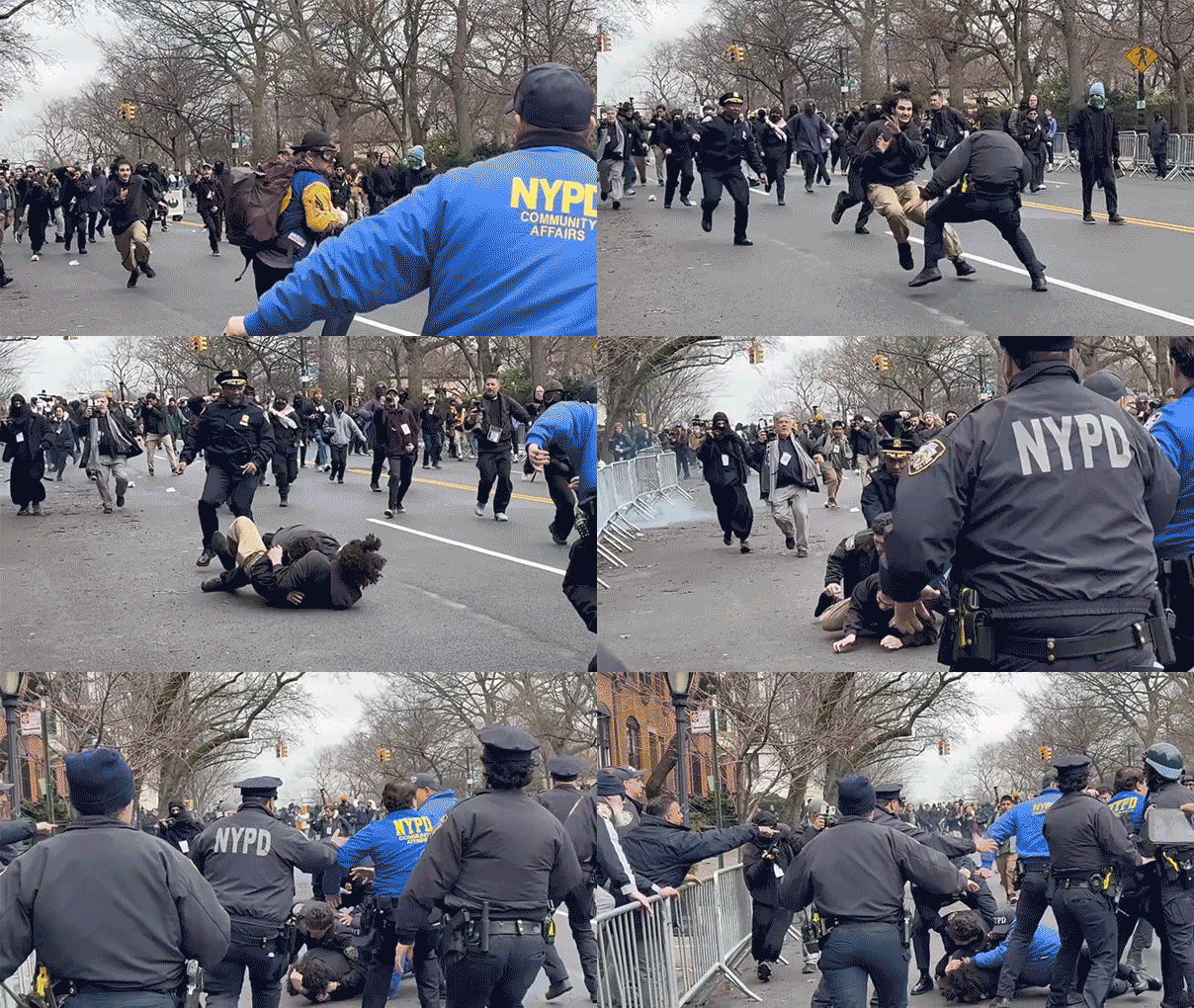
Federal and local authorities say two men — 19-year-old Ibrahim Kayumi and 18-year-old Emir Balat — allegedly drove from Bucks County to Manhattan on March 7 and threw homemade explosive devices into a protest outside Gracie Mansion, the official residence of New York City’s mayor. New video shows Balat being tackled by an NYPD officer after allegedly dropping an improvised explosive device near officers; witnesses shouted “bomb.” Prosecutors say the device contained TATP and shrapnel (nuts and bolts) and that photos show the men handling the device. Balat is reported to have said he wanted the attack to be “bigger than the Boston Marathon bombing” and allegedly wrote a pledge of allegiance to the Islamic State after his arrest. Authorities called the incident ISIS-inspired and investigated it as terrorism. An FBI search of a storage unit linked to the case turned up explosive residue; bomb technicians performed a controlled detonation. Surveillance footage obtained by police reportedly shows a suspect buying fireworks fuse days earlier. The devices failed to detonate and the suspects were apprehended; investigations by federal and local agencies continue.
Biblical Reflection
This story presents a clear moral and civic crisis: deliberate attempts to kill or maim at a public protest are acts of evil that threaten innocent life and public order. Scripture teaches the sanctity of human life and the call to pursue justice while loving our neighbors (Genesis 1:27; Micah 6:8). Violent extremism — whatever its claimed justification — perverts religious language to justify murder and terror; Jesus’ command to love enemies (Matthew 5:44) and Paul’s instruction to overcome evil with good (Romans 12:17–21) stand in stark opposition to such acts. Christians should therefore respond on three fronts: 1) affirm the need for lawful, proportionate action to protect the vulnerable and hold perpetrators accountable, 2) resist simplifications that equate a whole people or faith with the violent acts of a few (we must avoid collective blame or dehumanization), and 3) practice compassionate care for victims and for communities that may feel stigmatized or fearful. We should also be honest about the real spiritual and social pathways into radicalization — including loneliness, ideological echo chambers, and moral confusion — and support prevention through community, discipleship, and outreach. The church’s vocation is to pray and act for peace, to assist those harmed, and to speak truth about both the reality of evil and the redeeming power of repentance and reconciliation.
Scripture in context
This outlook does not yet include contextual Scripture citations. Do not treat a general biblical theme as an exegetical conclusion.
Faithful Response
No prescribed response is offered. Consider the reflection prompts below in your own church context.
Reflection and Discussion
- 1When I hear news about violent or terroristic acts, where do I see fear leading me toward blame or compassion — and how can I move toward Christlike responses?
- 2How can my family, church, or neighborhood practically support victims and reduce isolation that can lead to radicalization?
- 3Am I holding both to truth (calling evil evil) and mercy (avoiding collective condemnation) in how I speak about people of different faiths?
Sources
Reporting links are evidence inputs; Sanctuary News' biblical reflection is commentary.
This outlook currently relies on fewer than two linked sources. Broaden verification before teaching from it.
- 1.Original reportprimary