News Summary
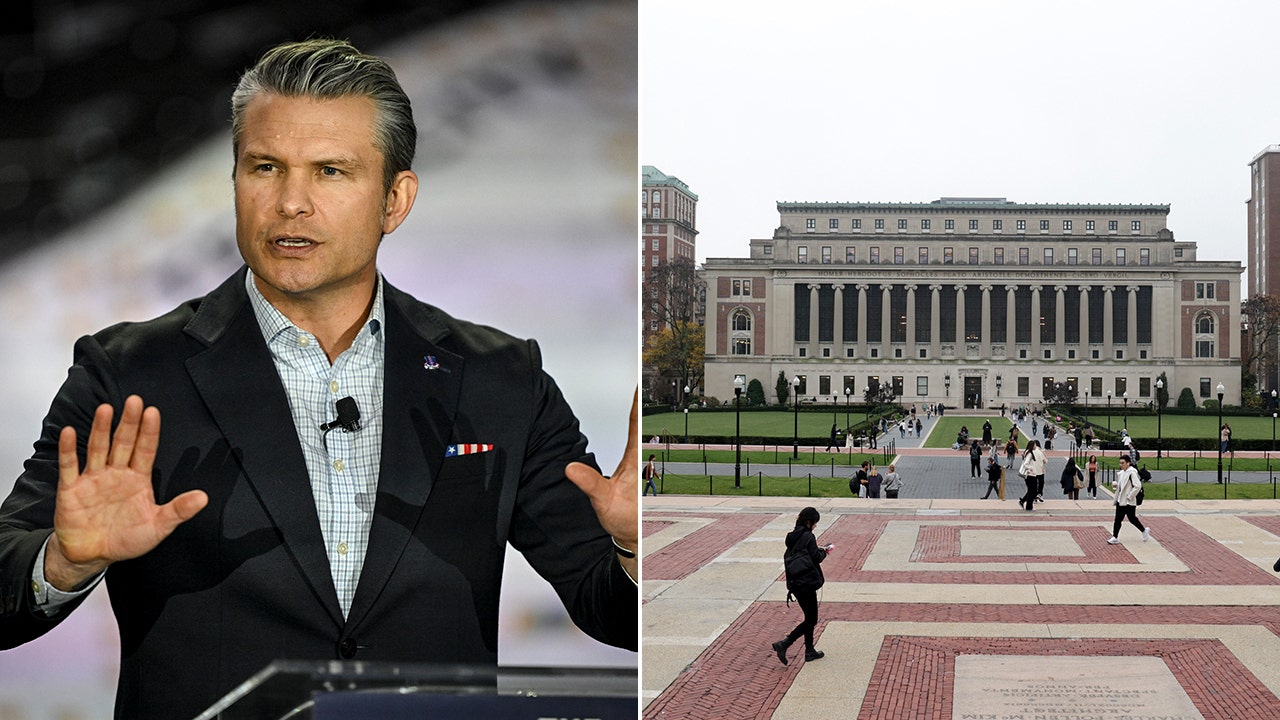
Secretary of War Pete Hegseth announced that starting with the 2026-27 academic year, the Department of War will ban attendance at elite institutions such as Princeton, Columbia, MIT, Brown, and Yale for its personnel. This follows a similar recent ban on Harvard. Hegseth justified the move by accusing these universities of fostering 'anti-American resentment' and 'military disdain,' claiming they have shifted from promoting victory and realism to promoting 'wokeness and weakness.' He described this as indoctrination rather than education and stated that the Department of War will stop subsidizing what he calls the corruption of its own uniformed class. Hegseth also promised a review of internal military education to ensure a focus on strategic thought and effectiveness.
Biblical Reflection
From a Christian and scriptural perspective, this development highlights complex issues of discernment, truth, and the stewardship of influence. The decision appears motivated by a desire to protect certain values and shield future military leaders from ideologies deemed harmful or antithetical to the mission of national defense. Scripture calls believers to pursue truth (John 8:32), to seek wisdom (James 1:5), and to be peacemakers (Matthew 5:9). The action taken by the Department of War raises questions about how Christians should engage with institutions that may hold differing worldviews, and whether separation or engagement is the most faithful response.
Biblically, Christians are called to be 'in the world but not of the world' (John 17:14-18), which suggests a calling to engage with, rather than withdraw from, challenging environments. Jesus and the apostles frequently interacted with those holding opposing perspectives, seeking to transform rather than abandon. At the same time, scripture warns against being 'conformed to the pattern of this world' (Romans 12:2) and calls for discernment about sources of influence.
The rhetoric of 'wokeness and weakness' versus 'victory and strategic thought' frames the issue in combative terms. Christians are reminded that true strength is found in humility and service (Philippians 2:3-8), and that peacemaking is central to Christ's teaching. If the accusations of indoctrination are well-founded, it is right to seek truth and integrity in education. However, blanket bans and divisive language risk deepening suspicion and division rather than modeling Christ-like engagement, wisdom, and love. Ultimately, Christians are called to pray for leaders, to pursue justice and truth, and to be salt and light even in difficult places.
Scripture in context
This outlook does not yet include contextual Scripture citations. Do not treat a general biblical theme as an exegetical conclusion.
Faithful Response
No prescribed response is offered. Consider the reflection prompts below in your own church context.
Reflection and Discussion
- 1How can Christians discern when to engage with or withdraw from institutions or environments with opposing values?
- 2What does it mean to be 'in the world but not of the world' in the context of education and public service?
- 3How can believers model both truth-seeking and peacemaking in divisive cultural debates?
Sources
Reporting links are evidence inputs; Sanctuary News' biblical reflection is commentary.
This outlook currently relies on fewer than two linked sources. Broaden verification before teaching from it.
- 1.Original reportprimary