News Summary
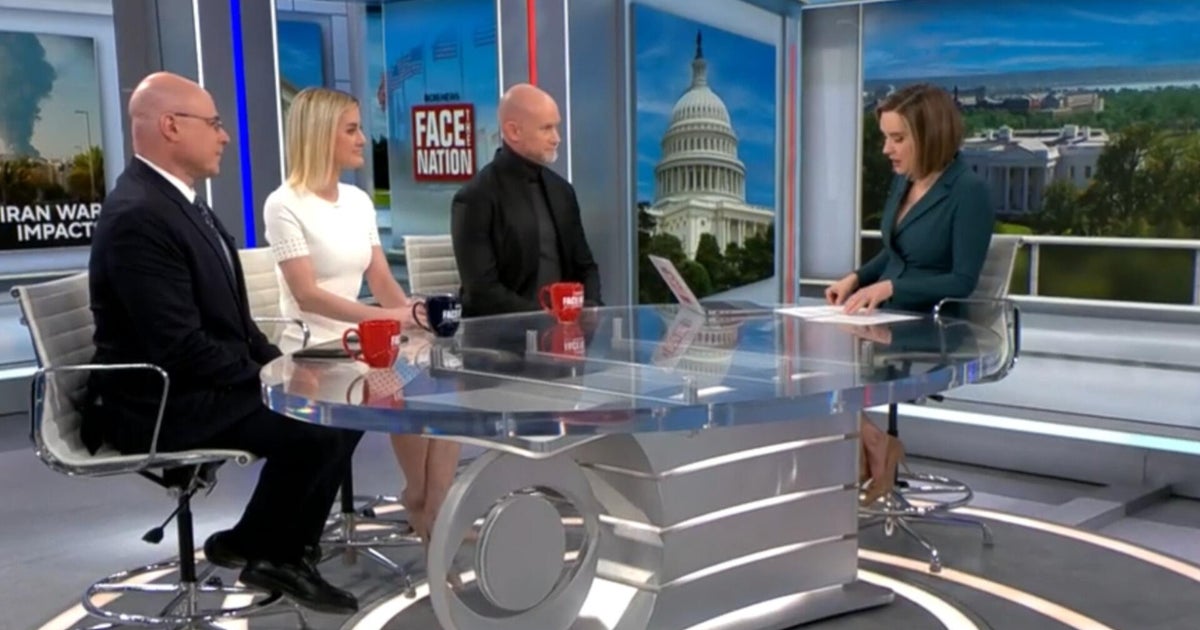
This is a full transcript of the March 15, 2026 broadcast of Face the Nation with Margaret Brennan. The episode focuses on the widening war involving Iran and its regional impact, the global oil supply disruption caused by Iranian actions in the Strait of Hormuz, and recent violent incidents on U.S. soil.
Key segments and facts covered:
- On-the-ground reporting from Tel Aviv describing increased rocket and missile attacks attributed to Iran and its proxies; Iran has been restricting transit through the Strait of Hormuz and several tankers and vessels have been crippled.
- The Department of Defense reported 13 U.S. casualties related to the conflict, including six aircrew identified after a refueling tanker crash in Iraq.
- Iran and Israeli forces traded strikes, and President Trump has asked allies (including a public appeal to China) to send warships to help secure the strait. Officials say tens of thousands of U.S. service members have been committed to the region; the administration and advisers estimate the campaign could last a few more weeks.
- Interview with Iran's foreign minister Abbas Araghchi: he denied asking for a cease-fire or negotiations, defended Iran's strikes as self-defense, asserted Iran's stability, and described damaged nuclear facilities. He reiterated that Iran had previously offered to downblend 60% enriched uranium as part of a negotiated settlement but said no formal negotiations were underway now.
- Interview with Kevin Hassett (National Economic Council): he argued the U.S. economy is resilient, described planned and existing measures to blunt energy and fertilizer shocks (including SPR releases and broadened supply sources), and said the administration believed the conflict's economic impacts would be short-lived if objectives are achieved.
- Interview and questioning of Senator Mark Warner about homeland security and intelligence: he criticized FBI resource reassignments, called for investigations into a U.S. strike that reportedly hit a school in Minab, Iran, acknowledged clear economic impacts at home (gasoline and fertilizer price spikes), and pushed for restoring focus on counterterrorism. He also criticized the administration's communication around war aims.
- Representative Dan Crenshaw (R-TX) discussed the military posture, defended hard-line rhetoric used by some U.S. officials, and spoke about misinformation and internal political culture within the Republican Party.
- Panel of experts (former CIA, national security and energy analysts) assessed threats to Gulf partners and U.S. interests, the effectiveness of Iran's asymmetric tactics (drones, mines, proxies), near-term global oil market impacts, and rising domestic terrorism threats and radicalization pathways.
- Domestic incidents: coverage included three violent attacks in the U.S., including an attack on a synagogue and an Old Dominion University shooting involving a previously incarcerated ISIS supporter, raising concerns about homegrown and inspired violent extremism.
The broadcast interweaves operational military updates, diplomatic statements from Iran, economic analysis of energy disruptions, and domestic security concerns, concluding with the sense that many questions—about objectives, timelines, intelligence failures, and the prospects for negotiation—remain unsettled.
Biblical Reflection
From a biblical perspective this broadcast highlights some deep moral and spiritual fault lines: the human cost of war, the vulnerability of civilians, the responsibility of leaders to seek justice and peace, and the ripple effects of conflict on the poorest and most vulnerable.
Scripture repeatedly calls God’s people to pursue peace and justice (e.g., “Blessed are the peacemakers”), to protect the weak, and to speak truth. The program details harm to noncombatants (the school strike in Minab, disruptions that raise food and fuel costs for ordinary families) and rhetoric that celebrates mercilessness. Such rhetoric and actions conflict with the biblical witness that values human life and commands mercy (Micah 6:8; Matthew 5:7). Leaders who rush into or celebrate violence without transparent aims and accountability fail a core biblical test of stewardship: they are entrusted with other people’s lives and livelihoods.
At the same time, the interviews and expert commentary show some virtues we should affirm: desire for accountability (investigations into the school strike), willingness of some officials to seek multilateral approaches to secure shipping lanes, and concern for homeland protection. Scripture does not forbid the use of force to protect the innocent (see the biblical concern for justice and protection), but it places strong moral limits on how force is used—requiring proportionality, diligence to avoid harming innocents, and constant pursuit of reconciliation when possible.
Practical biblical takeaways:
- Pray and work for peacemakers: Christians are called to be instruments of reconciliation amid national conflict (Matthew 5:9). That includes urging leaders toward honest diplomacy and transparency.
- Advocate for the vulnerable: rising gas and food prices disproportionately hurt the poor; justice requires we care for those who bear the economic brunt of geopolitical decisions.
- Reject dehumanizing language: political rhetoric that depicts “enemies” as objects to be destroyed is inconsistent with Christ’s call to love enemies and seek the good of neighbors where possible.
- Demand truth and accountability: mistakes in targeting that kill civilians call for independent investigation and responsible leadership—biblical justice requires that wrongdoing be acknowledged and repaired when possible.
For Christians watching the news, this story is a gauge of spiritual temperature: it shows the world’s brokenness—sin manifested in violence, pride, and fear—but it also shows opportunities for Christians to embody peaceable wisdom, mercy, and courageous truth-telling in public life.
Scripture in context
This outlook does not yet include contextual Scripture citations. Do not treat a general biblical theme as an exegetical conclusion.
Faithful Response
No prescribed response is offered. Consider the reflection prompts below in your own church context.
Reflection and Discussion
- 1Where can I personally and practically pursue peace or support peacemaking in my community or in how I engage public life?
- 2Who among the vulnerable (refugees, low-income families, service members' families) is being harmed by this conflict, and how can my church or I respond to their material and spiritual needs?
- 3Am I contributing to or resisting dehumanizing rhetoric and misinformation about those on the other side of this conflict?
Sources
Reporting links are evidence inputs; Sanctuary News' biblical reflection is commentary.
This outlook currently relies on fewer than two linked sources. Broaden verification before teaching from it.
- 1.Original reportprimary