News Summary
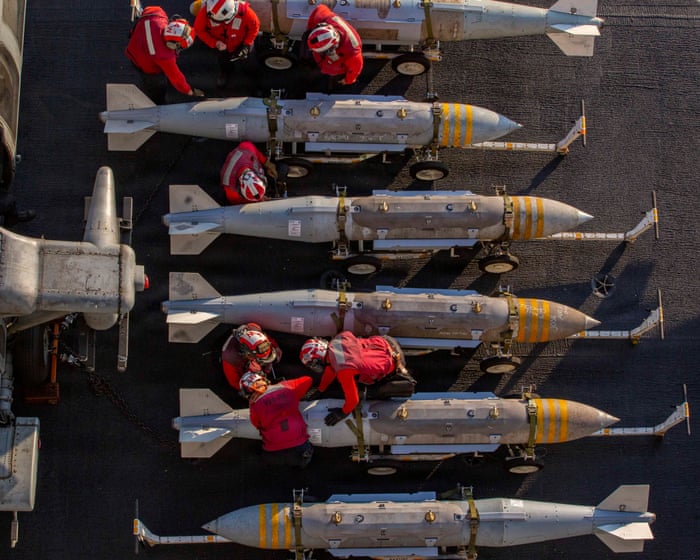
The Guardian reports, based on obtained documents and interviews with navy officials, contractors and defense analysts, that the US Navy has transferred internal funds — including from payroll and other internal accounts — to cover combat costs tied to US operations against Iran. The article says US munitions stockpiles have been depleted and that retaliatory Iranian strikes have damaged bases across the Middle East. Experts and former officials quoted in the piece warn that accounts are running dry and that funding a prolonged conflict with no clear endgame is the central budgetary challenge. The supplied package does not include the underlying documents, specific dollar figures, named official confirmations from the Department of Defense or the Navy, or alternate-source corroboration.
Source and Framing Analysis
Source: The Guardian (investigative/critical framing). Strengths: The story is presented as an exclusive based on obtained documents and interviews, which indicates reporting that may reveal internal problems. The reporting highlights matters of public interest (budgetary transfers, munitions levels, readiness). Limitations and uncertainties: the excerpted material lacks the underlying documentary evidence, specific amounts, dates, and named sources; it does not include official Department of Defense or Navy responses in the supplied text. Framing: the headline and story frame the situation as a crisis and link responsibility to a policy context described as 'Trump’s war on Iran.' That attribution is interpretive and may conflate policy choices, operational command decisions, allied actions, and other causes. Implication: the claims are potentially consequential (legal, readiness, personnel impacts) and warrant follow-up reporting, documentary release or oversight responses before treating scope and specifics as settled fact.
How sources covered this story
Sanctuary separately assesses reporting quality and alignment with Christian virtues. The virtues assessment considers truthfulness, dignity, compassion, justice, peacemaking, humility, and care for vulnerable people. It does not assess a publisher's faith or reward religious language.
Compare 1 reports
Reporting 75/100Virtues 78/100
- Distinctive contribution
- Asserts that the Navy is transferring money from payroll and other internal accounts to finance combat operations; ties fiscal strain explicitly to an ongoing US–Israeli operation that has depleted munitions and to Iranian strikes that have damaged strategic bases. Frames funding a war with 'no clear endgame' as the main budgetary challenge.
- Framing
- Investigative/critical: presents an 'exclusive' finding, attributes claims to documents and interviews, and frames the situation as a severe financial crisis caused by a specific policy (Trump's war on Iran). Language is urgent and critical ('severe financial crisis', 'forced to transfer', 'wrecked strategic bases').
- Omissions or uncertainty
- The excerpt provides no specific figures, dates, documentary excerpts, named sources, or official responses. It does not specify which payroll accounts were tapped, the scale or duration of transfers, which bases were 'wrecked', or the nature/corroboration of the cited documents. It also doesn't show counter-evidence or alternative explanations.
- Why these scores
- The passage asserts consequential claims and explicitly cites documents and interviews, which implies journalistic sourcing and investigation. However, the excerpt lacks concrete data, named sources, or documentary detail that would allow independent evaluation. The tone is strongly critical but does attribute claims rather than presenting them as unquestioned fact; overall this is a solid investigative lead but too brief here to be rated higher. The excerpt raises concerns about public stewardship of resources, accountability, and the human costs of conflict—issues aligned with care for the vulnerable and justice. It attributes its claims to sources, avoiding overtly dehumanizing language. The critical framing is robust but not gratuitously sensational in the excerpt; however, absence of nuance or responses lowers the score slightly.
Biblical Reflection
Christians should hold together truth and mercy: insist on honest, transparent accounting about the costs of military action while also praying and acting to protect those harmed. Scripture calls for prudence in counting costs and for peacemaking; fiscally and morally, leaders should weigh how prolonged conflict affects service members, families, and civilians. Advocacy for oversight, care for military households, and persistent pursuit of diplomatic avenues are expressions of neighbor-love. At the same time, avoid letting partisan loyalties eclipse careful assessment of facts or compassion for those bearing the burden.
Scripture in context
- 1Luke 14:28–30 — A biblical teaching about prudence and counting the cost before undertaking a major project. — Leaders and citizens should weigh the human and material costs of extended military commitments; fiscal planning and honest public accounting matter morally because they affect lives and livelihoods.
- 2Matthew 5:9 — A teaching that values those who pursue peace and reconciliation. — Christians are called to press for policies and actions that reduce harm, pursue diplomatic options, and prioritize the protection of civilians and service members over glorifying conflict.
Faithful Response
Pray regularly for national leaders, service members, families, and civilians affected by the conflict.
Seek reliable information: request that elected representatives publish or make available the documents and specific figures the article cites, and ask the Department of Defense for a public accounting or response to the claims.
Support ministries and organizations that provide care for military families, veterans, and contractors who may be affected by budget reallocations.
Advocate for congressional oversight, transparent reporting of transfers between accounts, and clear statements about munitions inventories and readiness impacts.
Encourage and model peacemaking: press for diplomatic avenues, clarification of objectives, and policies that minimize harm and prioritize de-escalation where possible.
Resist partisan simplification: hold both government and media accountable for clarity and truth while maintaining pastoral concern for those who serve.
Reflection and Discussion
- 1Where do I see prudence and stewardship missing in this report, and how should that shape my conversations with neighbors and leaders?
- 2How can Christians call for both accountability and mercy when policies harm service members and civilians?
- 3Am I letting partisan loyalty shape my judgment about whether the article’s claims are fully established?
- 4What concrete steps can my congregation take to support affected service members and to ask elected officials for transparent answers?
Sources
Reporting links are evidence inputs; Sanctuary News' biblical reflection is commentary.
This outlook currently relies on fewer than two linked sources. Broaden verification before teaching from it.
- 1.Trump’s war on Iran is rapidly draining US navy budget, documents and interviews revealprimary_reporting