News Summary
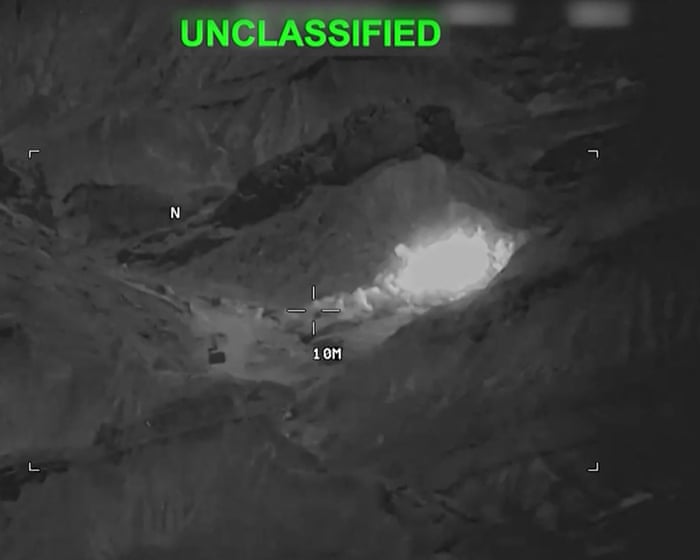
Reported facts: The Guardian reports the US military identified Sgt Angel S Rampersad, 28, as a third service member believed killed in a Friday attack on a base in Jordan; two other service members were also killed in that attack. The article states the identification brings the U.S. death toll to 18 service members since the start of the Iran war. Attributions and uncertainty: The phrase "believed to be dead" signals incomplete confirmation; the article does not provide independent corroboration or operational details about how or by whom the attack was carried out. Uncertainty remains about precise circumstances, motives, and confirmation procedure.
Source and Framing Analysis
Material uncertainties: the article contains minimal operational detail and uses cautious language about the newest casualty, indicating reliance on official U.S. military communications without further corroboration. Framing: the piece centers U.S. military casualties and names an individual, which personalizes loss but provides little contextual information about the attack's provenance or broader battlefield dynamics. The absence of corroborating sources or explanatory context (e.g., how the attack occurred, evidence of Iranian responsibility) is consequential for readers trying to assess escalation risk and accountability.
Biblical Reflection
This report foregrounds the human cost of armed conflict by naming an individual life lost and counting fallen service members. From a Christian perspective, the immediate pastoral response is grief and prayer for the deceased, their family, and comrades. The coverage is factual but sparse—its language shows the indicators of uncertainty where appropriate ("believed to be dead"). Christians should receive such reporting with sorrow, resisting any rush to retribution or dehumanization, and holding leaders accountable to pursue truth, proportionality, and avenues for de-escalation.
The article's framing centers U.S. casualties and therefore naturally draws the American reader’s sympathy; that focus is not wrong, but it is partial. A Christian outlook seeks both to mourn these specific losses and to widen the circle of compassion to all who suffer in the same conflict, including civilians and foreign combatants. Truth-seeking requires noting what the article does not say—details about how the attack occurred, independent confirmation of responsibility, and wider context for the escalation—so that Christians avoid forming judgments on incomplete information.
Finally, Christian discipleship calls for practical mercy: pray and lament; support bereaved families materially and emotionally; press for transparency and peaceful conflict resolution; and resist narratives that treat human lives as mere statistics. Holding those commitments models courage tempered by humility and love for neighbor even amid the fog of war.
Scripture in context
- 1Psalm 34:18 — In its original context Psalm 34 is a song of deliverance and trust; the verse about God's nearness to the brokenhearted speaks from the perspective of one who has experienced distress and seen God’s care. — This passage reassures Christians that God is close to those who mourn, offering a theological basis for pastoral care, lament, and presence with grieving families rather than quick politicized responses.
- 2Matthew 5:4 — Part of the Sermon on the Mount, this saying addresses those who are mourning and promises comfort as part of Jesus’ radical ethic of suffering and reversal. — It invites believers to hold sorrow openly, to comfort others, and to let mournfulness shape responses that prioritize mercy and reconciliation over vindictiveness.
Faithful Response
Pray and lament explicitly for the named service member, their family, and all who suffer in the conflict.
Provide concrete support for military families (meals, offers of babysitting, financial help, funeral assistance through established charities).
Seek reliable information before forming public judgments; press political leaders for transparent facts and proportionate responses.
Advocate for and support diplomatic, humanitarian, and de-escalatory measures that prioritize civilian protection and seek to limit further loss of life.
Reflection and Discussion
- 1When news names a single person among many casualties, how does that personalization help or limit our compassion for all who suffer?
- 2How should Christians balance calls for justice and legitimate security needs with the imperative to pursue peace and protect civilians?
- 3What role should the church play in pressing for truth, supporting the bereaved, and advocating for de-escalation in this conflict?
Sources
Reporting links are evidence inputs; Sanctuary News' biblical reflection is commentary.
This outlook currently relies on fewer than two linked sources. Broaden verification before teaching from it.
- 1.US military identifies third service member killed in Iranian attack on Jordan baseprimary_reporting