News Summary
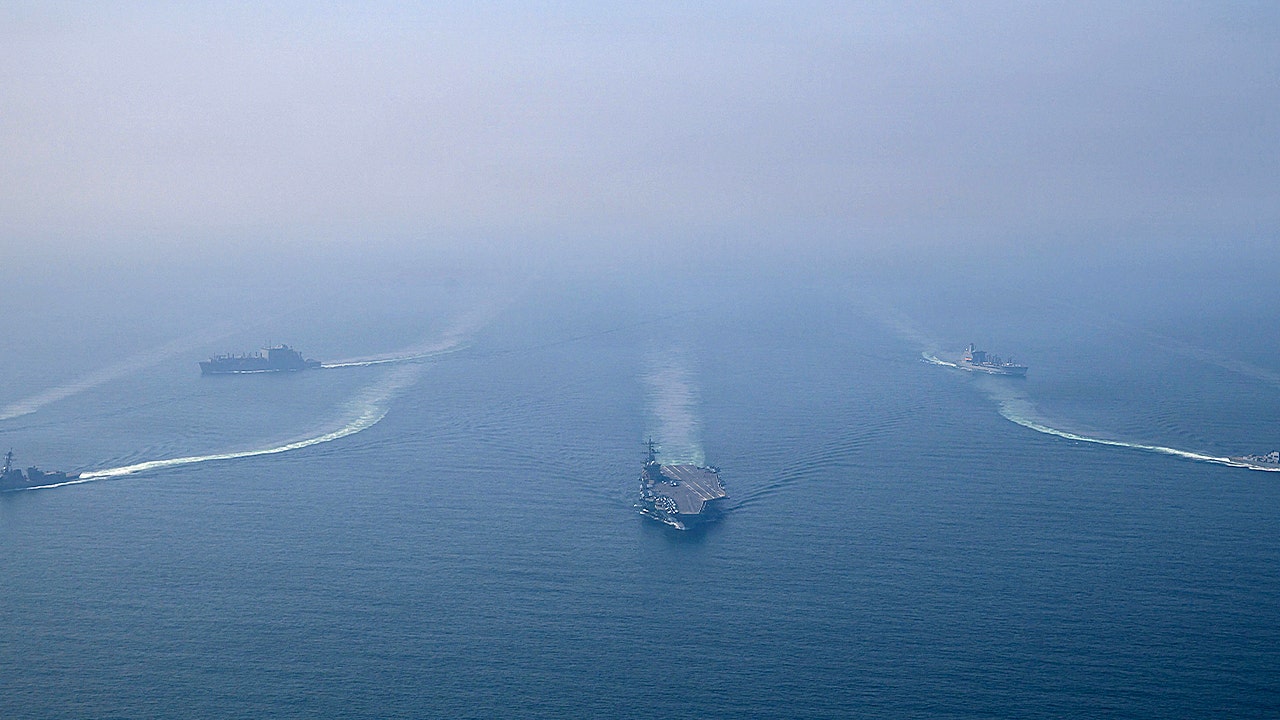
This article details the recent buildup of U.S. military assets in the Middle East, as described by Dana Stroul, a former Pentagon official and current research director at The Washington Institute for Near East Policy. The U.S. has positioned itself for a potentially 'highly kinetic' (i.e., intense and active) military campaign against Iran, in the context of ongoing indirect nuclear talks between Washington and Tehran, with Oman acting as a mediator. The buildup includes multiple aircraft carriers, guided-missile destroyers, fighter aircraft, and enhanced air defense systems. Stroul claims that the U.S. military force far outmatches Iran's, especially after recent conflicts which have weakened Iran's network of regional proxies. The article notes that the readiness of U.S. forces is not in question, but any action depends on political decisions by President Trump. The situation remains tense as Iran balances diplomatic negotiations with military posturing, and while the U.S. signals deterrence through its force projection.
Biblical Reflection
From a biblical perspective, this situation is a sobering reminder of the brokenness of our world and the ever-present temptation to rely on might and military power rather than seeking genuine peace and reconciliation. The Bible consistently calls God's people to pursue peace (Romans 12:18; Matthew 5:9) and warns against placing ultimate trust in 'horses and chariots'—symbols of military strength (Psalm 20:7). While governments are tasked with protecting their people and maintaining order (Romans 13:1-4), the escalation of military force as a means of deterrence or leverage should be weighed against Christ's call to love enemies and seek the welfare even of adversaries (Matthew 5:43-48). Christians are called to pray for leaders (1 Timothy 2:1-2), for wisdom, and for the softening of hearts on all sides to avoid war and its tragic consequences. Trusting in overwhelming lethal force as the ultimate solution stands in tension with the biblical vision of shalom—peace, justice, and wholeness. This news invites believers to lament the threat of violence, to intercede for peacemakers, and to examine where their own hope is ultimately placed.
Scripture in context
This outlook does not yet include contextual Scripture citations. Do not treat a general biblical theme as an exegetical conclusion.
Faithful Response
No prescribed response is offered. Consider the reflection prompts below in your own church context.
Reflection and Discussion
- 1Where do I place my trust when I hear about threats of war and military might—do I look to human power or to God?
- 2How can I actively pray for peace and for the leaders involved in these tense situations?
- 3In what ways does my faith call me to respond differently to news of conflict compared to the world around me?
Sources
Reporting links are evidence inputs; Sanctuary News' biblical reflection is commentary.
This outlook currently relies on fewer than two linked sources. Broaden verification before teaching from it.
- 1.Original reportprimary