News Summary
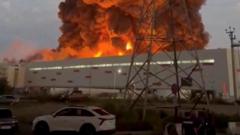
Reported facts: BBC reports Ukrainian drones hit multiple Wildberries retail warehouses over several days. Attributed claims: the strikes have put Russia's businesses 'under strain' — an interpretation presented by the article. Uncertainty: the report does not provide detailed counts of strikes, the extent of damage, casualties, or independent confirmations from Wildberries or Russian authorities.
Source and Framing Analysis
The BBC piece supplies a concise factual claim (drone strikes on Wildberries warehouses) but uses economical framing ('under strain') that elevates interpretive judgment about economic consequences without detailed evidence in the article text. Material uncertainties that affect interpretation include the number and timing of strikes, the scale of physical damage, whether civilian workers were harmed, and confirmations from affected companies or officials.
Biblical Reflection
This report points to a focused tactical campaign that is affecting commercial infrastructure rather than only military targets. As Christians seeking truth, we should note the factual claim (warehouse strikes) separately from the evaluative language (‘‘under strain’’), which interprets consequences beyond the single fact. Violence that intersects with civilian commerce harms livelihoods, disrupts ordinary life, and creates economic ripple effects for workers, suppliers, and customers.
Biblical discipleship calls Christians to pursue truth and to respond to suffering with mercy. That means not cheering harm to civilian infrastructure even when harms arise in wartime contexts, and it also means recognizing legitimate security concerns where combatants use dual-use facilities. Our response should combine careful discernment, concern for the vulnerable whose work and food supply chains are disrupted, and prayer for justice and paths toward lasting peace.
Practically, Christians should resist simplifications that dehumanize either side, seek reliable information before concluding broader strategic outcomes, and prioritize help for those materially affected — workers, families, and communities dependent on disrupted supply chains. In congregational life, this is a moment to teach how Christian love, humility, and peacemaking shape how we interpret and respond to conflict news.
Scripture in context
- 1Matthew 5:9 — Part of the Sermon on the Mount, where Jesus teaches about the character of those who belong to God's kingdom and the call to live differently amid conflict and injustice. — This passage calls Christians to value peacemaking; applied here it urges believers to pursue reconciliation, compassionate ministry to those harmed by conflict, and careful discernment before endorsing actions that harm civilians or livelihoods.
Faithful Response
Pray specifically for those directly affected — workers, families, and local communities — and for wisdom for leaders on all sides.
Seek further reliable information before forming public judgments; distinguish reported facts from interpretation.
Support practical relief for affected civilians (local charities, trusted international relief agencies) rather than amplifying partisan rhetoric.
Practice measured speech: avoid dehumanizing language about people on any side and model Christian compassion in conversations and social media.
Reflection and Discussion
- 1How does Scripture shape the way I name and respond to harm that affects civilians and their livelihoods?
- 2In what practical ways can my congregation offer mercy that does not depend on political allegiance?
- 3Am I quick to adopt interpretive language (like 'under strain') as fact, and how can I cultivate a habit of careful discernment?
Sources
Reporting links are evidence inputs; Sanctuary News' biblical reflection is commentary.
This outlook currently relies on fewer than two linked sources. Broaden verification before teaching from it.
- 1.Russia's businesses under strain from Ukraine's attacks on Wildberriesprimary_reporting