News Summary
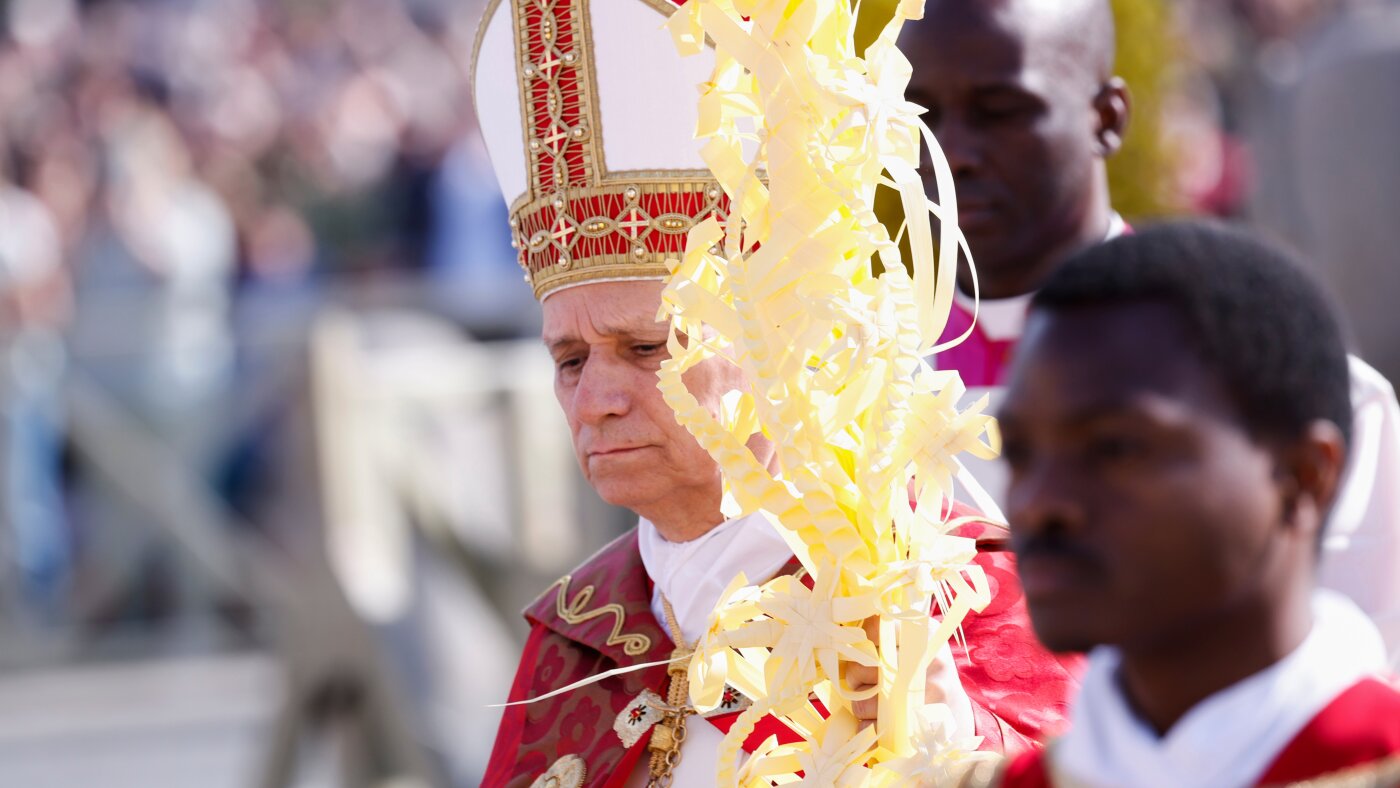
Pope Leo XIV presided over Palm Sunday Mass in St. Peter's Square on March 29, 2026. In his homily he said God is the "king of peace," rejected claims that God can be used to justify war, and stated that God "does not listen to the prayers of those who wage war, but rejects them." The pope prayed particularly for Christians in the Middle East suffering the effects of an "atrocious conflict" and noted that some cannot fully observe Holy Week rites. The story notes the wider context of ongoing conflicts including a U.S.-Israeli war on Iran entering its second month and Russia's campaign in Ukraine, and it cites examples of leaders and churches who have invoked religious language to justify military action (mentioning U.S. Defense Secretary Pete Hegseth and the Russian Orthodox Church). The Latin Patriarchate said Jerusalem police prevented top Catholic leaders from entering the Church of the Holy Sepulchre for Palm Sunday, a first in centuries. The article also outlines Pope Leo XIV's Holy Week schedule and contrasts his liturgical approach with that of the late Pope Francis, including the return of the Holy Thursday foot-washing ceremony to the basilica of St. John Lateran.
Biblical Reflection
The pope's message foregrounds a core Christian claim: Jesus is portrayed in Scripture as the Prince of Peace, and invoking God to justify violence distorts that witness. The homily functions as pastoral and prophetic speech—comforting the afflicted, calling for reconciliation, and cautioning believers and leaders against sacralizing war. From a biblical standpoint the statement aligns with passages that call for peacemaking and condemn unjust violence (e.g., Matthew 5:9, Isaiah 2:4). At the same time, Christians should note historical theological nuance: Christian tradition includes debates about legitimate defense and the 'just war' concept, so a public rejection of using God as a warrant for war is not necessarily the same as settling all moral questions about state violence. Regarding media framing, the article ties the pope's words to specific contemporary conflicts and to examples of political and religious leaders invoking faith to justify force. That linkage is factual reporting, but readers should be aware that naming particular actors or labeling conflicts in certain ways can shape moral impressions and assign responsibility beyond the pope's pastoral point. The faithful response implied by the article is prayer for victims, prophetic critique of claims that God sanctions violence, and practical concern for persecuted communities. Christians should hold both to truth—speaking against the misuse of religion—and to charity—caring for those harmed by war.
Scripture in context
This outlook does not yet include contextual Scripture citations. Do not treat a general biblical theme as an exegetical conclusion.
Faithful Response
No prescribed response is offered. Consider the reflection prompts below in your own church context.
Reflection and Discussion
- 1How does the article’s language (which conflicts and which leaders it highlights) shape who we see as responsible or justified—are any theological claims being used to excuse political actions?
- 2When public figures invoke faith in relation to war, what criteria should Christians use to discern whether that invocation aligns with the gospel or is a misuse of religion?
- 3Does the story prompt us to see the pope primarily as a pastoral voice calling for care of the suffering, or as a political actor—how should that role shape our response to his statements?
Sources
Reporting links are evidence inputs; Sanctuary News' biblical reflection is commentary.
This outlook currently relies on fewer than two linked sources. Broaden verification before teaching from it.
- 1.Original reportprimary