News Summary
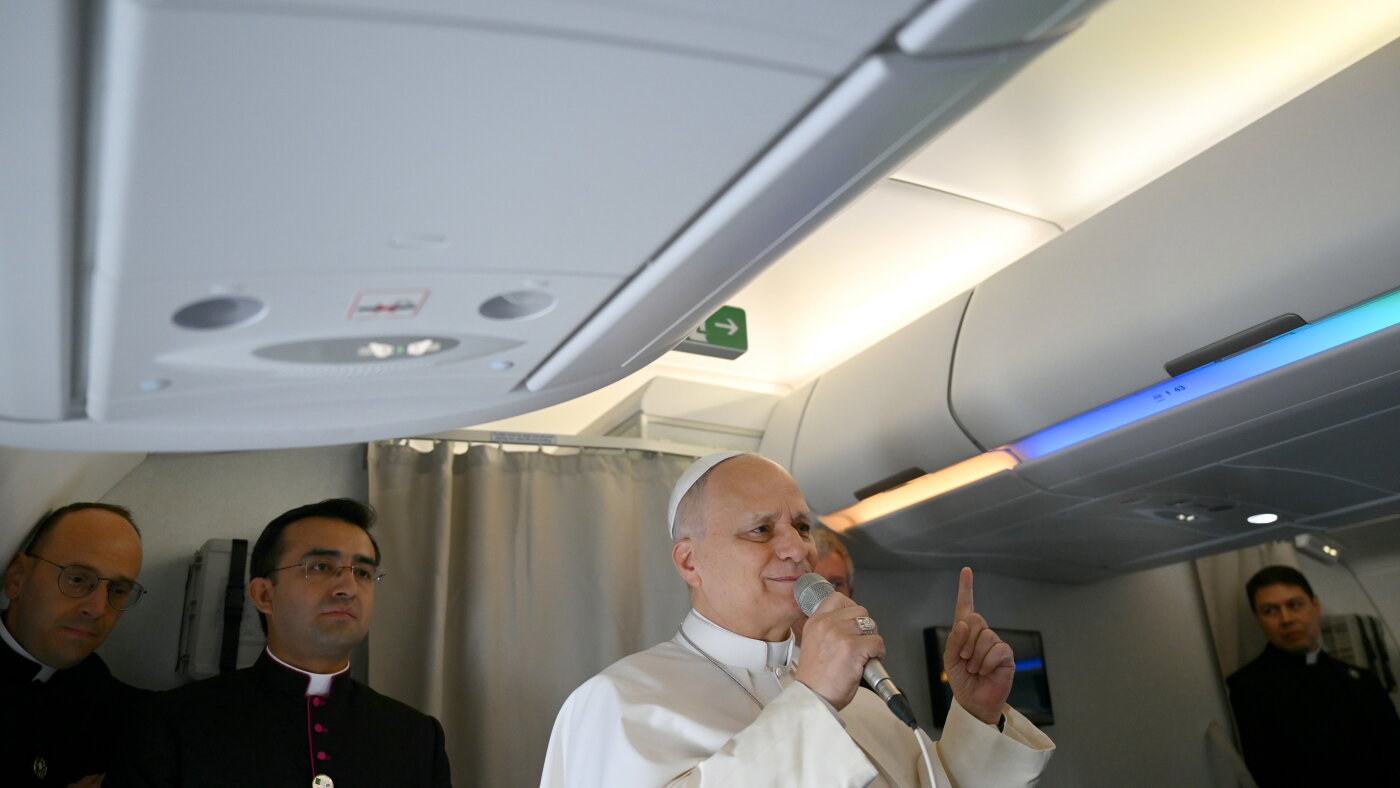
Pope Leo XIV, the first U.S.-born pope, responded to sharp public criticism from President Donald Trump regarding the U.S.-Israel war in Iran. Speaking aboard the papal plane en route to Algeria, the pope said his calls for peace and reconciliation are rooted in the Gospel and not intended as personal attacks; he also said he does not fear the Trump administration. The pope has warned against a “delusion of omnipotence” he says is fueling the Iran conflict and described threats of mass strikes as “truly unacceptable.” Trump, returning to Washington from Florida, posted on social media and spoke to reporters criticizing the pope as “very liberal,” “weak on crime,” and accused him of “catering to the Radical Left.” Trump also accused the pope of implicitly supporting Iran’s acquisition of nuclear weapons, a claim not substantiated in the pope’s statements. Trump posted an image with religious imagery portraying himself in a saint-like pose. The exchange follows the start of a fragile ceasefire and face-to-face negotiations between U.S. and Iranian representatives in Pakistan. Archbishop Paul S. Coakley of the U.S. Conference of Catholic Bishops criticized Trump’s remarks, calling them disheartening. The article notes that Trump won a majority of Catholic voters in 2024 and that some U.S. officials have used explicitly religious language in support of the war.
Biblical Reflection
From a Christian perspective, the pope’s public calls for peace reflect a long-standing biblical witness that values reconciliation and cautions against prideful uses of power. As the pope framed his remarks in Gospel terms — invoking peacemaking and warning against a ‘delusion of omnipotence’ — he was speaking in a prophetic, moral register rather than offering a policy manual. President Trump’s response mixes political critique with religious rhetoric and symbolic imagery. Christians should notice two temptations on display: (1) to weaponize religious language to justify political or military objectives, and (2) to treat religious leaders as partisan rivals rather than moral interlocutors. The article itself reports the exchange without obvious editorializing, but readers must still weigh claims (for example, Trump’s assertion that the pope favors Iran having nuclear weapons) against actual statements and evidence. Biblically, authority to call for peace and to challenge injustice rests with both church and state, but their roles differ; the church’s prophetic voice is meant to remind all leaders of God’s standards of justice, mercy, and humility (Micah 6:8, Matthew 5–7). Christians should also be wary of conflating national identity with Christian identity: patriotic impulse is not identical to faithfulness to Christ. Finally, when political actors employ religious motifs or claim divine endorsement, Christians should evaluate those claims against scripture, the fruit of actions, and the clear teachings of Christ on love, humility, and the protection of the vulnerable.
Scripture in context
This outlook does not yet include contextual Scripture citations. Do not treat a general biblical theme as an exegetical conclusion.
Faithful Response
No prescribed response is offered. Consider the reflection prompts below in your own church context.
Reflection and Discussion
- 1When a religious leader offers moral critique of a government’s use of force, am I evaluating the critique on its biblical merits or through partisan filters?
- 2How do I discern between genuine prophetic warning and political posturing when leaders use religious language to justify war or policy?
- 3What indicators should I look for to determine whether a public figure’s religious imagery or rhetoric aligns with Christlike humility and care for the vulnerable?
Sources
Reporting links are evidence inputs; Sanctuary News' biblical reflection is commentary.
This outlook currently relies on fewer than two linked sources. Broaden verification before teaching from it.
- 1.Original reportprimary