News Summary
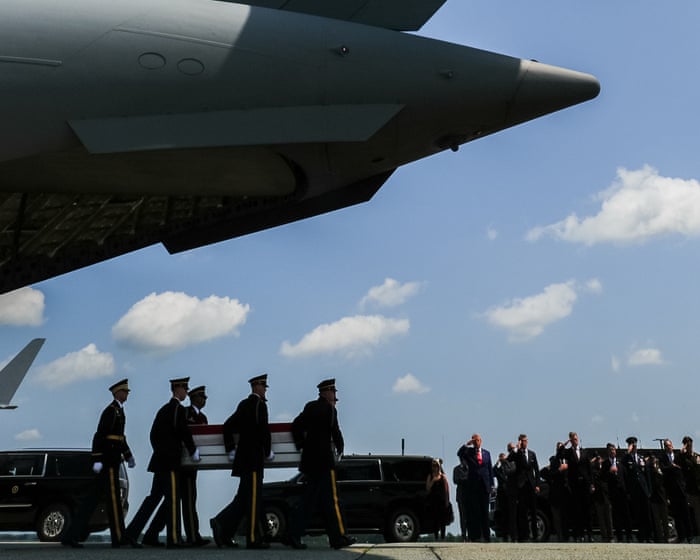
Reported facts: The Guardian reports the Pentagon updated the Defense Casualty Analysis System over a weekend, adding more than 140 wounded and creating a new "Overseas Operations" casualty category effective July 7; the update lists Operation Epic Fury as having 14 killed and more than 400 wounded. Attributed claims: The article states the figures are a source of dispute and references a recent Pentagon reduction in previously recorded troop casualties. Uncertainty: The article does not include a Department of Defense statement explaining the changes, nor does it provide a detailed breakdown of how the totals were calculated or reconciled with earlier reductions.
Source and Framing Analysis
Material uncertainties that affect interpretation include why the DCAS totals changed, what events the new "Overseas Operations" category covers, and whether the update reflects new reporting, reclassification, or correction of prior errors. The article frames the update as "quiet," which suggests an editorial judgment about transparency; that phrasing is consequential because it invites readers to infer secrecy rather than administrative data reconciliation. The Guardian is a reputable outlet, but this single report does not include official DoD comment or independent confirmation of the totals.
Biblical Reflection
Christians should receive this news with a desire for truth, compassion for those harmed, and sober attention to how information shapes public judgment. Accurate casualty reporting matters morally because it affects grieving families, public accountability, and our communal ability to respond with care. When official figures shift, prudence calls us to insist on clear explanations rather than assume bad faith, while still holding leaders accountable to transparency and the protection of those they send into harm's way.
The grieving and wounded are the primary human reality behind numbers; Christian wisdom calls us to center their needs for care and to resist allowing statistics to become abstractions. At the same time, Scripture affirms just oversight of rulers and careful stewardship of life—expectations that justify civic scrutiny of how and why casualty records change. Pray for the injured, the families of the dead, military chaplains and caregivers, and for leaders to act with honesty, humility, and a commitment to minimizing further harm.
Scripture in context
- 1Romans 13:1-7 — Paul's letter to the Romans instructs Christians to respect governing authorities as instituted by God, while also recognizing that governments bear responsibility to maintain order and justice. — The passage supports a posture of responsible civic engagement: Christians should pray for and respect lawful authority but also call for accountability and just administration when public welfare or truth is at stake.
- 2Psalm 34 (selection) — Psalm 34 expresses trust in God’s care for the broken and the fearful, offering consolation to those who suffer. — This psalm grounds pastoral care: when casualty figures represent real suffering, Christians are called to comfort the afflicted and to offer practical support, trusting God's nearness to the grieving.
Faithful Response
Pray for the wounded, the bereaved, caregivers, and decision-makers — naming people rather than treating statistics as abstractions.
Offer practical support to veterans and military families in your congregation or community (meals, visits, referrals to counseling and VA resources).
Seek verified information before forming strong public judgments; when necessary, ask elected representatives for clarification and accountability on behalf of affected neighbors.
Practice charitable listening: avoid quick partisan assumptions and prioritize the human costs behind the data.
Reflection and Discussion
- 1Are we centering the human cost behind casualty figures or letting statistics drive our emotional and political responses?
- 2How does Scripture shape our expectation for leaders to be transparent and accountable in matters of life and death?
- 3In what ways should the church be a place of consolation and practical help for those affected by war-related injuries and deaths?
Sources
Reporting links are evidence inputs; Sanctuary News' biblical reflection is commentary.
This outlook currently relies on fewer than two linked sources. Broaden verification before teaching from it.
- 1.Pentagon reports more than 600 Iran war casualties in quiet database updateprimary_reporting