News Summary
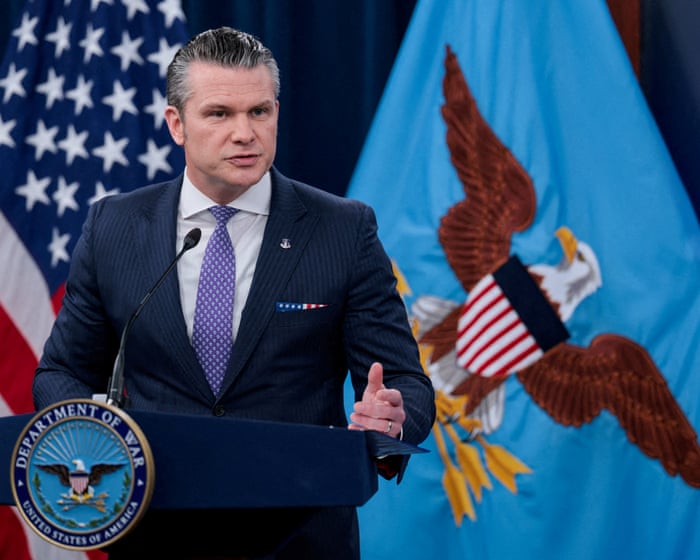
Reported facts: The Guardian states the Trump administration requested an $87.6 billion Pentagon supplemental appropriation; $67.1 billion is reported as earmarked to sustain the ongoing war effort. Defense Secretary Pete Hegseth and the chair of the Joint Chiefs, Gen. Dan Caine, testified before the Senate Appropriations Committee chaired by Sen. Susan Collins, and the Pentagon said it was running low on cash. Attributed claims: The article reports senators' anger that the US-Israel war on Iran is costing more than the White House had acknowledged. Uncertainty: The Guardian article is the single supplied source and does not include supporting budget documents, detailed Pentagon financial statements, or independent confirmation of the precise budget shortfall or operational forecasts.
Source and Framing Analysis
The Guardian piece frames the request as part of an active U.S.-Israel military campaign involving Iran and emphasizes congressional anger and a reported Pentagon cash shortfall. That framing highlights political tension and fiscal urgency but rests on one news report and testimony at a hearing; it does not supply underlying budget documents or independent verification of the exact causes of the shortfall. The characterization of the conflict as a "US-Israel war on Iran" is a strong label reflecting the article's perspective and participant statements rather than a neutral, legally defined status; readers should note that diplomatic and operational descriptions can vary between sources.
Biblical Reflection
This story describes a high-stakes budget request that has clear moral and practical implications. From a Christian perspective, questions of truth-telling, stewardship, the protection of innocent life, and the care of those who serve in harm’s way should guide how believers read this report. Large military expenditures and ongoing conflict demand sober discernment: Christians should insist on honest accounting from leaders, transparent oversight, and serious efforts at de-escalation whenever possible.
The article frames the funding as necessary to continue military operations while also highlighting congressional frustration about cost and transparency. That tension—between the claim of necessity and the demand for truthful reporting and prudent stewardship—is where pastoral concern should land. Seekers of Christian wisdom should not rush to partisan conclusions; rather, they should press for facts, advocate for noncombatant protections, support those wounded or displaced by conflict, and pray for peacemakers.
Finally, Christians should remember that fiscal decisions about war have human consequences: lives lost, families broken, and resources diverted from civilian needs. Faithful discipleship calls for both realism about threats and an active pursuit of peace, justice, and mercy toward all affected.
Scripture in context
- 1Matthew 5:9 (peacemaking) and Romans 13 (government and conscience) — Matthew 5:9 appears in the Sermon on the Mount, where Jesus blesses those who pursue peace and righteousness; Romans 13 addresses the New Testament teaching about the role of governing authorities and the conscience of citizens under civic power. — These passages together encourage Christians to pray and work for peace while also recognizing the legitimate role of authorities; they call believers to hold leaders to account in ways that pursue justice and mercy rather than partisanship or fear.
Faithful Response
Pray regularly for elected and military leaders for wisdom, transparency, and restraint.
Seek verified information from multiple sources before forming firm conclusions and encourage your church to follow trustworthy reporting.
Advocate for oversight and care for service members — write to representatives asking for detailed accounting, protections for noncombatants, and support for veterans and civilians affected by the conflict.
Partner with or donate to reputable organizations providing humanitarian relief to civilians affected by the conflict.
Reflection and Discussion
- 1How does Scripture shape my willingness to press for transparency from leaders when public decisions involve life-and-death consequences?
- 2In what ways should concern for national security be balanced with the biblical call to pursue peace and prioritize the vulnerable?
- 3Where might my own political loyalties blind me to the human costs reported in this story?
Sources
Reporting links are evidence inputs; Sanctuary News' biblical reflection is commentary.
This outlook currently relies on fewer than two linked sources. Broaden verification before teaching from it.
- 1.Pete Hegseth faces questions over $87.6bn additional funding for Pentagonprimary_reporting