News Summary
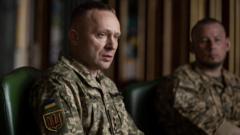
Reported fact: BBC states Mykhailo Drapatyi is Ukraine’s new commander-in-chief and that he is the third person to hold that role since Russia’s full‑scale invasion in February 2022. Attributed/uncertain elements: the supplied article text contains no detail about Drapatyi’s background, the reasons for the leadership change, the exact date of installation beyond the report, or reactions from Ukrainian political leaders or international partners. The broader consequences and motives are therefore not established by this report alone.
Source and Framing Analysis
The supplied article text is extremely short and purely declarative; it provides the key personnel fact but lacks context (biography, rationale, domestic or international reaction, and strategic implications). This absence creates material uncertainty: readers cannot assess whether the change signals a shift in strategy, a routine personnel rotation, political disputes, or other causes. The framing — a single-sentence announcement — prevents evaluation of motives or consequences and increases reliance on additional reporting.
Biblical Reflection
The appointment of a new military commander in an active war is a sober, consequential event. From a Christian perspective, leadership over armed forces carries heavy moral responsibility: decisions can save or cost lives, affect civilians, and shape a nation's future. The sparse reporting here does not allow confident judgment about Drapatyi’s intentions or competence, so Christians should avoid rushing to praise or condemn without fuller information.
Biblical priorities call for seeking truth, praying for those in authority, and caring for vulnerable neighbors caught in the conflict. That means praying for wisdom and restraint for military leaders, insisting on accountability and protection for civilians, and supporting humanitarian relief for those affected. We should resist narratives that dehumanize any group or sanitize violence; Christian discipleship requires both courage to oppose injustice and mercy toward those who suffer.
Practically, this change in Ukraine’s military leadership should prompt thoughtful attention rather than partisan cheerleading: monitor credible reporting for facts, advocate for policies and actions that minimize civilian harm, and sustain prayer and aid for the displaced and wounded. In uncertainty, humility and persistent prayer are more faithful responses than certainty or triumphalism.
Scripture in context
- 1Romans 13:1-7 — Paul addresses Christians under Roman rule about the role of governing authorities in maintaining order and the conscience-bound duty to submit insofar as civil responsibilities do not contradict God’s commands. The passage presumes delegated authority but is situated within early-Christian minority contexts. — This passage supports praying for those in authority and recognizing the role of government, while still requiring moral scrutiny of actions; Christians should pray for leaders’ wisdom and also expect leadership to be held accountable to justice.
- 2Matthew 5 (Beatitudes), verse on peacemakers — Part of the Sermon on the Mount, where Jesus describes the character of those blessed in the kingdom of God; peacemaking is commended as a kingdom virtue amid societal conflict. — Even amid war, Christians are called to value peacemaking, to care for victims, and to press for measures that reduce harm to noncombatants and pursue reconciliation where feasible.
Faithful Response
Pray specifically for the new commander, for Ukraine’s civilian population, and for negotiators and humanitarian workers.
Follow reputable, multiple-source reporting before forming firm opinions; avoid amplifying unverified claims.
Support practical aid for civilians: donate to vetted humanitarian organizations assisting displaced persons and wounded civilians.
Engage in prayerful advocacy that urges governments and militaries to protect noncombatants and respect the laws of war.
Reflection and Discussion
- 1How do Scripture’s calls to justice, mercy, and peacemaking shape our assessment of military leadership changes?
- 2What evidence would move you from uncertainty to action or advocacy concerning this leadership change?
- 3How can our community better support those harmed by the conflict while holding leaders to moral responsibility?
Sources
Reporting links are evidence inputs; Sanctuary News' biblical reflection is commentary.
This outlook currently relies on fewer than two linked sources. Broaden verification before teaching from it.
- 1.Who is Mykhailo Drapatyi, Ukraine's new commander-in-chief?primary_reporting