News Summary
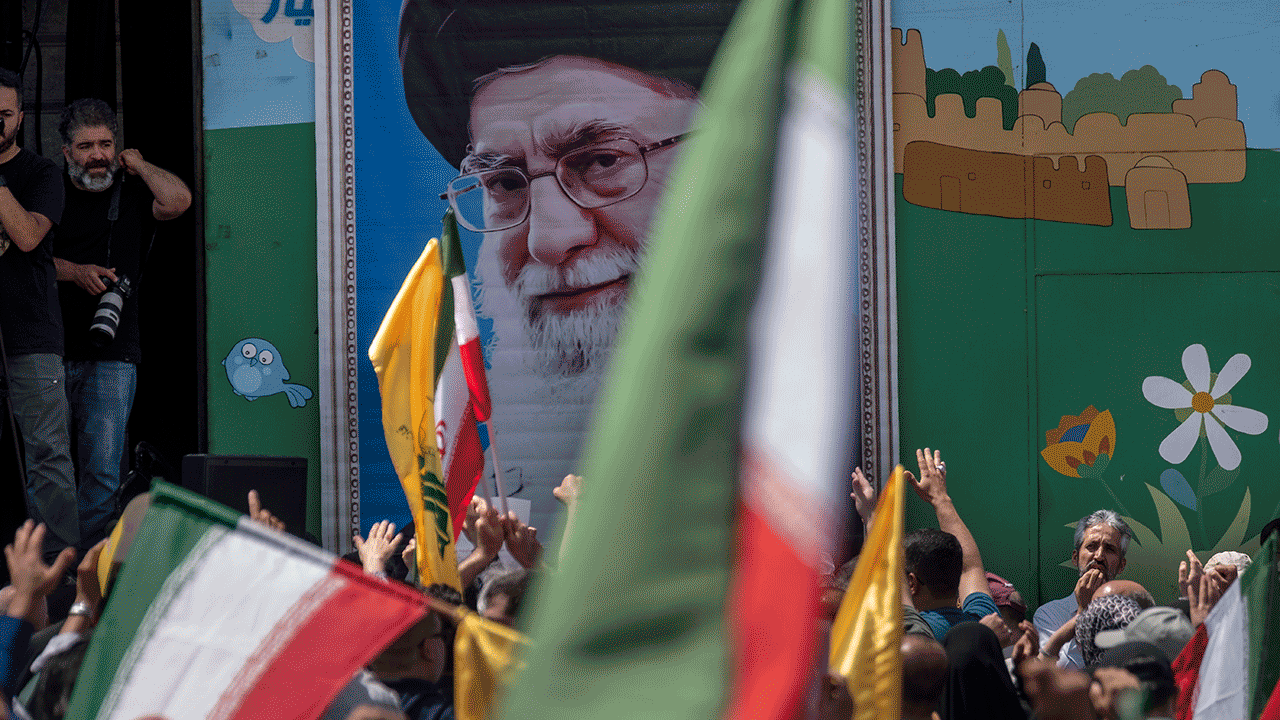
The article discusses a significant event in Iranian history: the reported killing of Iran’s Supreme Leader, Ayatollah Ali Khamenei, in an Israeli airstrike, and the subsequent reaction within Iran and among the Iranian diaspora. The author, an Iranian American journalist, describes the unprecedented scenes of celebration in Iran, where citizens are expressing hope and joy after decades of repression under the Islamic Republic. The article emphasizes the high cost that Iranians have paid for freedom and the unique nature of this moment, as people welcome military action as a path to liberation. It also underscores the Trump administration’s strategy, which focused on preventing Iran from acquiring nuclear weapons and combating its support for terrorism, rather than pursuing regime change for its own sake. The administration made clear that the future of Iran should be determined by its people, not by foreign occupation, and that America’s support will be moral and political. The article contrasts this approach to previous U.S. policies and highlights the resolve and unity of the Iranian people as they seek to reclaim their destiny.
Biblical Reflection
From a scriptural perspective, the article brings up complex themes of justice, liberation, and the cost of freedom. The joy of those celebrating the end of an oppressive regime is understandable, and Scripture calls us to 'proclaim liberty to the captives' (Isaiah 61:1). Yet, the means by which this liberation has come—military intervention and the death of a leader—raises serious questions about the use of violence, vengeance, and the pursuit of justice. The Bible does not shy away from the reality that earthly rulers can be oppressive (Ecclesiastes 4:1), and it affirms the longing for justice and freedom. However, Jesus teaches that true freedom comes not only from political change but from spiritual transformation (John 8:36). While the hope for a new era in Iran is worth celebrating, Christians are called to pray for peace and for the healing of wounds caused by decades of violence. We are reminded that God desires justice, mercy, and humility (Micah 6:8), and that the way of Christ is ultimately one of reconciliation and non-retaliation (Romans 12:17-21). The challenge is to support the cause of liberty without celebrating violence, and to pray for a future in Iran marked by justice, peace, and true freedom for all.
Scripture in context
This outlook does not yet include contextual Scripture citations. Do not treat a general biblical theme as an exegetical conclusion.
Faithful Response
No prescribed response is offered. Consider the reflection prompts below in your own church context.
Reflection and Discussion
- 1How do I reconcile the longing for justice and freedom with Jesus’ call to love our enemies and pursue peace?
- 2What role should Christians play in responding to international events marked by violence and political upheaval?
- 3How can I pray for both justice and healing for nations emerging from long periods of oppression?
Sources
Reporting links are evidence inputs; Sanctuary News' biblical reflection is commentary.
This outlook currently relies on fewer than two linked sources. Broaden verification before teaching from it.
- 1.Original reportprimary