A little more detail
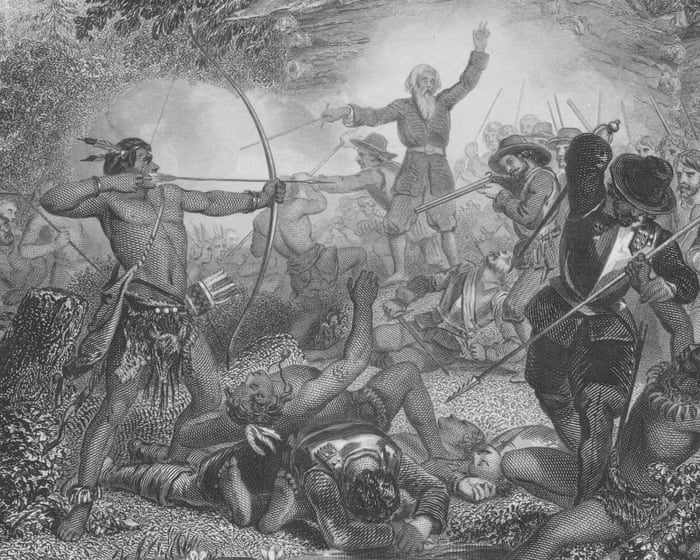
Commemorative coverage recalls the 1675–1676 conflict led by Metacom (King Philip) between an alliance of Indigenous tribes and English colonists in New England, noting its causes in land loss and cultural intrusion. The reporting highlights the 350th anniversary of the war, centers Indigenous experience and loss, and cites casualty estimates that many accounts present as making it among the deadliest per capita conflicts in early New England history.
Source and Framing Analysis
The primary source in this cluster (The Guardian) is a commemorative, interpretive piece that foregrounds Indigenous perspectives and public memory. It frames the story as corrective to dominant Revolutionary-era remembrance in New England, emphasizes Indigenous suffering and loss, and cites casualty estimates and a comparative claim that the war was the deadliest per capita in colonial/U.S. history. The article supplies useful context (dates, leader identity, anniversary) but does not provide detailed primary-source citations or scholarly methodological backing for the casualty figures and the comparative ranking. The piece's aim is memorial and reflective rather than a methodological historical study; as it notes, material uncertainty remains around precise death tolls, comparative metrics, and the full variety of historical interpretations. Readers and congregations should treat the reporting as an invitation to deeper study and to centering Indigenous testimony rather than as an exhaustive academic account.
How sources covered this story
Sanctuary separately assesses reporting quality and alignment with Christian virtues. The virtues assessment considers truthfulness, dignity, compassion, justice, peacemaking, humility, and care for vulnerable people. It does not assess a publisher's faith or reward religious language.
Compare 1 reports
Reporting 72/100Virtues 78/100
- Distinctive contribution
- States the 350th anniversary, asserts the war was the bloodiest per capita in colonial/U.S. history, contrasts Massachusetts’ Revolutionary memory with relative neglect of King Philip’s War, and names Metacom as a Pokanoket leader.
- Framing
- The excerpt frames the topic as an overlooked, painful chapter of New England history deserving remembrance—contrasting state pride in Revolutionary memory with relative inattention to an earlier Indigenous catastrophe. It conveys a corrective/commemorative angle.
- Omissions or uncertainty
- No casualty figures, geographic scope, dates, primary-source citations, or evidence supporting the 'bloodiest per capita' claim are provided in the excerpt. The excerpt does not include Indigenous voices, specific examples of commemoration, or methodological sourcing for comparative claims. It is a short lead that signals themes but lacks supporting detail.
- Why these scores
- As a brief excerpt/lead, it effectively signals a story angle and supplies a few clear factual claims. It is concise and topical. However, the key comparative claim ('bloodiest per capita') is asserted without quantification or attribution in the supplied text, and the excerpt lacks supporting details or sourcing. For a short remembrance piece this is adequate but not fully thorough. The excerpt treats a marginalized historical tragedy as worthy of attention, which aligns with virtues of truth-telling, dignity, and care for the historically vulnerable. It respectfully names Indigenous leadership and highlights neglect in public memory. Because the supplied text is short and does not include explicit restorative or justice-oriented language or direct Indigenous perspectives, it does not score in the highest tier but demonstrates considerate, non-dehumanizing reporting.
Biblical Reflection
Remembering King Philip’s War should unsettle easy nostalgia about national origins and compel Christians toward truth-telling, lament, and acts of neighborly restoration. The Gospel calls communities to pursue peace, mercy, and justice while honoring the dignity of those harmed. Commemoration that centers Indigenous loss invites believers to mourn honestly, confess where communities have benefited from past wrongs, listen to Indigenous voices, and take concrete steps to support remembrance, education, and restoration for descendants of the affected peoples.
Scripture in context
- 1 — Part of the Sermon on the Mount, where Jesus lists characteristics of those blessed in the Kingdom and calls his followers toward peacemaking amid social disruption. — This passage invites Christians to pursue peace and reconciliation while seeking justice; remembering violent history should aim toward healing rather than triumphalism.
- 2 — Paul instructs the early Christian community to avoid repaying evil with evil and to overcome wrongdoing with good, within a call to love enemies where feasible. — When confronting historical injustices, Christians are called to refuse vengeance and instead work toward restoration and protections for vulnerable neighbors.
Faithful Response
Learn from trustworthy historical accounts and from Indigenous testimony; prioritize listening over speaking. Create space for communal lament and prayer that names historical facts and victims. Support Indigenous-led memorials, education efforts, and organizations preserving tribal history. Teach honest history to children and congregation members, and resist simplifying national narratives. Where invited by tribal representatives, cooperate on joint services or commemorations and follow their leadership about appropriate gestures and reparative steps.
Reflection and Discussion
- 1How does admitting historical wrongdoing shape Christian hope and witness today?
- 2What responsibilities do churches have when public memory omits victims of past violence?
- 3What does repentance look like for a congregation remembering past harms?
- 4How do mercy and justice together shape our response to historical violence?
Sources
Reporting links are evidence inputs; Sanctuary News' biblical reflection is commentary.
This is a developing, single-source report. Details may change as more reporting becomes available.
Download source notes