News Summary
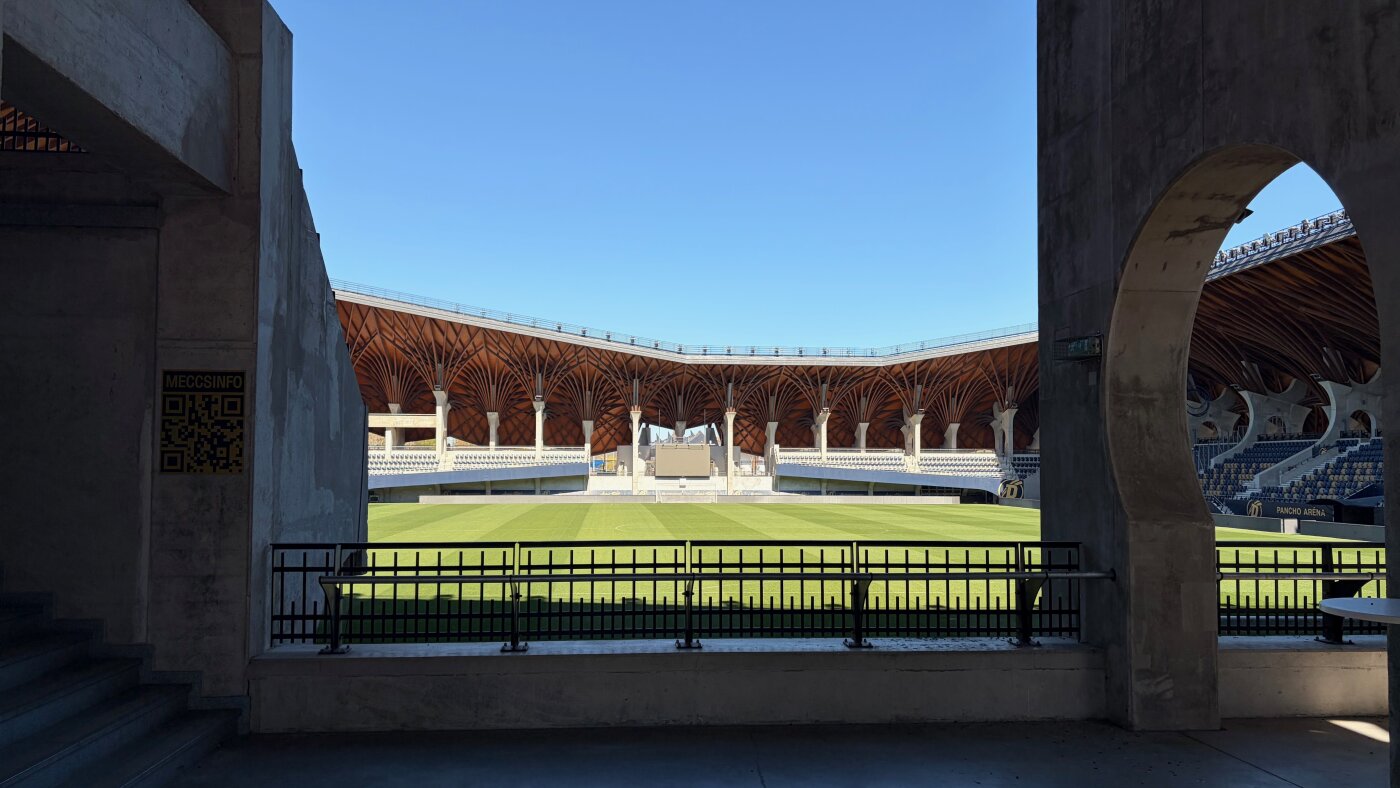
The article reports that a cluster of costly projects in Felcsút, the Hungarian village where Prime Minister Viktor Orbán grew up, has become a focus of attention and criticism ahead of Hungary's national election. Key details reported: Pancho Arena, a 4,000-seat stadium in Felcsút near Orbán’s family home, and an adjoining soccer academy were built as high-profile projects; the stadium’s construction and related spending are cited by critics as examples of government favoritism and wasted public resources. The article cites an estimated total cost of more than $200 million for the stadium and academy complex. A nearby 3-mile narrow-gauge railway cost about $3 million, including approximately $2 million in EU funding; projected daily ridership was 2,000 but actual usage has been far lower and trains now run mainly on weekends. The article also describes a manor on former protected property that was purchased and replaced by a multi-story residence associated with Orbán’s family, and mentions a golf course run by Lőrinc Mészáros, a longtime acquaintance of Orbán who has become wealthy. Anti-corruption activists and opposition figures — including K-Monitor’s Sándor Léderer and MP Ákos Hadházy — have been organizing tours to show visitors these sites and to highlight alleged diversion of funds, tax breaks, and patronage toward Orbán’s circle. The article states Hungary ranks worst for corruption within the European Union, per Transparency International, and that the EU has blocked billions in funding to Hungary over concerns about democratic principles and rule-of-law issues. It notes opposition leader Péter Magyar’s criticism of the government’s impact on poverty and corruption and reports that Orbán faces a double-digit polling deficit ahead of the vote; the article also mentions a recent rally in Budapest that included U.S. Senator J.D. Vance. Orbán has denied corruption allegations; NPR’s requests for comment to Orbán’s spokesman received no response for this story.
Biblical Reflection
From a Christian perspective, this story touches on several biblical concerns: the stewardship of public resources, the need for justice and accountability in leadership, and the danger of power being used for private enrichment. The article documents public allegations and visible examples (stadium, rail line, private residences) that critics use to illustrate favoritism and fiscal mismanagement. Christians should value careful discernment: confirm facts where possible, recognize the difference between allegations and proven wrongdoing, and be wary of tours or spectacles that can simplify complex problems into dramatic images without exploring systemic causes or legal findings. Scripture repeatedly calls leaders to righteous stewardship and the community to seek justice for the poor (e.g., Micah 6:8). At the same time, the church should guard against tribalism: responding with righteous indignation does not justify slander or partisan zealotry. Believers can pray for truthful investigation, reform where wrongdoing is found, protection for vulnerable citizens affected by misused resources, and humility for leaders. Christians should also consider policy solutions that promote transparency, independent oversight, and institutions that restrain abuses of power so that common goods (schools, hospitals, infrastructure) serve the many rather than the connected few.
Scripture in context
This outlook does not yet include contextual Scripture citations. Do not treat a general biblical theme as an exegetical conclusion.
Faithful Response
No prescribed response is offered. Consider the reflection prompts below in your own church context.
Reflection and Discussion
- 1What concrete evidence distinguishes a legitimate public project from one that serves private interests, and how should Christians weigh visual symbols (large buildings, mansions) against audit reports and legal findings?
- 2How can the church advocate for stewardship, transparency, and help for the poor without becoming captive to partisan narratives or reducing complex institutional problems to individual spectacle?
- 3Are there practical, nonpartisan reforms (transparency laws, independent audits, stronger checks on public contracts) that Christians can support to reduce the chance that public resources are diverted for private gain?
Sources
Reporting links are evidence inputs; Sanctuary News' biblical reflection is commentary.
This outlook currently relies on fewer than two linked sources. Broaden verification before teaching from it.
- 1.Original reportprimary