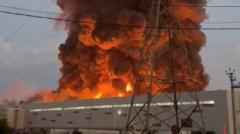
News Summary
Reported facts: BBC states that logistics hubs owned by Wildberries in Russia’s Krasnodar and Stavropol regions were struck overnight. Attributed claim: the headline attributes the strikes to Ukrainian drones. Uncertainty: the article provides no details about casualties, the extent of physical damage, official confirmations, or independent corroboration.
Source and Framing Analysis
The BBC headline names Ukrainian drones as the attacker; the short supplied body reports the logistics hubs were struck but lacks detail. This leaves material uncertainty about responsibility, scale, and human impact. Framing emphasizes a military actor and a commercial target, which can shape readers’ moral reactions (e.g., seeing the hit as strategic vs. seeing it as harm to civilians and workers). Independent verification and local official statements would materially affect how confidently one can accept the attribution and assess consequences.
Biblical Reflection
The report describes a wartime strike on commercial infrastructure. Christians should hold a posture of sober truth-seeking and compassion: acknowledge legitimate concerns about national security and the strategic choices belligerents make, while also remembering that attacks on logistics and commerce often ripple into civilian life—workers, local suppliers, and families who depend on those jobs and services.
War reporting can compress complex moral questions into brief headlines. The Christian response is not to reflexively cheer damage to the enemy’s property nor to excuse wrongdoing, but to weigh justice and mercy together—advocating for protection of noncombatants, accurate information, and efforts to relieve suffering. At the same time, we should be attentive to how violence shapes souls: conflict hardens hearts, fuels fear, and can tempt believers to dehumanize those on the other side.
Practically, this means praying for truth, for civilians affected on all sides, and for leaders to pursue just restraint; supporting humanitarian response where needs arise; and resisting tribal celebration of destruction. Holding both truth and compassion reflects the character of Christ more than polarized partisanship will.
Scripture in context
- 1Matthew 5:9 — Part of the Sermon on the Mount (the Beatitudes) where Jesus describes the characteristics of those belonging to the kingdom—here, blessed are the peacemakers, who seek reconciliation and the repair of relationships. — This passage calls Christians to pursue peace and reconciliation even amid conflict; it does not demand passivity in the face of injustice but frames faithful action around restoring relationships and protecting the vulnerable.
Faithful Response
Pray specifically for civilians, workers, and first responders affected by the strikes and for honest reporting and investigation.
Avoid celebrating destruction or sharing unverified claims; prioritize verified information and empathy in conversations.
Support or volunteer with humanitarian organizations that assist civilians impacted by wartime infrastructure damage.
Encourage church prayers and teaching that hold both a commitment to justice and concrete care for suffering people.
Reflection and Discussion
- 1How does targeting economic and logistics infrastructure in war affect civilians and the vulnerable communities who depend on those systems?
- 2When news labels an action as a military success, what questions should Christians ask about proportionality, noncombatant protection, and long-term consequences?
- 3How can Christians maintain compassion for people on all sides while standing for justice and truth?
Sources
Reporting links are evidence inputs; Sanctuary News' biblical reflection is commentary.
This outlook currently relies on fewer than two linked sources. Broaden verification before teaching from it.
- 1.Ukrainian drones hit more sites of Russian online retailer Wildberriesprimary_reporting