News Summary
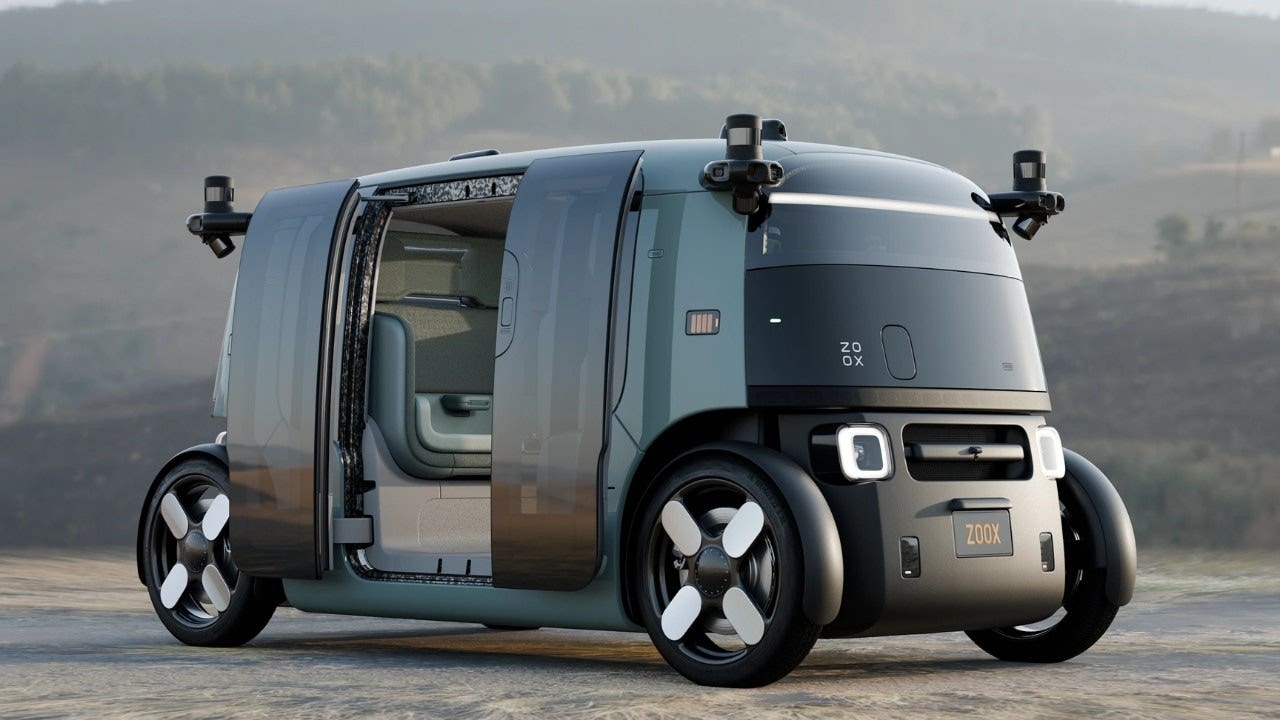
Zoox unveiled an updated version of its purpose-built, steering‑wheel‑free electric robotaxi that retains bidirectional driving and four‑wheel steering. The company says the redesign focuses on rider comfort and usability based on testing and feedback from about half a million riders, adding more padded, ergonomic seats, lighter interior colors, larger cupholders, a fluted wireless charging pad, a clearer touchscreen, and two‑way audio through a new door speaker/microphone. Exterior changes include repositioned, color‑rotating reflectors to make the vehicle’s direction clearer to people outside. Zoox’s vehicle uses cameras, radar, lidar and long‑wave infrared sensors, can travel up to 75 mph, and is described as a “production intent” model intended for large‑scale production in Hayward, California. Zoox operates in Las Vegas and San Francisco with limited availability in other cities and says wider expansion depends on regulatory approval; it has petitioned NHTSA for exemptions from certain Federal Motor Vehicle Safety Standards. The article also references separate incidents and safety concerns involving other companies’ driverless fleets (Waymo) and notes that broader commercial deployment will hinge on federal rules and approvals.
Biblical Reflection
This story highlights a familiar tension: technical innovation and user experience versus safety, oversight, and accountability. The upgrades show Zoox responding to rider feedback and attending to ordinary human needs—comfort, clear communication, and easier retrieval of personal items—which is a healthy corrective to purely engineer‑driven design. At the same time, the vehicle’s absence of conventional driver controls and the company’s request for regulatory exemptions raise legitimate questions about how safety standards, public accountability, and emergency communication will be preserved when human drivers are removed. Christians should notice the article’s implicit worldview that technological progress is desirable and often framed as inevitable; that can obscure who bears the risk (pedestrians, children, low‑income riders) and whether institutions charged with protecting the public are keeping pace. From a pastoral perspective, it is right to welcome innovations that serve neighbors and reduce harm, but such welcome should be tempered by insistence on transparency, careful regulation, and compassion for those most vulnerable to new risks or displaced by automation. Companies and regulators share moral responsibility to prioritize safety, honest communication, and the common good over speed to market or fashionable novelty.
Scripture in context
This outlook does not yet include contextual Scripture citations. Do not treat a general biblical theme as an exegetical conclusion.
Faithful Response
No prescribed response is offered. Consider the reflection prompts below in your own church context.
Reflection and Discussion
- 1Who gains and who bears the risks when driverless vehicles are cleared to operate without traditional controls or human oversight?
- 2Are comfort and convenience being prioritized over rigorous safety testing and clear channels of accountability?
- 3How should regulators, companies, and communities balance innovation with the duty to protect children, pedestrians, and riders?
Sources
Reporting links are evidence inputs; Sanctuary News' biblical reflection is commentary.
This outlook currently relies on fewer than two linked sources. Broaden verification before teaching from it.
- 1.Original reportprimary