News Summary
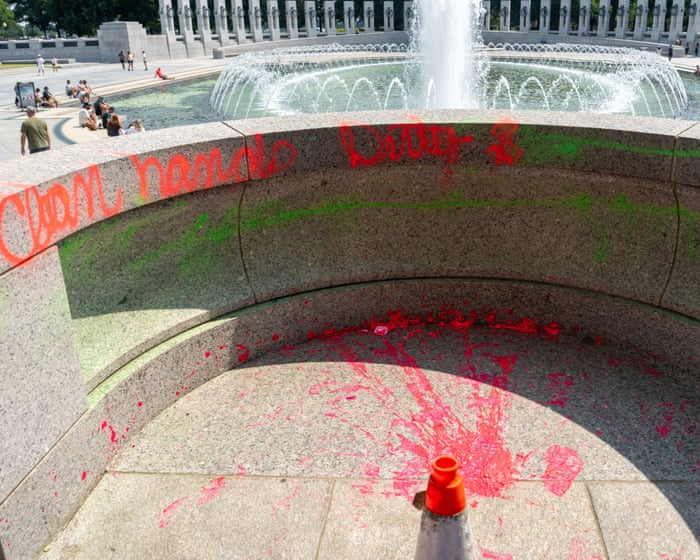
A vandalism incident at the National World War II Memorial in Washington, D.C., was reported: the memorial fountain was filled with soap suds that overflowed, red and green paint was splattered nearby, and graffiti reading “Clean hands Dirty $” was painted on a surface. Uniformed police and National Guard personnel responded; the area was cordoned off with yellow crime-scene tape, restricting visitor access. The U.S. Department of the Interior called the incident an “utter disgrace” and said the government would seek to identify the perpetrator. The sole news account in this cluster (The Guardian) does not report arrests, identified suspects, a motive, or detailed investigative findings.
Source and Framing Analysis
This cluster is based on a single primary report (The Guardian). The article supplies concrete, attributable observations (soap suds in the fountain, the graffiti text, paint colors) and an official reaction from the Department of the Interior. Because reporting is limited to one source and contains no follow-up investigative detail, important uncertainties remain: suspect identity, motive or political context for the graffiti, whether the act was coordinated or a lone actor, exact extent of physical damage, security footage or eyewitness corroboration, any responses from veterans’ groups, and law-enforcement outcomes. The Guardian’s framing emphasizes the disrespectful character of the act by quoting Interior’s strong language; that is appropriate for reporting visible desecration but does not establish motive or broader context.
How sources covered this story
Sanctuary separately assesses reporting quality and alignment with Christian virtues. The virtues assessment considers truthfulness, dignity, compassion, justice, peacemaking, humility, and care for vulnerable people. It does not assess a publisher's faith or reward religious language.
Compare 1 reports
Rank 1
The Guardian: Memorial for second world war vandalized with bubbles and graffiti in WashingtonReporting 72/100Virtues 75/100
- Distinctive contribution
- Reports that the memorial fountain was filled with suds/soap, gives the exact graffiti text 'Clean hands Dirty $', notes red and green paint splatters, and attributes an 'utter disgrace' statement and vow to locate the perpetrator to the Interior Department.
- Framing
- Straightforward incident report with a brief official condemnation quoted; framing focuses on the vandalism itself and the government's promise to identify the perpetrator. Tone is factual and not sensationalistic in the supplied text.
- Omissions or uncertainty
- No information on timing beyond 'Thursday'; no details about suspects/arrests, extent of physical damage or cleanup, motive or responsible group, security footage or eyewitnesses, legal/statutory consequences, response from veterans' groups or local authorities beyond the Interior Department, or photographs/verification.
- Why these scores
- The excerpt is concise and supplies specific, attributable details (exact graffiti wording, paint colors, method used, and an official quote), which is appropriate for a short news item. It is limited in scope and lacks broader context, follow-up detail, and sourcing beyond the Interior Department quote, so while reliable for the facts it presents, it is incomplete for a full account. The supplied text is factual and non-dehumanizing, attributes condemnation to an official source rather than using inflammatory language itself, and does not exploit victims' suffering. It could show stronger alignment if it included attention to affected communities (veterans, caretakers) or emphasized restorative justice or care for those harmed, but there is no evidence of disrespect or sensationalism.
Biblical Reflection
This incident touches memory, civic trust, and how we treat symbols of collective sacrifice. Vandalism of a war memorial affronts the respect owed to those who served and to public spaces intended for communal mourning and gratitude. Christians should grieve the desecration of a place that bears witness to sacrifice, while resisting immediate politicization or demonization without fuller facts. At the same time, Christian virtues call us to pursue truth and accountability: seeking the perpetrator, restoring the site, and ensuring public safety are legitimate public goods pursued with sober justice rather than vindictiveness. Where anger is warranted, it must be disciplined by mercy — remembering that sinners sometimes act out of confusion, protest, or pain, and that repentance and restoration are preferable to unending retribution. The episode also invites the church to model respectful memory and to care for veterans and the grieving: offer hospitality to those wounded by the act, teach younger generations the value of public remembrance, and pray for both healing and honest investigation. Our response should honor the dead, uphold civic order, and reflect the character of Christ in humility and truth.
Scripture in context
- 1Romans 12:17-21 — Paul's practical instructions to believers about living in community — urging non-retaliation, overcoming evil with good, and living peaceably with others after a section on transformed Christian identity and sacrificial service. — This passage calls Christians to seek justice without revenge, to protect vulnerable neighbors (including veterans and grieving families), and to pursue restoration rather than escalation when possible.
Faithful Response
Pray for investigators, victims, veterans, and for the perpetrator’s repentance and accountability.
Support restoration efforts through appropriate channels (donating time or resources only if coordinated with official caretakers or authorized veteran organizations).
Resist rushing to politicized judgments until facts are confirmed; encourage others to wait for official information.
Teach and model respectful remembrance of those who served in local church education and youth programs.
Reflection and Discussion
- 1How does the desecration of public memorials shape our collective memory, and what responsibilities do Christians have to preserve respectful remembrance?
- 2Before assigning motive or political meaning, what facts are still missing and how should that uncertainty shape our public response?
- 3How can calls for accountability be pursued in ways that reflect both truth and mercy?
Sources
Reporting links are evidence inputs; Sanctuary News' biblical reflection is commentary.
This outlook currently relies on fewer than two linked sources. Broaden verification before teaching from it.
Download source notes