News Summary
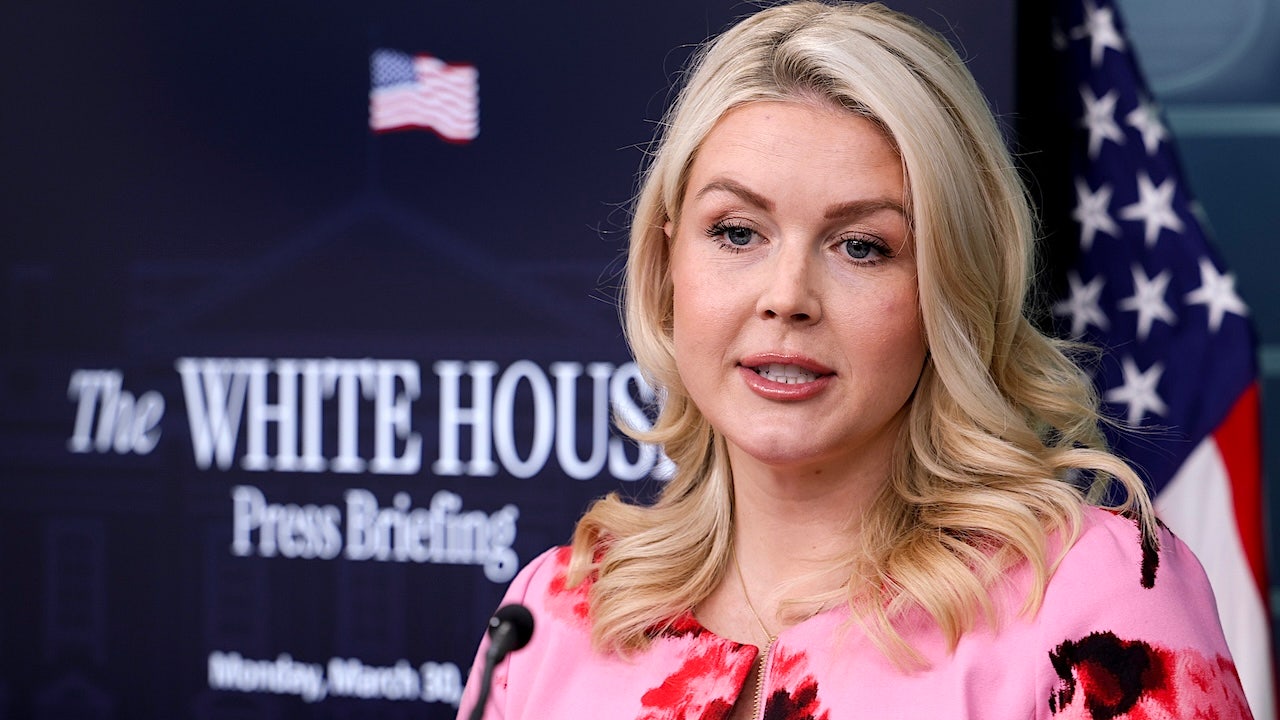
At a White House press briefing, press secretary Karoline Leavitt defended President Donald Trump’s recent social-media post in which he warned that if the Strait of Hormuz is not “immediately ‘Open for Business,’” the U.S. would conclude its presence in Iran by “blowing up and completely obliterating all of their Electric Generating Plants, Oil Wells and Kharg Island (and possibly all desalinization plants!).” NBC correspondent Garrett Haake asked whether striking civilian infrastructure would amount to a potential war crime and whether the administration was suggesting targeting civilian infrastructure. Leavitt replied that the president’s message was intended to pressure Iran to negotiate and stressed that the United States Armed Forces “will always act within the confines of the law,” while also saying the president is prepared to use significant military capabilities. The exchange included Leavitt repeating that the administration expects Iran to make a deal; Haake’s follow-up questions went largely unanswered. The article quotes Trump’s Truth Social post asserting “serious discussions” with a “new, and more reasonable, regime” and framing possible strikes as retribution for past Iranian actions.
Biblical Reflection
This report documents a public threat from a head of state and a close defense of that threat by a senior communications official. From a Christian perspective, the primary concerns are the moral seriousness of threats that could imperil civilians, the rule-of-law claims about adherence to international humanitarian law, and the rhetorical posture used to pursue political objectives. The article largely reports statements and the on-the-record back-and-forth; it does not provide independent legal analysis of whether the described actions would meet the legal definition of war crimes, nor does it include operational details about targeting or safeguards. Readers should note (1) the article frames the exchange as a political-defense of presidential rhetoric rather than an adjudication of legal or moral culpability; (2) the administration’s public assurance that it “will always act within the confines of the law” is an important claim that invites verification from independent legal and military experts; and (3) rhetoric that emphasizes obliteration of infrastructure risks normalizing large-scale harm to civilians and essential services, which contradicts core Christian commitments to protect the vulnerable and seek justice. Biblically, Christians are called both to respect legitimate authority (Romans 13) and to pursue peace and protect innocent life (Matthew 5:9; Romans 12). Healthy Christian discernment requires pressing beyond political theater to ask whether policies comport with international law, whether they proportionally guard civilian life, and whether the language used dehumanizes opponents or cultivates false security. At the same time, Christians should avoid simple partisanship: evaluating a leader’s words and actions should be consistent across parties and rooted in scriptural principles of justice, mercy, and truth.
Scripture in context
This outlook does not yet include contextual Scripture citations. Do not treat a general biblical theme as an exegetical conclusion.
Faithful Response
No prescribed response is offered. Consider the reflection prompts below in your own church context.
Reflection and Discussion
- 1Does the article present the president’s post and the press secretary’s response as policy, rhetoric, or both — and how does that distinction change how we evaluate the moral weight of the statements?
- 2What assumptions about civilian immunity, proportionality, and the legality of targeting infrastructure are implicit in the administration’s language, and who should we consult to test those assumptions?
- 3Are we responding as Christians primarily with partisan loyalty or with consistent concern for justice, the protection of noncombatants, and the pursuit of peace?
Sources
Reporting links are evidence inputs; Sanctuary News' biblical reflection is commentary.
This outlook currently relies on fewer than two linked sources. Broaden verification before teaching from it.
- 1.Original reportprimary