News Summary
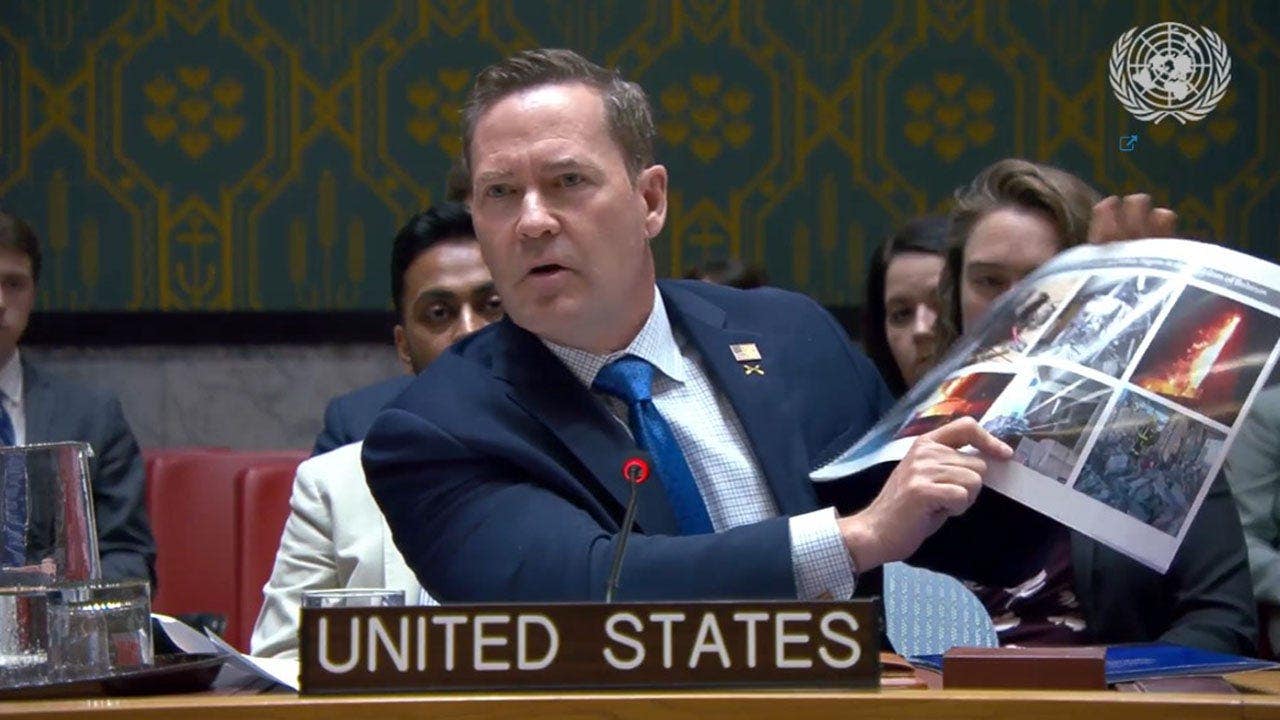
At an emergency U.N. Security Council meeting, U.S. Ambassador to the U.N. Mike Waltz publicly rebuked Iran's envoy Amir Saeid Iravani after recent drone and missile attacks struck Bahrain and Kuwait. Waltz displayed images he said showed civilian damage from the strikes and accused Iran of targeting civilians; Iravani denied the accusations, called the claims lies, and accused the U.S. and other Western members of hypocrisy and unlawful aggression. Bahrain’s foreign minister reported that since Feb. 28 the country had endured 808 attacks (203 ballistic missiles and 605 armed drones), saying the strikes killed three civilians and injured 465. The attacks followed an Iranian drone strike on a merchant vessel off Oman and subsequent U.S. airstrikes on Iranian sites, with both Washington and Tehran accusing the other of violating a fragile ceasefire. President Donald Trump posted that U.S. forces struck Iranian missile and drone storage and coastal radar sites and warned Iran of further military action if necessary.
Biblical Reflection
This article covers an escalating exchange between state actors where competing narratives — accusation and denial — shape diplomatic proceedings. The Christian response asks us to prize truth-seeking and protection of the vulnerable: images and casualty reports point to real civilian harm that demands impartial investigation and accountability, while the strong public rebukes and retaliatory strikes raise the risk of further escalation. The piece leans toward presenting the U.S. perspective (showing images and quoting U.S. officials prominently), so readers should be cautious about accepting unverified claims as settled fact. Pastoral discernment calls for praying for restraint by leaders, justice for victims, and independent verification of allegations rather than taking partisan rhetoric at face value. Christians are called both to lament innocent suffering and to advocate for peacemaking, channeling concern into measured calls for truth, mercy, and de-escalation.
Scripture in context
This outlook does not yet include contextual Scripture citations. Do not treat a general biblical theme as an exegetical conclusion.
Faithful Response
No prescribed response is offered. Consider the reflection prompts below in your own church context.
Reflection and Discussion
- 1Which details are independently verified and which rely on claims from parties to the conflict, and how does that affect what we believe?
- 2How does public shaming or theatrical rebukes in diplomatic settings advance accountability versus inflaming tensions?
- 3In a situation of reciprocal strikes and accusations, what structures or third-party processes would best protect civilians and discover the truth?
Sources
Reporting links are evidence inputs; Sanctuary News' biblical reflection is commentary.
This outlook currently relies on fewer than two linked sources. Broaden verification before teaching from it.
- 1.Original reportprimary