News Summary
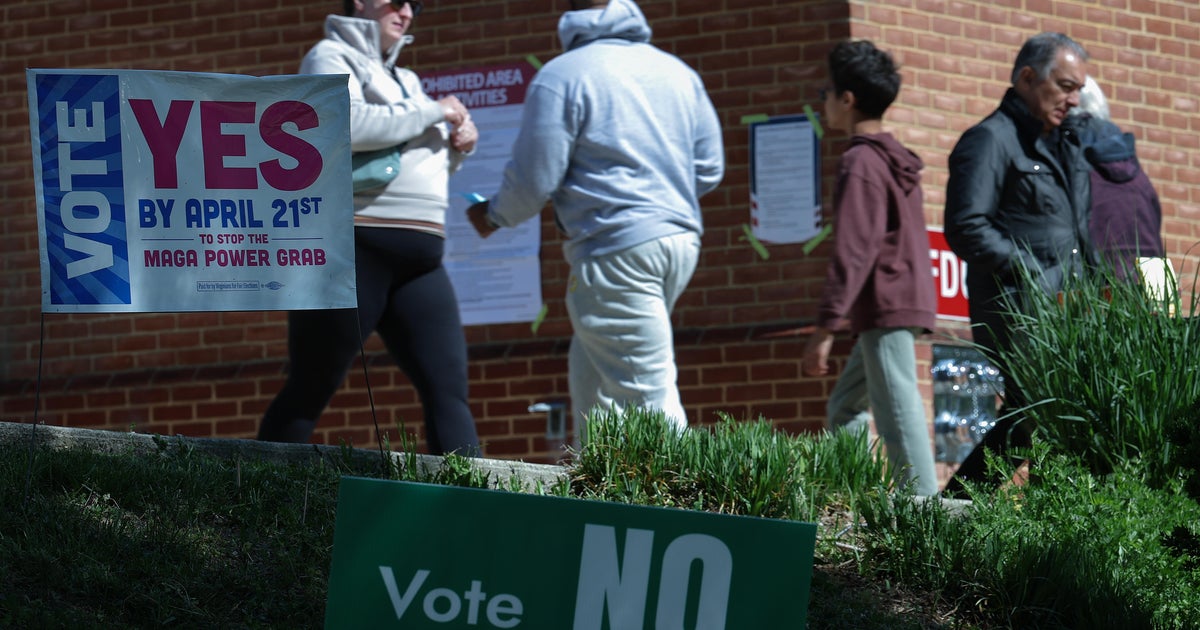
Virginia voters approved a referendum replacing the congressional map drawn by the state's bipartisan commission with a map produced by the Democratic-controlled General Assembly. CBS News projects the new map gives Democrats an advantage in 10 U.S. House districts and leaves one safe Republican seat; analysts say it could help Democrats pick up as many as four seats. The referendum resets the commission-driven process to resume after the 2030 census. The campaign over the referendum was competitive and well-funded (nearly $100 million reported, much of it from groups described as dark money), and legal challenges from Republican officials remain pending though the state supreme court allowed the referendum to proceed. National Democrats framed the measure as a response to GOP-led redistricting in other states; prominent Democrats including Barack Obama and Eric Holder campaigned for it. Republicans called the change a partisan power grab and said the narrow margin showed Virginia remains purple. The story notes parallel redistricting activity in other states, mentions pending Supreme Court litigation (Louisiana v. Callais) that could affect Voting Rights Act Section 2, and observes it is unlikely many other states will complete new congressional maps before 2026 given timing of primaries and filing deadlines.
Biblical Reflection
From a Christian perspective, this story highlights how political processes meant to enable fair representation can be shaped by partisan incentives, money, and power. Both parties have at times pursued map changes for advantage; the article shows organized efforts, large sums of outside funding, and strategic messaging on behalf of competing worldviews. Biblical concerns include justice (protecting the enfranchised voice of all communities), stewardship of civic institutions (not using them primarily to entrench power), and honesty in public life. Christians should be wary of partisan triumphalism or cynicism that assumes moral purity on one side and corruption on the other; instead, evaluate policies and methods by whether they promote equitable representation and protect the vulnerable. The piece also reveals media and political framing — Democrats framing the measure as corrective, Republicans framing it as a power grab — so readers should notice which facts are emphasized and which are backgrounded (e.g., how maps affect rural voters, minority representation, or electoral competitiveness). Ultimately the Christian response is to seek truth, defend fair processes, pray for wisdom, and work for institutions that reflect justice and neighbor-love rather than purely partisan gain.
Scripture in context
This outlook does not yet include contextual Scripture citations. Do not treat a general biblical theme as an exegetical conclusion.
Faithful Response
No prescribed response is offered. Consider the reflection prompts below in your own church context.
Reflection and Discussion
- 1Which details in the article point to systemic incentives (money, timing, legal strategy) that shape outcomes more than voter preference, and how should that affect our judgment of the result?
- 2How does each party’s framing (correcting unfairness vs. power grab) reveal underlying assumptions about legitimacy and who counts as the political community?
- 3When political mechanisms appear to advantage one group, how do we distinguish between legitimate reform and unjust consolidation of power in light of Christian commitments to justice and the common good?
Sources
Reporting links are evidence inputs; Sanctuary News' biblical reflection is commentary.
This outlook currently relies on fewer than two linked sources. Broaden verification before teaching from it.
- 1.Original reportprimary