News Summary
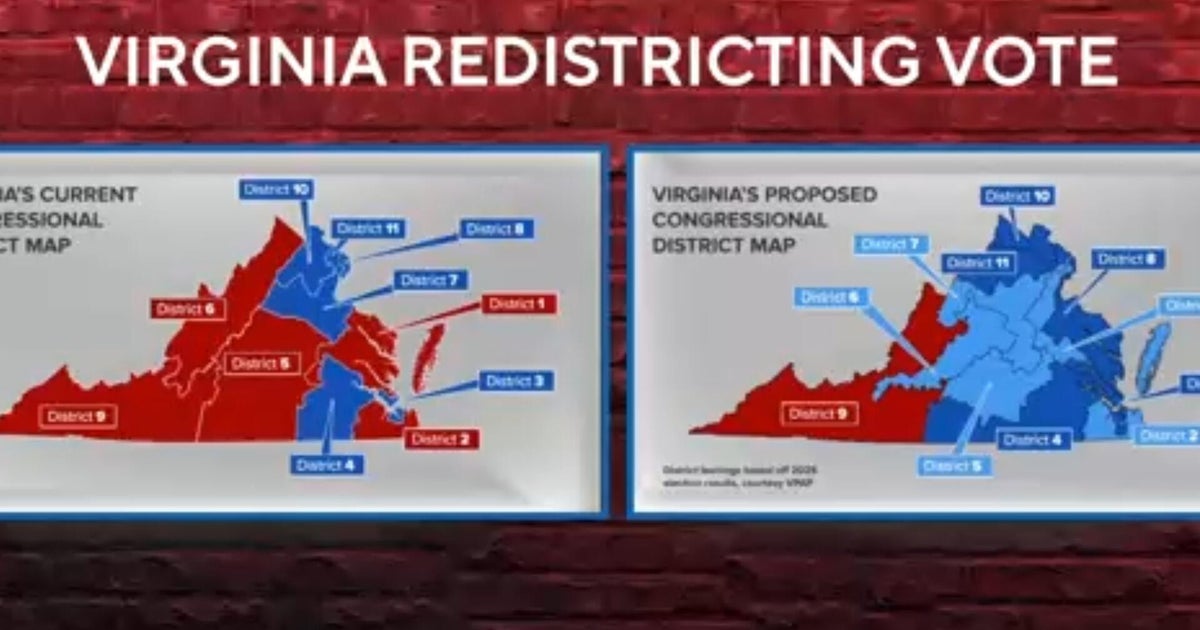
The Virginia Supreme Court invalidated a recently passed voter referendum that approved a new congressional map. The court concluded the legislative process used to advance the referendum violated Article XII, Section 1 of the Virginia Constitution, ruling the procedural violation “incurably taints” the referendum and nullifies its legal effect. The proposed map — approved by voters last month — would have been more favorable to Democrats, creating an advantage in roughly 10 U.S. House districts and leaving about one safe Republican seat; Virginia’s current U.S. House delegation is split roughly 6 Democrats to 5 Republicans. The court’s decision was issued in Scott v. McDougle. Republican state leaders praised the ruling as an affirmation of constitutional process; Democratic leaders said they respect the court’s decision while criticizing that it overturns a voter-approved measure. President Trump also praised the outcome. The article places this ruling in the broader context of states’ ongoing efforts to redraw congressional maps after high-profile redistricting fights in other states since 2025.
Biblical Reflection
The core issue in this story is procedural integrity versus partisan outcomes. The court’s opinion focuses on adherence to the state constitution and the rule of law: even popular outcomes can be voided if constitutional procedures were not followed. The article largely reports factual developments and includes partisan reactions, which reflect predictable political framing (Republican leaders calling it a defense of the constitution; Democrats framing it as blocking the voters’ choice). Christians should note two tensions: first, the legitimate biblical call to respect just authority and lawful process (Romans 13), and second, the prophetic biblical insistence that outcomes should be pursued through just and honest means (Micah 6:8; Proverbs on righteous scales). Partisans on both sides are tempted to cast the ruling as a political win or loss; a Christian reading should instead consider whether processes were lawful and transparent, and whether public trust in institutions is being preserved or eroded. The broader cultural pattern — states using legislative power to reshape federal representation — raises moral questions about stewardship, civic virtue, and the temptation to treat political power as an end. Christians are called to advocate for fairness, truthfulness, and humility in public life, resisting tribalism that equates victory with righteousness.
Scripture in context
This outlook does not yet include contextual Scripture citations. Do not treat a general biblical theme as an exegetical conclusion.
Faithful Response
No prescribed response is offered. Consider the reflection prompts below in your own church context.
Reflection and Discussion
- 1Are we interpreting legal rulings primarily through partisan lenses, or are we assessing whether constitutional processes and justice were upheld?
- 2How does framing from political leaders and media shape our perception of legitimacy — and what criteria should guide a Christian’s judgment about institutional decisions?
- 3In debates over redistricting and elections, are Christians emphasizing ends (party advantage) over means (transparent, lawful procedures) — and how should Micah 6:8 inform that balance?
Sources
Reporting links are evidence inputs; Sanctuary News' biblical reflection is commentary.
This outlook currently relies on fewer than two linked sources. Broaden verification before teaching from it.
- 1.Original reportprimary