A little more detail
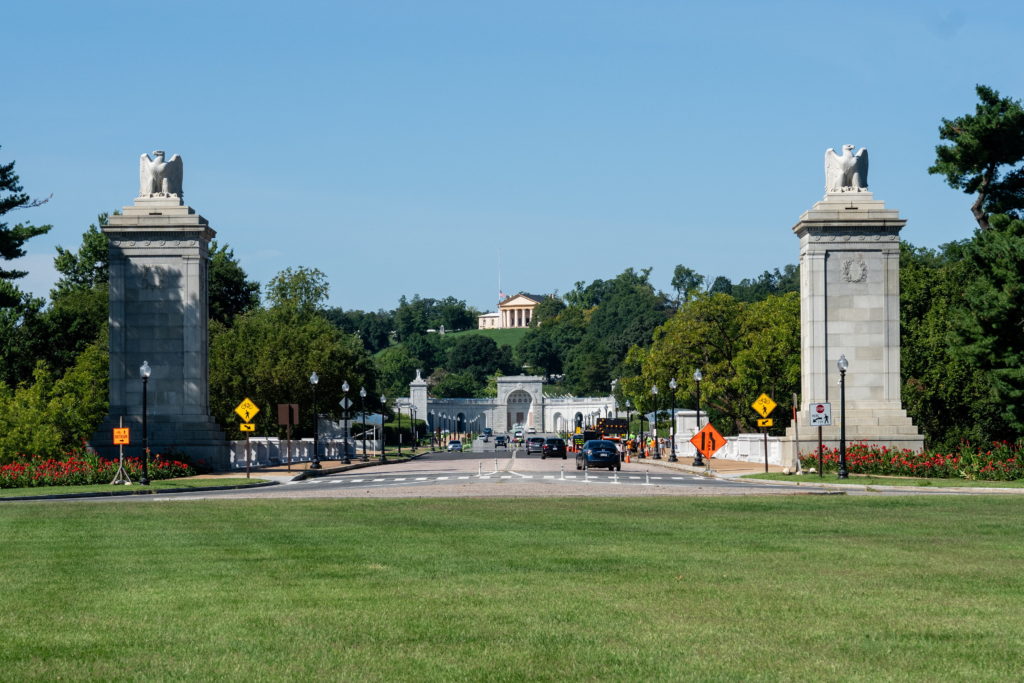
Virginia and the District of Columbia filed federal lawsuits seeking to halt potential work on a proposed 250-foot memorial arch to be sited near the Potomac River adjacent to Arlington National Cemetery. Reporting shows there are now three separate lawsuits aimed at stopping the project. The administration has indicated construction could begin imminently; one outlet reports it could be 'as early as next week.' Key legal and permitting questions (court rulings, injunctions, exact authorization to proceed) remain unresolved in the available coverage.
Source and Framing Analysis
Two reputable outlets (PBS NewsHour and The Guardian) report the same core facts: Virginia and D.C. have sued in federal court, there are three lawsuits in total, and the proposed monument would be about 250 feet on a grassy site near the bridge over the Potomac by Arlington National Cemetery. PBS presents concise, neutral factual language and corroborates the count of three lawsuits and the site and size details. The Guardian supplies similar facts but emphasizes urgency and scale, reporting an administration claim that construction could start 'as early as next week' and offering a height comparison to the Statue of Liberty. Neither excerpt supplies plaintiffs' detailed legal claims, court filings, permit status, or whether any injunctions or authorizations already exist. The primary framing difference is emphasis and immediacy: PBS is more restrained and factual; The Guardian adds comparative detail and a tighter timeline claim, increasing perceived urgency. Both omit procedural details needed to assess whether work may legally begin.
How sources covered this story
Sanctuary separately assesses reporting quality and alignment with Christian virtues. The virtues assessment considers truthfulness, dignity, compassion, justice, peacemaking, humility, and care for vulnerable people. It does not assess a publisher's faith or reward religious language.
Compare 2 reports
Reporting 80/100Virtues 74/100
- Distinctive contribution
- Confirms the count of three lawsuits and the monument's size and immediate location; serves as independent confirmation of those core facts.
- Framing
- Neutral factual reporting — concise statement of the number of lawsuits and a brief description of the proposed monument and site.
- Omissions or uncertainty
- Excerpt omits who the plaintiffs are, their legal bases, the defendant(s), specific court or filing dates, whether any injunctions exist, permit or administrative status, and any government response beyond 'wants work to begin.'
- Why these scores
- Concise and fact-focused; the sentence is clearly worded and useful for verifying key facts. It lacks detail that a fuller report would include (plaintiff identities, legal grounds, timeline), but as an excerpt it responsibly communicates verifiable information without sensationalism. Neutral and non‑inflammatory language that neither dehumanizes nor sensationalizes; it focuses on factual description. It does not, however, provide context about affected communities, justice concerns, or the stakes for vulnerable people, so scores below the top range.
Rank 2
The Guardian: Virginia and DC sue to stop Trump’s arch as government looks to start constructionReporting 78/100Virtues 72/100
- Distinctive contribution
- Provides an imminent construction timeline ('as early as next week') and a concrete height comparison (250 ft arch is ~100 ft taller than the Statue of Liberty from base to torch), which helps convey scale and urgency.
- Framing
- Slightly dramatic but factual framing — emphasizes that challenges are 'mounting' and highlights the monument's size with a familiar comparison to the Statue of Liberty.
- Omissions or uncertainty
- Does not name plaintiffs or specify legal claims, the authority claiming construction could start, permit status, what 'as early as next week' is based on, or whether work has been authorized. The dramatic height comparison may emphasize symbolism over procedural detail.
- Why these scores
- The excerpt adds useful context (timeline and size comparison) and communicates urgency clearly. It remains anchored in factual claims but is somewhat more vivid in language; like the PBS excerpt, it omits substantive procedural/legal details that would be needed for a fuller assessment. The text is not dehumanizing and presents information that may inform public interest; its slightly dramatic framing is still within responsible journalism. It does not engage with impacts on people or justice concerns, limiting higher virtue-alignment scoring.
Biblical Reflection
Christians should uphold the rule of law, the fair stewardship of shared public spaces, and the dignity of neighbors on all sides of this dispute. This situation is an occasion to practice humility and care: seek verified facts before forming public judgments, support lawful and peaceful resolution of disputes, and advocate for transparency in civic decision-making. Pray for wise, impartial adjudication; for leaders and neighbors to show mercy and restraint; and for processes that protect community well-being without dehumanizing those with different convictions.
Scripture in context
- 1 (Sermon on the Mount) — Jesus teaches attitudes for his followers that include pursuing reconciliation and peace rather than provoking division. — This passage invites Christians to favor lawful, peaceful dispute resolution, to listen to neighbors across differences, and to seek outcomes that protect the common good while honoring truth and justice.
Faithful Response
Pray for judges, plaintiffs, local officials, nearby communities, and the workers who would be affected by any construction or legal delay.
Learn the basic, verifiable facts from filings or official statements before taking or publicizing a position.
Encourage congregational members to engage civilly with officials and neighbors and to prioritize nonviolent, law‑respecting civic participation.
Offer pastoral care to people distressed by the symbolism or implications of the proposed monument, and host neutral forums to discuss public memory and civic process.
Reflection and Discussion
- 1How does our commitment to justice and truth shape how we evaluate contested public symbols?
- 2Where should humility and neighbor-love guide decisions about national memorials and shared public spaces?
- 3What responsibilities do Christians have to ensure civic processes (permits, reviews, courts) are respected and transparent?
- 4How can congregations provide space for grieving, disagreement, and constructive civic engagement when national symbols polarize?
Sources
Reporting links are evidence inputs; Sanctuary News' biblical reflection is commentary.
- 1.Virginia and D.C. sue over Trump's arch, adding to legal challenges as government wants work to beginprimary_reporting
- 2.Virginia and DC sue to stop Trump’s arch as government looks to start constructionadditional_reporting