News Summary
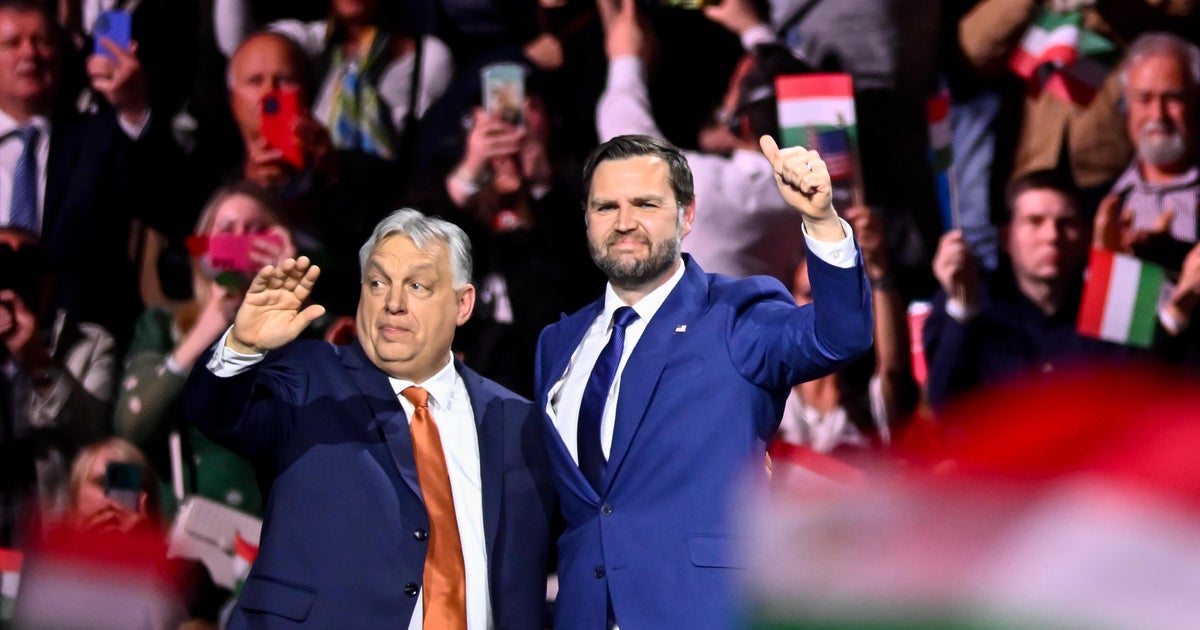
Vice President J.D. Vance visited Budapest to publicly endorse Hungarian Prime Minister Viktor Orbán ahead of Hungary's April 12, 2026, parliamentary election. Vance said he was in Hungary to help Orbán’s reelection and praised Orbán as defending Western civilization and Christian values. Vance claimed critics accused him of engaging in foreign influence by supporting Orbán, and countered by accusing the European Union of exercising foreign influence when it threatens to withhold funds from Hungary over policy concerns such as border protections and rule-of-law issues. Independent polling cited by news outlets places Orbán and his Fidesz party behind main opponent Péter Magyar among decided voters. Democracy watchdog Freedom House designates Hungary as "partly free," citing concerns about elections and independent institutions. The article notes Hungary's closer ties with Russia under Orbán. EU officials responded by saying European elections are the citizens’ choice, defending EU actions as efforts to strengthen Europe and noting the use of diplomatic channels to convey concerns to partners. The EU also referenced measures like the Digital Services Act aimed at protecting democratic processes online.
Biblical Reflection
This report presents competing claims about influence, sovereignty, and the partisan role of foreign actors. Vance’s public endorsement of Orbán is a straightforward exercise of political support, but it also raises legitimate questions about the propriety and effects of high-profile foreign endorsements on another country’s election. The EU’s threatened conditionality on funds reflects a different kind of leverage—one rooted in institutional mechanisms and stated rule-of-law standards. Christians should be cautious about simplifying complex geopolitical actions into moral absolutes: defending sovereignty and criticizing bureaucratic overreach can be valid, but so can holding leaders accountable for weakening democratic institutions and liberties. The article’s framing mixes policy claims (funding conditionality, border control) with moral language about “Western civilization” and “Christian values,” which can encourage conflation of religious identity with particular political programs. Scripture calls believers to seek truth, justice, and the protection of the vulnerable; those commitments should temper applause for any leader whose methods undermine pluralism, free press, or independent institutions. At the same time, Christians should avoid elevating political figures to savior status or allowing partisan loyalties to override core biblical ethics such as honesty, justice, and care for the weak. Pray for discernment, prioritize facts over rhetoric, and evaluate both domestic and international political actions by how well they serve truth, justice, and the common good.
Scripture in context
This outlook does not yet include contextual Scripture citations. Do not treat a general biblical theme as an exegetical conclusion.
Faithful Response
No prescribed response is offered. Consider the reflection prompts below in your own church context.
Reflection and Discussion
- 1Are the statements in this article framed to encourage allegiance to a political leader or to evaluate specific policies and institutional practices? How does that framing shape your judgment?
- 2When foreign actors (officials or blocs) apply pressure—through diplomacy, funding conditions, or public statements—are those actions best understood as interference or as efforts to uphold agreed standards of rule-of-law and human rights?
- 3Does praise of a leader for defending "Christian values" in public rhetoric align with that leader's record on protecting pluralism, independent institutions, and the vulnerable?
Sources
Reporting links are evidence inputs; Sanctuary News' biblical reflection is commentary.
This outlook currently relies on fewer than two linked sources. Broaden verification before teaching from it.
- 1.Original reportprimary