News Summary
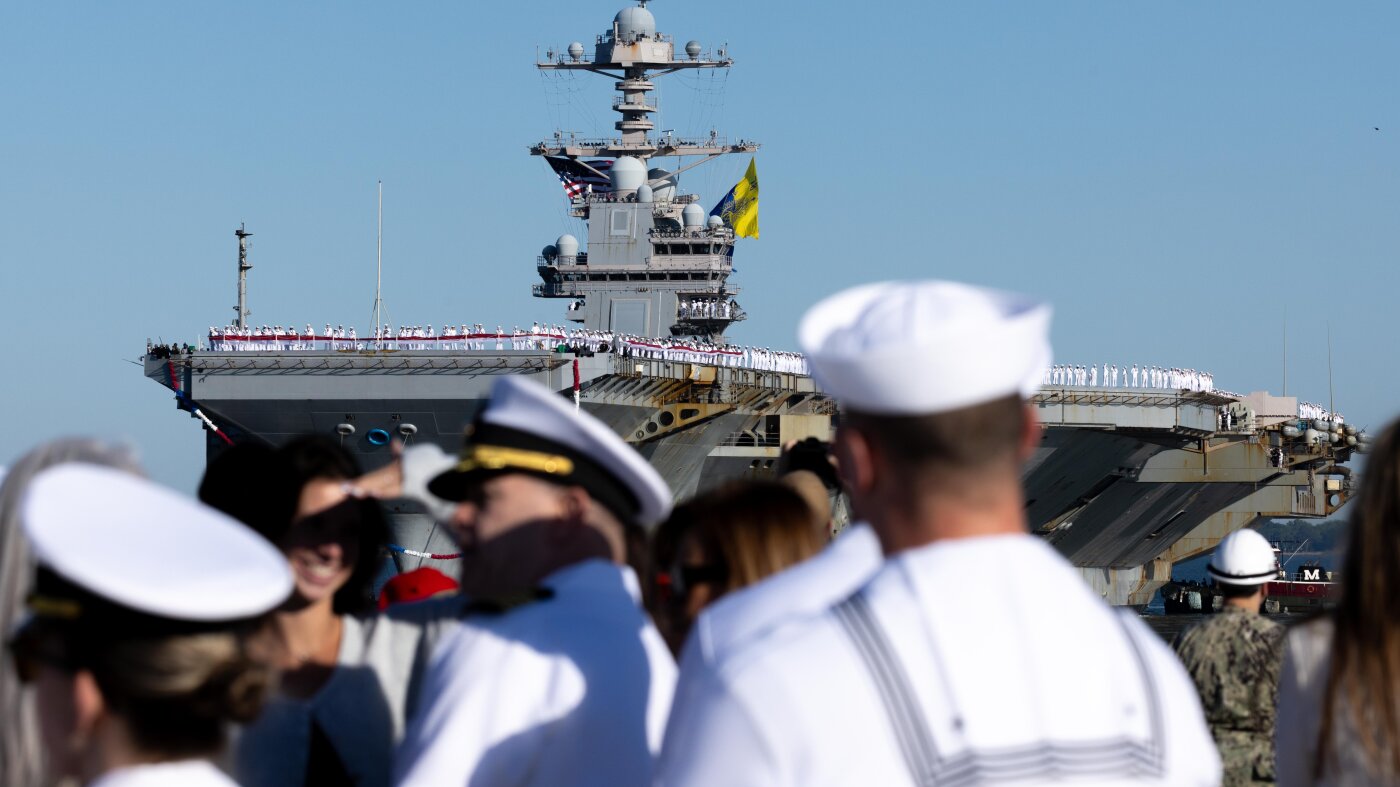
The aircraft carrier USS Gerald R. Ford returned to Naval Station Norfolk with about 4,600 sailors after an approximately 11-month deployment following an eight-month maiden voyage. The ship is scheduled for maintenance at Norfolk Naval Shipyard to repair damage from a March fire that began in a laundry room and spread to berthing areas, and to upgrade its Vacuum Collection, Holding, and Transfer (VCHT) sewage system. NPR reviewed FOIA-released emails from March–August 2025 showing recurring problems with the VCHT system while the carrier was underway; common failures included hoses and valves coming loose, which can cause loss of suction and disable multiple toilets in a section. Hull technicians asked sailors to help locate leaks and offered training on use of the system; crew memos mentioned items found in toilets and other blockages. Navy leaders have said onboard systems operated within expected parameters and that sanitation issues on ships are routine; Chief of Naval Operations Adm. Daryl Caudle characterized reporting on the problems as overblown. Problems with vacuum sewage systems were identified earlier in other carriers (USS George H.W. Bush experienced vacuum-system issues before a 2011 fix). Norfolk shipyard officials say they will install a fix that further subdivides the system to prevent a single failure from disabling a large portion of the ship’s toilets. A 2020 Government Accountability Office report noted the Ford-class system requires periodic acid flushes costing about $400,000 each, which cannot be performed while deployed; such maintenance is planned now that the ship is in port.
Biblical Reflection
From a Christian perspective, this story raises questions of stewardship, truthfulness, and care for neighbors. The Navy’s investment in advanced technology aims to increase capability, but the recurring operational failures and expensive corrective work point to gaps in testing, design oversight, and ongoing care for the people who live and work on the ship. The FOIA emails suggest honest, ground-level concern by technicians and sailors—voices Christians should listen to—while public statements from senior leaders emphasize institutional confidence. Neither silence nor sensationalism serves truth: faithful response requires transparent assessment, responsibility for mistakes, and prompt action to protect personnel. The higher cost of cutting-edge systems heightens the moral obligation to steward public resources well and to prioritize sailors’ health and dignity over appearances of infallibility. Practically, Christian virtues — humility to admit problems, courage to correct them, and compassion for those affected — should guide both leadership and public discussion.
Scripture in context
This outlook does not yet include contextual Scripture citations. Do not treat a general biblical theme as an exegetical conclusion.
Faithful Response
No prescribed response is offered. Consider the reflection prompts below in your own church context.
Reflection and Discussion
- 1Are we giving priority to institutional reputation or to the wellbeing and dignity of the sailors impacted by engineering failures?
- 2What does the costly and recurring nature of these technical fixes reveal about how we evaluate and steward public resources for defense?
- 3When frontline workers raise repeated concerns, how should leaders balance confidence with transparency and accountability?
Sources
Reporting links are evidence inputs; Sanctuary News' biblical reflection is commentary.
This outlook currently relies on fewer than two linked sources. Broaden verification before teaching from it.
- 1.Original reportprimary