News Summary
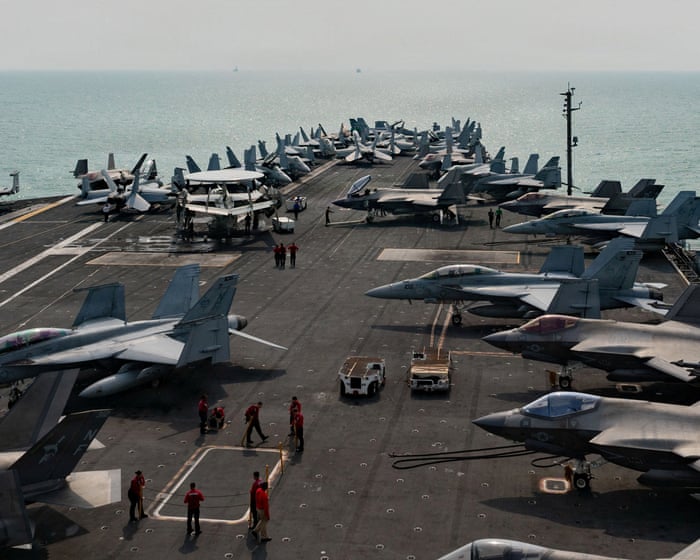
US Central Command announced that the aircraft carrier USS George Washington has arrived in the Middle East and is expected to relieve the USS Abraham Lincoln, which is on an extended or 'record' deployment. CENTCOM posted an image of sailors working on the George Washington’s flight deck as it transited the Arabian Sea. Reporting in The Guardian attributes to families of Lincoln sailors claims of shortages, plumbing problems and low morale aboard the Lincoln. No date for the Lincoln’s return to the United States has been announced in the sourced coverage. The family reports have not been independently corroborated in the referenced reporting.
Source and Framing Analysis
Core operational facts (arrival of USS George Washington; CENTCOM announcement; public image of sailors on deck) derive from an official military communication cited in reporting. Human‑impact claims (shortages, plumbing failures, low morale) are attributed by The Guardian to families of sailors on the USS Abraham Lincoln. The Guardian’s framing emphasizes welfare concerns and institutional responsibility and uses attribution language ('families say'), which signals these are reported claims rather than independently verified facts. Missing from available coverage are on‑the‑record Navy responses to those family allegations, direct on‑the‑record sailor testimony, independent corroboration, and a clear timeline for Lincoln’s return. Readers should therefore treat the CENTCOM operational details as strongly supported and the families’ allegations as important leads requiring further corroboration.
How sources covered this story
Sanctuary separately assesses reporting quality and alignment with Christian virtues. The virtues assessment considers truthfulness, dignity, compassion, justice, peacemaking, humility, and care for vulnerable people. It does not assess a publisher's faith or reward religious language.
Compare 2 reports
Reporting 75/100Virtues 78/100
- Distinctive contribution
- Attributes the arrival to a US Central Command announcement, mentions a posted image of sailors as evidence of transit, records that no return date has been announced, and lists specific types of alleged problems (shortages, plumbing issues, low morale) reported by families.
- Framing
- Frames the Washington’s arrival as a relief of a 'troubled' ship and highlights reports of substandard living conditions and morale concerns; the phrasing ('families say') signals reporting of claims rather than settled facts.
- Omissions or uncertainty
- The excerpt does not include direct quotes from sailors, families, or officials; it lacks detailed evidence (how widespread the problems are, which systems are failing, timelines), and does not include any official response from Lincoln leadership or the Navy beyond the CENTCOM arrival announcement.
- Why these scores
- Supplied excerpt shows responsible indicators: attribution to US Central Command and cautious phrasing ('families say'), and it includes specific alleged problems rather than vague assertions. It remains limited by lack of direct quotes, quantitative detail, or official responses in the excerpt, but it performs well for a concise news piece. The excerpt respectfully highlights concerns raised by families and mentions morale and living conditions—issues that relate to care for vulnerable people—using measured language and attribution rather than inflammatory claims. The score reflects a constructive, non‑dehumanizing approach while noting that more voices from those affected would strengthen the compassionate dimension.
Reporting 70/100Virtues 74/100
- Distinctive contribution
- A short, high‑level confirmation that the George Washington has arrived in the Middle East to relieve the Lincoln and that the Lincoln’s deployment is described as a record one amid concerns about living conditions and morale; also signals an unrelated investigation item in the same briefing.
- Framing
- Presents the arrival as a relief operation for a ship facing reported problems, with emphasis on poor living conditions and morale; tone is brief and news‑summary oriented rather than investigative.
- Omissions or uncertainty
- No sourcing or attribution for the claims within the supplied excerpt, no details about the nature or scale of the living‑condition problems, no dates, no statements from officials or sailors, and no timeline for the Lincoln’s return.
- Why these scores
- Appropriate for a short morning briefing: concise and not sensational. However, the supplied excerpt lacks attribution and concrete details (who reported the conditions, examples of problems, or official statements). As a brief notice it responsibly flags the issue but provides limited evidence or sourcing. Neutral, non‑sensational language that acknowledges concerns about living conditions and morale—implicitly treating affected people with dignity. Score limited because the excerpt offers little contextual detail or voices from those affected (which would increase compassion and care for the vulnerable).
Biblical Reflection
Two Christian commitments shape how to receive news that the USS George Washington has arrived to relieve the USS Abraham Lincoln: (1) truth‑telling — pursue accurate verification of operational facts and alleged suffering so that accountability rests on evidence rather than rumor; and (2) care for those who serve — listen respectfully to service members and families, advocate for their material and spiritual needs, and avoid exploiting their suffering for partisan gain. Faith calls for humility in judgment, mercy in response, insistence on justice where failures are verified, and prompt pastoral and practical care for affected sailors and families.
Scripture in context
- 1Matthew 25:35–40 — A teaching of Jesus about caring for the hungry, thirsty, stranger, naked, sick and imprisoned, given in the context of final judgment and identifying care for vulnerable people with service to Christ. — Reminds Christians that attending to the physical needs and dignity of those who serve — including addressing poor living conditions and morale — is a concrete form of neighbor‑love; advocating for sailors’ material care can be an expression of that duty.
- 2Philippians 2:3–4 — Paul's exhortation to the Philippian church to practice humility and consider others’ interests above their own, written to a community navigating internal rivalries and external pressures. — Calls leaders and communities to humility and attentive service: Christians should prioritize the welfare of people harmed, avoid self‑promotion, and pursue reform with a posture of service rather than partisan advantage.
Faithful Response
Pray specifically for sailors aboard the USS Abraham Lincoln and USS George Washington, for commanders executing the relief, and for families awaiting news.
Listen to and support military families in your congregation or community with dignity — offer pastoral visits, a listening space, and referrals to military family support services.
Provide practical assistance where appropriate (meals, childcare, short‑term relief funds, counseling referrals) for any affected families you can verify are in need.
Advocate for verified accountability: request information from official Navy or Department of Defense channels, support independent reporting that seeks on‑the‑record testimony, and contact elected representatives or veterans’ advocacy organizations if credible evidence indicates neglect.
Resist amplifying unverified claims for partisan advantage; insist on transparency while maintaining mercy for individuals involved.
Reflection and Discussion
- 1Which Christian values (truth, mercy, justice, humility) are most at stake in response to this relief operation and the reported conditions aboard the Lincoln, and how should they guide our actions?
- 2How can the church hold together a demand for institutional accountability and a posture of pastoral care for service members and their families?
- 3What steps will I take to verify reported claims about conditions aboard the USS Abraham Lincoln before advocating publicly?
- 4Are there service members or military families in my congregation who need immediate practical or pastoral support, and how will we provide it?
Sources
Reporting links are evidence inputs; Sanctuary News' biblical reflection is commentary.
This outlook currently relies on fewer than two linked sources. Broaden verification before teaching from it.
- 1.US aircraft carrier arrives in Middle East to relieve troubled USS Lincolnprimary_reporting