News Summary
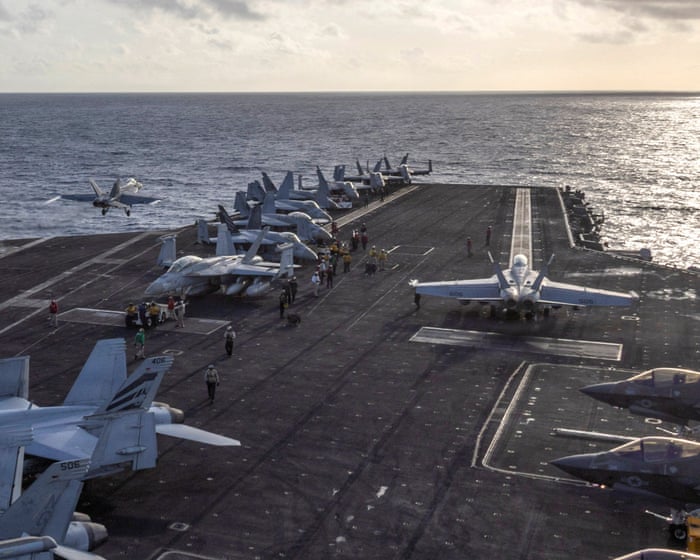
The Guardian reports that the USS Abraham Lincoln, a U.S. Navy aircraft carrier that had spent more than 250 consecutive days at sea supporting U.S. operations related to Iran, left the Middle East after being relieved by the USS George Washington and is en route to San Diego. Thai navy officials told reporters the carrier is expected to make a brief, routine port visit in Thailand next week so personnel can rest and recuperate. The Guardian notes this operational update amid earlier media reports alleging poor living conditions and low morale aboard the ship; this particular article does not include on-the-record comments from U.S. Navy leadership or direct crew testimony.
Source and Framing Analysis
Primary source for this cluster is The Guardian article, which attributes the planned Thailand stop to Thai navy officials (via Reuters) and presents concrete operational details: the carrier’s extended time at sea (>250 days), its recent relief by USS George Washington, and its planned return to San Diego. The piece frames the stop as 'routine' and for rest and recuperation, while situating that detail against previously published accounts of poor living conditions and low morale. Strengths: facts in the article are attributed and described with cautious language; the framing highlights crew welfare without making unsupported assertions. Limitations and uncertainties: the article does not include direct statements from the Abraham Lincoln’s crew or an on-the-record response from U.S. Navy leadership in this version; the referenced reports about onboard conditions are not newly corroborated here and lack detail in the excerpt. Readers should distinguish between (a) the operational scheduling and attribution (well supported by named sources) and (b) the prior allegations about conditions and morale (reported elsewhere and not independently verified within this piece).
How sources covered this story
Sanctuary separately assesses reporting quality and alignment with Christian virtues. The virtues assessment considers truthfulness, dignity, compassion, justice, peacemaking, humility, and care for vulnerable people. It does not assess a publisher's faith or reward religious language.
Compare 1 reports
Reporting 80/100Virtues 78/100
- Distinctive contribution
- States the carrier spent more than 250 consecutive days at sea supporting US operations against Iran; reports it left the Middle East after being relieved by USS George Washington; reports a planned brief port visit in Thailand next week for crew rest and recuperation before continuing to San Diego; attributes the characterization of the visit as 'routine' to the Thai navy and cites Reuters.
- Framing
- Frames the Thailand stop as a 'routine' brief visit to allow rest and recuperation while noting it comes 'amid reports' of poor living conditions and low morale onboard; presents operational facts with an emphasis on crew welfare and the exceptional duration at sea.
- Omissions or uncertainty
- No direct statements or testimony from Lincoln crew; no on-the-record comment from the US Navy in the supplied excerpt; no specifics about the reports of poor conditions (source, nature, timing); no exact dates or duration of the planned port call; relies on attribution to a Thai navy official and Reuters without reproducing Reuters’ sourcing in the excerpt.
- Why these scores
- The excerpt is specific and responsibly attributed (Thai navy official, Reuters) and avoids definitive claims about crew conditions by using cautious language ('amid reports'). It provides concrete operational details (250+ days, relieved by USS George Washington, destination). The main limitation in the supplied text is lack of primary crew testimony or US Navy response and absence of detail about the 'reports' referenced, but those are transparently signalled rather than asserted as fact. The text treats crew welfare as a concern (rest and recuperation) and uses non-dehumanizing, measured language. It attributes claims and signals uncertainty rather than sensationalizing suffering. Score is moderated because the excerpt lacks direct voices from affected sailors or explicit efforts to center their dignity, but overall it reflects truthfulness, restraint, and concern for vulnerable people.
Biblical Reflection
From a Christian perspective, this development raises two intertwined concerns: the real human cost of prolonged deployments and the responsibility of institutions to protect the dignity and welfare of those they send into service. Truth requires careful attention to what is confirmed (the planned stop and route) and humility about what remains unverified (the precise state of living conditions aboard). Mercy and justice call the church to pray for and support sailors and families, to advocate for humane policies and transparent accountability, and to resist turning human suffering into spectacle. Peacemaking and dignity ask us to honor those who serve while seeking reforms that reduce unnecessary harm and provide rest and care for vulnerable neighbors.
Scripture in context
- 1Matthew 25:31-46 — Jesus’ teaching about final judgment that identifies care for marginalized and suffering neighbors—feeding, clothing, visiting—as the criterion by which his followers are judged. — This passage urges Christians to treat service members and their families as neighbors deserving practical care. It supports pastoral and communal actions (prayer, meals, hospitality, advocacy) that respond to tangible needs rather than treating reports of suffering as mere headlines.
- 2Philippians 2:3-4 — Paul’s exhortation to the Philippian church to adopt humility, value others above oneself, and look to others’ interests. — These verses encourage a posture of sacrificial care and solidarity with those under strain. In this situation they counsel Christians to prioritize the welfare of sailors and families—advocating for rest, humane conditions, and institutional accountability—while exercising humility about what is not yet fully known.
Faithful Response
Pray specifically for the crew of the USS Abraham Lincoln, their families, and all who care for them, asking for rest, safety, and wisdom for leaders responsible for deployments.
Provide practical support to local military families (meals, childcare, transport, listening), and connect congregants who serve to pastoral care and counseling resources.
Encourage congregational leaders to avoid premature judgements about unverified allegations, while holding institutions accountable for transparency and humane personnel policies.
Contact elected representatives respectfully to request clear information about deployment practices, personnel welfare provisions, and timelines for relief and rest periods.
Partner with vetted military- and veteran-support organizations that offer rest, counseling, and material assistance; prioritize concrete acts of mercy alongside calls for systemic reform.
Reflection and Discussion
- 1How does the church’s call to care for 'the least of these' apply to service members and their families who face prolonged deployments?
- 2What forms of accountability and transparency should Christians ask of institutions that send people into extended service?
- 3In what concrete ways can our congregation embody rest and restoration for those who carry heavy burdens on behalf of the common good?
- 4How do we hold together honoring service, demanding humane treatment, and exercising humility about claims that are not yet fully verified?
Sources
Reporting links are evidence inputs; Sanctuary News' biblical reflection is commentary.
This outlook currently relies on fewer than two linked sources. Broaden verification before teaching from it.
Download source notes