News Summary
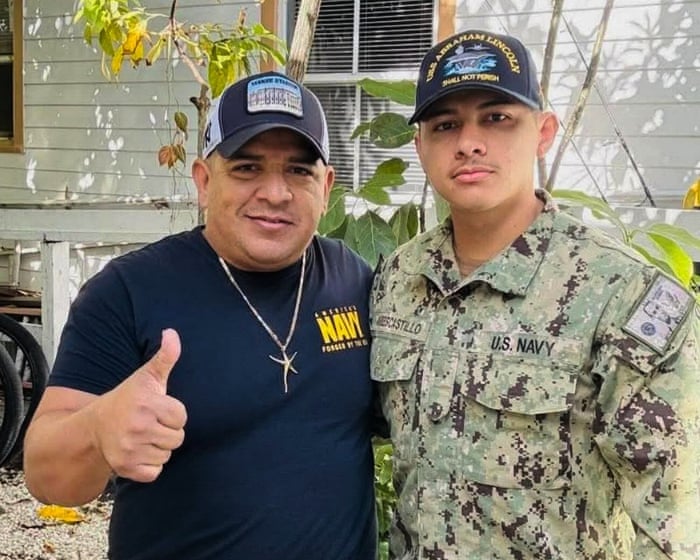
The Guardian reported that Luis Manuel Aviles Roa, identified as the father of Joshua Aviles (a U.S. sailor serving aboard the aircraft carrier USS Abraham Lincoln on a nine‑month Middle East deployment), was arrested by U.S. Border Patrol after a vehicle stop in Key West, Florida, and taken into federal immigration custody. The article attributes confirmation of the Border Patrol arrest to a Department of Homeland Security spokesperson. A follow-up Guardian update reports that the detained man was later released from immigration detention, attributing that development to the family; that update does not show an independent DHS/ICE confirmation in the supplied excerpts. Public reporting to date names the individuals and the arresting agency and reports family accounts about the detained man’s immigration application and release, but leaves important procedural and legal details unreported or unconfirmed in the public record cited so far.
Source and Framing Analysis
Primary reporting for this cluster comes from The Guardian. The initial piece names the detained individual (Luis Manuel Aviles Roa), gives the arrest circumstance and location (vehicle stop in Key West) and attributes an arrest confirmation to a Department of Homeland Security spokesperson — these are concrete, attributable details useful for verification. A subsequent Guardian update reports the subject’s release, attributing that information to the family and noting public backlash; that update supplies a material development but rests on family statements in the supplied excerpt and lacks a visible independent DHS/ICE confirmation. Strengths of the coverage: specific personal and locational details, and attribution to an official source for the arrest. Limitations and framing notes: reporting is thin on legal basis/charges, detention facility, dates and conditions of release, the formal immigration-case history, and whether legal representation exists. The Guardian pieces frame the story with human‑interest emphasis (linking enforcement to a deployed service member), which heightens compassion but does not establish causal or policy links between the ship’s deployment and immigration enforcement action. There are no explicit factual contradictions between the Guardian accounts cited here; the primary disagreement is one of omission and incomplete official corroboration (for example, the arrest confirmation is attributed to DHS, while the reported release is attributed to the family).
How sources covered this story
Sanctuary separately assesses reporting quality and alignment with Christian virtues. The virtues assessment considers truthfulness, dignity, compassion, justice, peacemaking, humility, and care for vulnerable people. It does not assess a publisher's faith or reward religious language.
Compare 2 reports
Reporting 78/100Virtues 82/100
- Distinctive contribution
- Reports the subject’s release from immigration detention (family as source) and highlights the public backlash and the son’s record-length deployment; cites that the Associated Press had previously reported the son entering his ninth month aboard USS Abraham Lincoln.
- Framing
- Framed sympathetically toward the family and the deployed sailor; emphasizes timing and public reaction ("sparked intense backlash") and situates the detention as notable because it occurred while the son was on a long deployment.
- Omissions or uncertainty
- The excerpt lacks official confirmation from DHS/ICE, dates or timing of the release, any conditions of release, details on charges or basis for the original detention, and where the individual was released to. The reliance on a family statement is explicit but uncorroborated in the excerpt.
- Why these scores
- Clear attribution ("according to his family") and contextualization (links to AP reporting) show responsible caution. The piece provides a concrete factual update but, in the supplied excerpt, lacks official confirmation or procedural detail; it is concise and avoids sensational language. The excerpt treats the individuals with dignity, centers family impact and public concern, and avoids dehumanizing or sensational wording. It shows compassion toward a deployed service member and his family by emphasizing context and backlash, though it does not provide deeper restorative or justice-oriented analysis in the excerpt.
Reporting 82/100Virtues 80/100
- Distinctive contribution
- Names the detainee (Luis Manuel Aviles Roa), gives the arrest circumstance (vehicle stop in Key West by border patrol) and states that a homeland security department spokesperson confirmed the detention; includes the sailor’s claim about awaiting green card approval and that he is on a nine-month deployment.
- Framing
- Presented as a factual news account focused on the intersection of immigration enforcement and the personal impact on a deployed service member; balances the sailor’s personal claim with attribution to a government spokesperson.
- Omissions or uncertainty
- The excerpt does not state the legal basis or charges for the detention, the precise date/time, the detention facility, any court or immigration proceedings, or full details about the green card application status. It also does not include direct quotes from the DHS spokesperson in the supplied text.
- Why these scores
- Good specificity (full name, location of stop) and responsible attribution to both the sailor and a homeland security spokesperson. The excerpt gives useful procedural detail while avoiding unwarranted conclusions; missing legal context reduces completeness but not basic quality. The report centers human impact (son deployed, family implications) and uses measured language with attribution to sources, which respects dignity and truthfulness. It does not sensationalize the arrest and leaves room for official clarification, aligning with compassion and humility in reporting.
Biblical Reflection
Christian concern for truth, mercy, justice, peacemaking, humility, human dignity, and care for vulnerable neighbors shapes how the church should receive and respond to this incident. Practically: seek verified facts before drawing public conclusions; pray for the detained man, his deployed son, and their family; offer tangible, non‑partisan support to the family and connect them with vetted legal and military‑family resources; advocate for humane, transparent treatment by authorities without politicizing the family’s suffering. The church should resist quick partisan judgments, insist on due process and humane administration of law, and model compassionate accompaniment for those caught between immigration systems and military service.
Scripture in context
- 1Luke 10:25–37 (Parable of the Good Samaritan) — Jesus tells this parable in response to a question about who qualifies as a 'neighbor' and what loving practical care looks like. — The passage calls Christians to practical compassion that crosses ethnic, social, and legal boundaries; it supports concrete care for people in distress — including families affected by detention — without using another's suffering for partisan advantage.
- 2Romans 13:1–7 — Paul speaks about the role of governing authorities and the Christian relationship to law and civic order. — This text encourages respect for lawful governance while also implying that authorities should be accountable to justice and the common good; Christians can therefore honor civil order and simultaneously press for humane, equitable treatment within legal systems.
Faithful Response
Pray specifically for Luis Manuel Aviles Roa, for Joshua Aviles and the family, for officials handling the case, and for wisdom for congregations and leaders responding to unfolding facts.
Offer immediate pastoral and practical support to the family (meals, childcare, transportation, financial help) while facts are clarified.
Connect the family with vetted immigration legal resources and with military‑family support services; compile and share reliable contacts and offer accompaniment to appointments.
Advocate for transparency and humane treatment through appropriate, non‑partisan civic channels (inquiries to elected representatives, referral to legal‑aid organizations), while avoiding amplification of unverified claims.
Provide public pastoral presence (prayer vigils, counseling, pastoral accompaniment) that centers compassion, protects dignity, and resists partisan exploitation of the family’s circumstances.
Reflection and Discussion
- 1How does knowing a service member’s close family member was detained shape our responsibilities toward both civic order and the vulnerable?
- 2Which facts are still missing from public accounts that should temper moral certainty, and how should those gaps shape a faithful, compassionate response?
- 3What concrete steps can our congregation take now to support the family and to promote fair, transparent treatment in immigration processes?
Sources
Reporting links are evidence inputs; Sanctuary News' biblical reflection is commentary.
This outlook currently relies on fewer than two linked sources. Broaden verification before teaching from it.
- 1.Father of USS Lincoln sailor taken into ICE detention while son deployed in Middle Eastprimary_reporting