News Summary
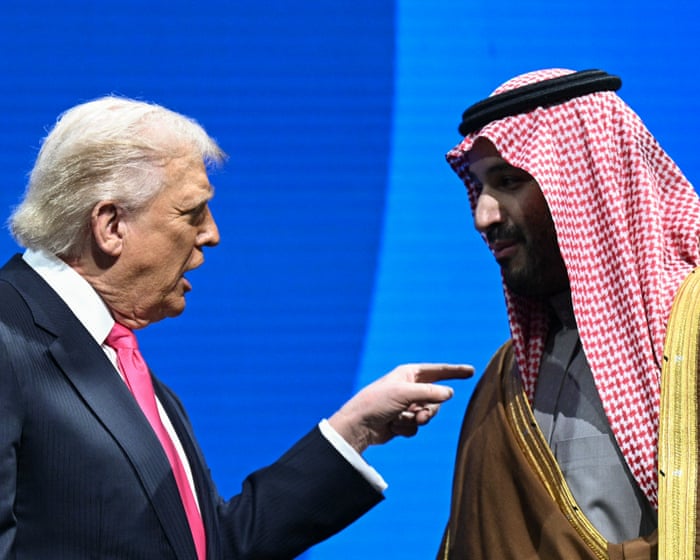
Reported facts: the U.S. and Saudi Arabia have an announced nuclear-technology agreement that could allow future uranium enrichment; the agreement will be sent to Congress; the U.S. carried out nightly strikes in Iran (reported as the 12th night); the Houthi militia said it attacked two Saudi tankers and a Saudi news outlet reported one was ablaze. Attributions and claims: the article attributes to U.S. officials a fear that Saudi Arabia would seek China or Russia for nuclear technology and notes prior Saudi statements about needing a deterrent if Iran acquired nuclear arms. Uncertainties: the full agreement text and specific monitoring safeguards are not public in the report; independent verification of strike results and full damage/casualty details are not provided.
Source and Framing Analysis
The article combines three related but distinct developments—an announced U.S.-Saudi nuclear technology agreement, U.S. military strikes inside Iran, and Houthi attacks on tankers—without publishing the full Saudi deal text or independent verification of strike outcomes. That creates material uncertainty about the agreement’s actual provisions and the immediate risks of proliferation. The framing links the Saudi agreement to efforts to deter Iran’s nuclear capability; this contextual connection is reasonable but depends on unstated details (e.g., safeguards and verification) that materially affect how the deal should be judged.
Biblical Reflection
This story raises urgent moral and pastoral concerns for Christians. The possibility of a U.S. agreement that permits future uranium enrichment in a volatile region touches on questions of truth, stewardship, and the care of innocent life. The lack of publicly available details invites caution: agreements that are secretive or poorly monitored can increase the risk of proliferation, escalate regional arms races, and place civilians in harm’s way. From a Christian perspective, the pursuit of national security must be balanced with commitments to transparency, justice, and the protection of vulnerable people.
The widening pattern of strikes and retaliatory attacks described in the article points to an escalating cycle of violence. Scripture steers believers toward peacemaking and the pursuit of reconciliation even while recognizing the legitimate role of governing authorities to restrain evil and protect the innocent. Christians should therefore press for diplomacy, independent oversight, and humanitarian safeguards alongside legitimate security measures. We should also resist narratives that dehumanize those on the other side or treat entire peoples as mere strategic assets.
Practically, this means praying for wisdom for leaders, advocating for oversight and safeguards that minimize risk to civilians, and supporting humanitarian responses for communities harmed by conflict. It also means allowing our responses to be shaped by humility and a refusal to let fear or partisan identity override the call to seek peace and justice for all.
Scripture in context
- 1Matthew 5:9 — In the Sermon on the Mount Jesus pronounces blessings on those whose lives embody Kingdom values; 'peacemakers' are commended as children of God within a broader call to righteousness and mercy. — This passage calls Christians to actively pursue peace and reconciliation, pressing for policies and actions that protect life and dignity rather than amplify fear or retribution.
Faithful Response
Pray regularly for leaders, diplomats, and civilians affected by the conflict.
Seek verified information before arriving at firm judgments; urge elected representatives to demand transparency and robust monitoring in nuclear agreements.
Support humanitarian organizations aiding civilians impacted by strikes and maritime attacks, and welcome refugees or displaced persons locally where possible.
Resist rhetoric that dehumanizes populations on any side and practice neighbor-love across political lines.
Reflection and Discussion
- 1How should the church weigh national security claims against the biblical call to protect the vulnerable when leaders pursue secretive or risky agreements?
- 2What practices can help Christians resist fear-driven thinking and instead act as agents of reconciliation in geopolitical crises?
- 3When governments claim necessity for secrecy, what biblical virtues (truth, accountability, mercy) should we insist are preserved and why?
Sources
Reporting links are evidence inputs; Sanctuary News' biblical reflection is commentary.
This outlook currently relies on fewer than two linked sources. Broaden verification before teaching from it.
- 1.First Thing: US agrees Saudi uranium deal as strikes on Iran continue and Yemen’s Houthis hit tankersprimary_reporting