News Summary
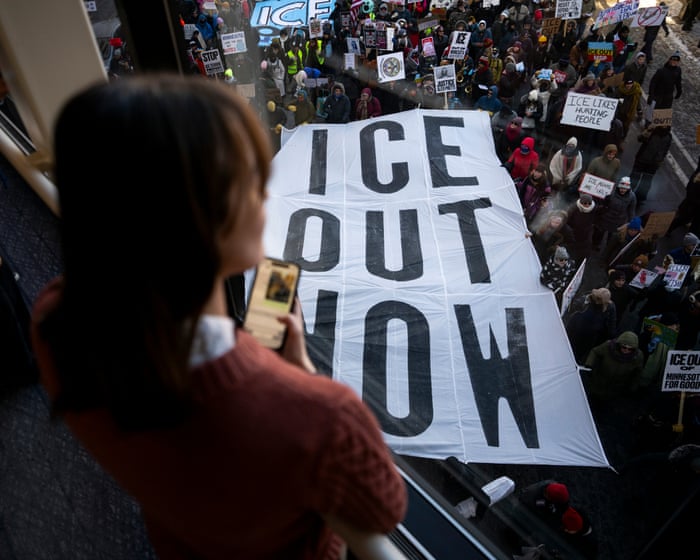
The Guardian reports that internal Department of Homeland Security (DHS) files disclosed in federal court show undercover federal officers posed as community members to observe and collect information on activists opposing an ICE enforcement operation in Minnesota. According to the documents reviewed by the Guardian, agents joined encrypted Signal group chats using at least one alias, screenshot conversations, offered to help with fundraising and recruitment, and photographed community meetings. The Guardian attributes these details to the disclosed DHS records; the supplied reporting does not include an on-the-record response from DHS/ICE or further independent corroboration in the supplied text.
Source and Framing Analysis
Primary source: internal DHS files disclosed in federal court and reviewed by The Guardian (the article cited). The Guardian's framing emphasizes undercover, deceptive surveillance of local organizers (terms used in the supplied excerpt include 'posed' and 'spied'). That framing is consistent with the documentary claims but leaves important contextual gaps: no dates or time frame are given in the supplied text; the scope and number of agents involved are not detailed; the legal authority or internal approval for these activities is not described; and the supplied excerpt does not include a DHS/ICE response. These gaps mean the core documentary claims are materially supported by the files as reported, but the reporting needs additional corroboration on intent, authorization, duration, effects on targeted people, and any remedies or oversight actions.
How sources covered this story
Sanctuary separately assesses reporting quality and alignment with Christian virtues. The virtues assessment considers truthfulness, dignity, compassion, justice, peacemaking, humility, and care for vulnerable people. It does not assess a publisher's faith or reward religious language.
Compare 1 reports
Reporting 80/100Virtues 78/100
- Distinctive contribution
- Reports that internal DHS files (disclosed in federal court and reviewed by the Guardian) show undercover officers posed as concerned community members, joined Signal chats, took photos at community meetings, and used at least one alias/username (‘peanutbutterjelly’).
- Framing
- Investigative/critical — frames the activity as undercover federal agents 'posing' to 'spy' on residents and activists who opposed ICE, implying deceptive surveillance of community organizing.
- Omissions or uncertainty
- No dates or time frame for the surveillance; number or identities of agents involved; specific content or copies of the internal DHS records; details about which Signal groups/activists were targeted; legal justification or DHS response; outcomes or consequences of the disclosures; methodological detail on how the records were obtained/reviewed.
- Why these scores
- The excerpt cites documentary evidence (internal DHS files disclosed in federal court) and gives a concrete, checkable detail (a Signal username), which are hallmarks of solid reporting. The language is direct but not overtly sensational in the excerpt. The score is moderated down slightly because the supplied text lacks key contextual details (dates, scope, DHS comment) that would strengthen accountability and allow fuller independent evaluation. The reporting appears aimed at exposing potential misuse of authority and protecting civic actors’ dignity and rights, which aligns with truth-telling, justice, and care for vulnerable people engaged in activism. The excerpt avoids dehumanizing language. The score is not higher because the excerpt does not include clear evidence of compassion for affected individuals, restorative context, or explicit attention to remedies for harm; those might appear in the full article but are not present in the supplied text.
Biblical Reflection
Christian concern should center on truth, mercy, justice, and protection of the vulnerable. Covert surveillance that deceives neighbors undermines communal trust and can chill peaceful civic participation that serves the common good. Christians should press for transparent rules, lawful oversight, and remedies where public power breached trust, while resisting retributional instincts toward individuals and instead pursuing accountability within due process. Our witness calls for both clear-eyed scrutiny of institutions and pastoral care for those who feel violated, seeking restoration and protection for community life.
Scripture in context
- 1Luke 12:2–3 — Teaching about concealed things being revealed and the call to watchfulness and integrity in discipleship. — This prompts Christians to seek transparency and accountability for covert actions that harm neighbors, recognizing that hidden deeds need public reckoning and repentance where wrong was done.
- 2Proverbs 12:22 — A wisdom saying contrasting honesty and deceit as formative for personal and communal conduct. — Institutions and citizens alike are called to truthful speech and just behavior; deception that undermines the dignity and safety of neighbors conflicts with this ethical standard.
Faithful Response
Pray for those surveilled, for public officials, and for justice and healing where rights were violated.
Seek verified information before forming final judgments: request access to the court filings, ask for DHS/ICE statements, and consult civil‑liberties analyses to clarify legal authority and scope.
Support practical help for affected community members: refer or contribute to legal-aid organizations and civic‑education resources that protect peaceful organizers.
Model transparent, lawful civic engagement locally so communities can continue mutual care without fear, and advocate for oversight reforms that protect civil liberties while acknowledging legitimate public‑safety duties.
Reflection and Discussion
- 1How does covert surveillance of peaceful organizers affect the church’s ability to practice public witness and hospitality in the community?
- 2What specific standards of oversight, transparency, and remedy should Christians advocate for when public institutions use secretive methods that touch civil liberties?
- 3How can the church accompany and restore relationships for neighbors who feel betrayed by state actors, while also holding institutions to account?
Sources
Reporting links are evidence inputs; Sanctuary News' biblical reflection is commentary.
This outlook currently relies on fewer than two linked sources. Broaden verification before teaching from it.
- 1.Revealed: How undercover agents spied on anti-ICE protesters in Minnesotaprimary_reporting