News Summary
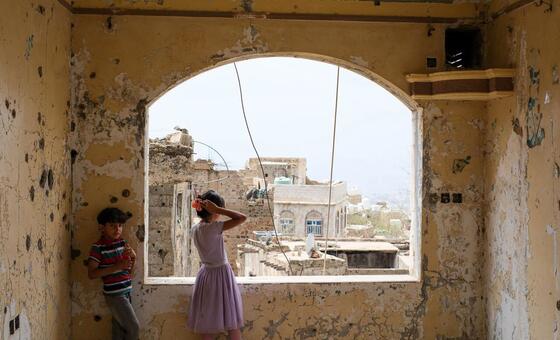
On 17 August 2026 UN News reported that United Nations High Commissioner for Human Rights Volker Türk warned that escalating conflict in Yemen is killing and injuring a growing number of civilians. The item states that Houthi rebels have struck targets in Saudi Arabia and Red Sea shipping and that Türk urged restraint. The piece is a concise UN account and does not provide casualty numbers, incident-by-incident details, on-the-ground eyewitness reporting, or independent verification tying the strikes concretely to broader Iran–US confrontation dynamics.
Source and Framing Analysis
The report is a brief UN News summary of remarks attributed to Volker Türk (UN High Commissioner for Human Rights). Its primary frame is humanitarian caution: highlighting rising civilian harm and calling for restraint. Strengths: clear attribution to a named UN official and focus on civilian impact. Limits and uncertainties: no numeric casualty data, no dates or locations of specific incidents, no direct quotes in the supplied text, no on-the-ground sourcing from affected civilians or local monitors, and an asserted linkage of Houthi strikes to a wider Iran–US confrontation without documentary evidence in the item. Readers should treat the humanitarian warning as credible reporting of the UN office’s public position while recognizing evidentiary gaps about scale, specific perpetrators in particular incidents, and geopolitical causation.
How sources covered this story
Sanctuary separately assesses reporting quality and alignment with Christian virtues. The virtues assessment considers truthfulness, dignity, compassion, justice, peacemaking, humility, and care for vulnerable people. It does not assess a publisher's faith or reward religious language.
Compare 1 reports
Reporting 78/100Virtues 85/100
- Distinctive contribution
- Names the UN human rights chief (Türk) as the speaker and explicitly ties Houthi strikes on Saudi Arabia and Red Sea shipping to the Iran–US confrontation while emphasizing an increasing civilian toll.
- Framing
- Humanitarian and cautionary — presents the situation as an escalating conflict with growing civilian casualties and urges restraint; connects local violence to broader international tensions.
- Omissions or uncertainty
- No casualty numbers, dates, locations, or detailed incidents; no direct quotes from Türk in the supplied text; no on-the-ground reporting or perspectives from affected civilians; no information on humanitarian response or verification of strikes.
- Why these scores
- The excerpt is responsibly worded and properly attributes the warning to the UN human rights chief. It succinctly links local attacks to broader geopolitical dynamics. It is limited by brevity and lack of specific data, sources, or substantiating detail, but for a brief UN summary it is clear and cautious. Highlights harm to civilians and calls for restraint, aligning with compassion, care for the vulnerable, and peacemaking. The tone is respectful and non-sensational; however, the supplied excerpt lacks deeper emphasis on relief or justice measures that would raise the score further.
Biblical Reflection
A Christian outlook toward the UN warning about Yemen centers sorrow for those harmed, a commitment to truth-seeking, and active compassion. Christians should receive the UN’s alarm with lament for civilians, resist partisan simplifications, and press for verified information and humanitarian access. Truth requires acknowledging the report’s confirmed elements (the UN chief’s warning and attribution of Houthi strikes) while also naming what the article does not show (casualty counts, incident detail, independent corroboration). Mercy and justice call the church to pray, shelter and aid the vulnerable, and to advocate for restraint and accountability; peacemaking and humility call us to avoid early moral certainty about complex geopolitical cause-and-effect without solid evidence.
Scripture in context
- 1Matthew 5:9 — Part of Jesus' teaching on the character of those who belong to God's kingdom, commending those who seek peace. — This passage calls the church toward peacemaking and reconciliation. In the context of rising civilian harm in Yemen, it urges prayers and actions that pursue de-escalation, protection for civilians, and nonviolent paths where possible.
- 2Micah 6:8 — A prophetic summons to do justice, love mercy, and walk humbly with God. — Applied to the Yemen crisis, the passage guides Christians to combine demands for justice (accountability for abuses), acts of mercy (humanitarian relief), and humility (careful moral discernment in complex conflicts).
Faithful Response
Pray for civilians, aid workers, and leaders in Yemen and neighboring countries; lament losses and seek God’s wisdom.
Support reputable humanitarian organizations providing medical care, shelter, food, and safe passage for displaced persons affected by the Yemen conflict.
Advocate—through church networks and civic channels—for unfettered humanitarian access, transparent investigations of abuses, and urgent steps to protect noncombatants.
Educate congregations with sober, evidence-focused briefings that distinguish confirmed facts (the UN warning) from unverified claims or geopolitical speculation.
Avoid dehumanizing language about any group; prioritize the dignity of all persons and press for humane treatment of civilians.
Reflection and Discussion
- 1Where in my personal or congregational response might I be privileging geopolitical narratives over the human suffering the UN has reported?
- 2What evidence would responsibly be required before accepting the article’s suggested linkage between Houthi strikes and a wider Iran–US confrontation as established fact?
- 3How can our community balance calls for justice and accountability with the immediate imperative to protect and assist civilians?
Sources
Reporting links are evidence inputs; Sanctuary News' biblical reflection is commentary.
This outlook currently relies on fewer than two linked sources. Broaden verification before teaching from it.
- 1.Yemen: Türk alarmed by rising civilian toll, urges restraintofficial_document