News Summary
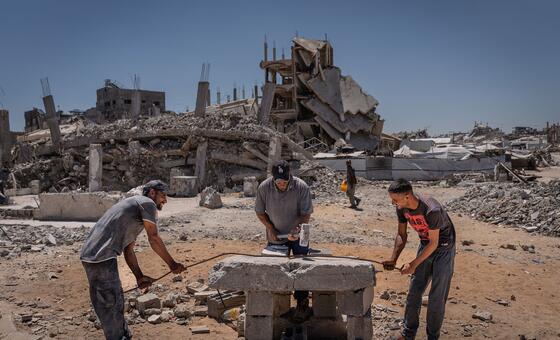
UN News reports that the UN Security Council convened at 10:00 a.m. (local time) to receive briefings on rising tensions across what the UN refers to as the Occupied Palestinian Territory. The brief characterizes recent developments as including surges in Israeli settlement activity described by the UN as illegal, continued attacks in Gaza and the West Bank, and broader spikes in tension. The item is a short live-briefing notice and does not provide casualty figures, named briefers, incident-level details, or documentary evidence within the piece.
Source and Framing Analysis
Source: UN News (live-briefing notice). The item uses standard UN terminology — e.g., 'Occupied Palestinian Territory' — and applies legal/normative framing by describing Israeli settlement activity as 'illegal.' That framing reflects established UN positions and carries legal and diplomatic weight for many international actors, but it is politically contested in some diplomatic circles. The piece is high-level and situational: it confirms a Security Council meeting and summarizes the UN framing of events but omits crucial specifics (no named briefers or member statements, no dates beyond the local meeting time, no casualty or displacement figures, and no incident-level sourcing). Readers should treat this as an institutional summary rather than a standalone, evidence‑rich report.
How sources covered this story
Sanctuary separately assesses reporting quality and alignment with Christian virtues. The virtues assessment considers truthfulness, dignity, compassion, justice, peacemaking, humility, and care for vulnerable people. It does not assess a publisher's faith or reward religious language.
Compare 1 reports
Reporting 76/100Virtues 78/100
- Distinctive contribution
- Confirms a Security Council briefing at 10am and summarizes the situation as rising tensions driven by settlement surges and continued attacks across Gaza and the West Bank, providing a concise UN-framed situational summary.
- Framing
- Brief, neutral-to-formal UN live-briefing tone that frames developments as ‘illegal Israeli settlement surges’ alongside ongoing attacks; the language reflects UN legal/political framing rather than partisan rhetoric.
- Omissions or uncertainty
- Does not specify date of the meeting, which Security Council members spoke, who carried out the attacks, casualty or displacement figures, specific incidents or locations, or what the briefings said. The term 'surges' is not quantified, and there is no sourcing for the characterization of settlements as illegal beyond the UN context.
- Why these scores
- Appropriate and concise for a live UN briefing notice: clearly attributed (Security Council), uses precise institutional framing, and flags key themes. Score is tempered by very limited detail, absence of sourcing for specific claims in the excerpt, and lack of corroborating specifics such as incident data or named briefers. The excerpt is factual and non‑dehumanizing, calling attention to injustice (illegal settlements) and ongoing violence, consistent with truthfulness and concern for vulnerable populations. It lacks explicit compassionate language or recommendations for relief/peacemaking, so it receives a solid but not maximal score.
Biblical Reflection
From a Christian perspective: this Security Council engagement signals international attention to a situation with clear humanitarian risk. Christians are called to pursue truth, mercy, justice, peacemaking, humility, and the protection of vulnerable neighbors. Public diplomacy matters for humanitarian access and de‑escalation, but statements alone rarely resolve structural grievances. A faithful Christian response combines informed prayer, clear-eyed attention to facts and legal language, compassionate care for civilians on all sides, and advocacy for measures that reduce harm and restore dignity. Pastoral leaders should resist partisan simplification, model careful listening, and mobilize concrete care for those suffering.
Scripture in context
- 1Matthew 5:9 — Jesus places peacemaking at the heart of his teaching about the life of the community and the disciples' witness. — Christians are called to pursue peace and reconciliation amid political complexity; this includes seeking truthful information, protecting the vulnerable, and urging policies that reduce violence and uphold human dignity.
Faithful Response
Pray regularly for civilians, for humanitarian workers, and for diplomats and leaders engaged in de‑escalation and relief.
Seek reliable, multiple-source reporting before forming or amplifying public judgments; recognize when an item is a high-level briefing rather than an evidentiary account.
Support reputable humanitarian organizations helping displaced, wounded, or otherwise vulnerable civilians in Gaza, the West Bank, and neighboring areas.
Advocate to elected leaders and international bodies for policies that prioritize civilian protection, humanitarian access, accountability for abuses, and negotiated pathways toward just peace.
Pastoral actions: organize focused prayer times, share vetted resources on humanitarian needs, provide pastoral care for congregants with ties to the region, and avoid turning worship spaces into arenas for partisan rhetoric.
Reflection and Discussion
- 1When news uses legal terms such as 'illegal' or labels territory as 'Occupied,' how should Christian discernment engage international law, moral convictions, and pastoral care?
- 2What concrete acts of mercy and justice can our congregation undertake now that do not depend on having perfect information about every political fact?
- 3How can we hold a simultaneous commitment to truth and compassion when reporting and public statements are contested and incomplete?
- 4In what ways can we support peacemaking efforts that protect civilians while acknowledging the complexity of structural grievances?
Sources
Reporting links are evidence inputs; Sanctuary News' biblical reflection is commentary.
This outlook currently relies on fewer than two linked sources. Broaden verification before teaching from it.
- 1.Security Council LIVE: Rising tensions in Gaza, West Bankofficial_document