News Summary
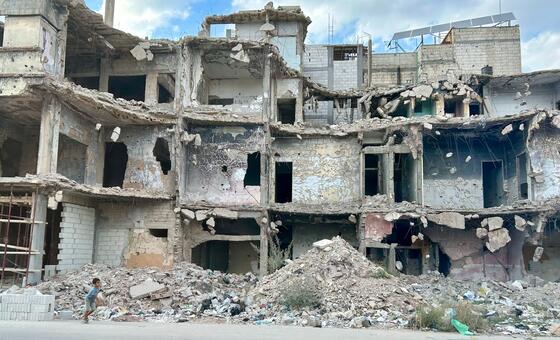
Facts: The UN Security Council convened its monthly debate on Syria. The meeting referenced reports of an Israeli strike in occupied territory, discussion of a proposed multinational oil pipeline as a response to closure of the Strait of Hormuz, and noted UN investigators’ findings that security remains fragile in southern Syria. UN Secretary‑General António Guterres was preparing to visit Damascus for the first time as Secretary‑General. Attributed claims: The article reports "reports" of an Israeli attack and that the pipeline discussion was aimed at countering disruptions linked to US–Iran hostilities; these are presented as reported or discussed items, not independently verified facts within the article. Uncertainties: The piece does not provide independent verification, detailed sourcing, casualty figures, precise locations, or operational details for the alleged attack or the pipeline project.
Source and Framing Analysis
The original piece is a UN News briefing-style report that emphasizes Security Council proceedings and UN investigator findings. Material uncertainties that affect interpretation include: limited corroboration for the alleged Israeli attack (the article references reports without on-the-record sources or detail), sparse detail about the multinational pipeline (participants, feasibility, timeline), and broad characterization of US–Iran hostilities as an ongoing "war" without elaboration. The article’s institutional frame privileges diplomatic and security perspectives; humanitarian impacts are noted indirectly (fragile security) but not explored in depth.
Biblical Reflection
This report focuses on international diplomatic and security developments rather than direct humanitarian detail. The framing centers on geopolitics — military incidents, strategic energy routes, and high-level diplomacy — which can obscure the daily suffering of civilians who bear the immediate consequences of instability. Christians should notice how the language of security and strategy can de-personalize those who are most vulnerable.
Truth demands careful attention to what is confirmed and what is reported as allegation; mercy calls us to put civilian protection and relief at the center of our moral concern. A Christian response will press for verified information, advocate for measurable protection for civilians, and support diplomatic efforts that prioritize de‑escalation and humanitarian access. Humility and patience are needed when reports are partial; we should avoid rushing to judgement while still insisting that truth and justice be pursued.
Finally, the call to love our neighbor means praying for and supporting those on the ground — displaced families, wounded civilians, and local aid workers — and using our voices to urge policies that reduce suffering, not merely to score geopolitical points.
Scripture in context
- 1Luke 10:25-37 (Parable of the Good Samaritan) — In this narrative Jesus answers a question about "neighbor" by telling a story where a Samaritan shows compassion to an injured stranger while others pass by; it challenges ethnic and religious presuppositions about who deserves mercy. — This passage calls Christians to prioritize immediate care for vulnerable people across political and ethnic divides and to measure actions by neighbor-love rather than legalism or strategic advantage.
- 2Matthew 5:9 and 23–26 (Peacemaking and reconciliation themes in the Sermon on the Mount) — Jesus teaches the blessings on peacemakers and urges reconciliation and right relationships among people before religious offering; the material links personal reconciliation with broader peace ethics. — These themes urge Christians to support diplomatic and peacemaking efforts that repair harm, reduce violence, and restore relationships rather than celebrate strategic wins.
Faithful Response
Pray regularly for civilians in Syria, for humanitarian workers, and for wisdom for diplomats and military leaders.
Support reputable humanitarian organizations providing food, shelter, medical care, and protection for displaced Syrians.
Stay informed with multiple reputable sources and avoid sharing unverified reports; prioritize verified information that can guide compassionate action.
Encourage local congregational teaching about nonpartisan care for victims of conflict and the difference between advocating for justice and inflaming partisan conflict.
Reflection and Discussion
- 1In what ways does a focus on security and strategy make it easier to ignore individual human suffering, and how can Scripture re-center our attention?
- 2How should our concern for national or allied interests be weighed against the biblical call to protect and serve the vulnerable?
- 3What does faithful peacemaking require of Christians when international diplomacy appears slow or inadequate?
Sources
Reporting links are evidence inputs; Sanctuary News' biblical reflection is commentary.
This outlook currently relies on fewer than two linked sources. Broaden verification before teaching from it.
- 1.Security Council LIVE: Spotlight on Syria as Guterres heads to Damascusofficial_document