News Summary
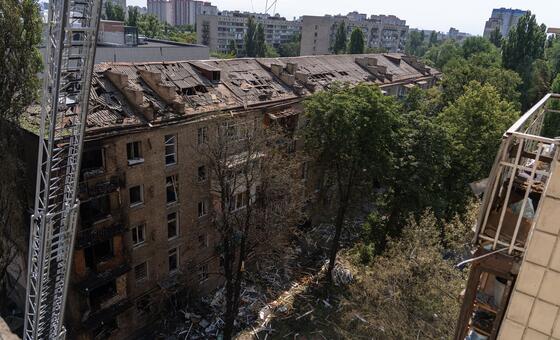
UN News reported that, at a Security Council session, UN officials said drone and missile attacks on civilians in the Russia‑Ukraine war are increasing. The live-coverage excerpt quotes officials characterizing the strikes as "spiralling" and notes the Council heard the latest reports. The item does not supply casualty figures, incident dates or locations, names of the officials who spoke, or independent evidence attributing responsibility for specific attacks.
Source and Framing Analysis
Source: UN News live coverage of a Security Council meeting. What it does: attributes the core claim to UN officials and centers civilian suffering and urgency, which rightly focuses attention on human harm. Framing: uses evaluative language (e.g., "spiralling") that emphasizes escalation. Omissions and limits: the excerpt provides no casualty counts, no geographic or temporal specifics beyond a reference to "Monday," no direct quotes or named UN speakers in the supplied text, and no independent corroboration or forensic detail. Implication for readers: the claim that attacks on civilians are increasing is credibly attributable to UN officials and worth concern, but the lack of specifics means readers should treat details about scope, victims, and responsibility as unresolved until supported by fuller reporting or UN documentation.
How sources covered this story
Sanctuary separately assesses reporting quality and alignment with Christian virtues. The virtues assessment considers truthfulness, dignity, compassion, justice, peacemaking, humility, and care for vulnerable people. It does not assess a publisher's faith or reward religious language.
Compare 1 reports
Reporting 70/100Virtues 80/100
- Distinctive contribution
- States that drone and missile attacks on civilians are 'spiralling' and that the Security Council heard the latest reports from UN officials about the situation, indicating both escalation and international diplomatic attention.
- Framing
- Frames the situation around civilian suffering and escalation (uses the emphatic term 'spiralling'), and highlights the Security Council as the venue for official UN reporting. The language emphasizes humanitarian impact and urgency.
- Omissions or uncertainty
- No specifics on locations, dates beyond 'on Monday', casualty figures, which parties conducted the attacks, which UN officials reported, or the content of the reports. The excerpt uses an evaluative adjective ('spiralling') without presenting supporting data in the supplied text.
- Why these scores
- As a brief lead, it responsibly attributes the information to UN officials and the Security Council and correctly centers civilian suffering. However, it lacks concrete data, direct quotes, detailed sourcing, and specifics that would strengthen verifiability. Appropriate as a summary but limited in evidentiary detail. The excerpt centers human dignity and suffering by highlighting civilian impact and elevates an international venue (Security Council) where concern is voiced, reflecting compassion and concern for vulnerable people. Language is urgent but not dehumanizing. Score is moderated because the supplied text does not include explicit calls for justice, reconciliation, or concrete protective measures.
Biblical Reflection
As Christians we first attend to the human suffering named by the Security Council report: civilians harmed by drone and missile strikes are our neighbors for whom we must mourn and act. Our response should balance truth and mercy—affirming the factual reports of rising civilian harm while avoiding premature assignment of blame without evidence. We are called to seek justice and protection for the vulnerable, to advocate for impartial humanitarian access, and to practice peacemaking and humility in public witness. The parable of the Good Samaritan reminds us that faithful discipleship shows itself in concrete, nonpartisan care for the injured; similarly, Christian public engagement here should prioritize relief, protection, truthful reporting, and honest accountability that seeks restoration rather than demonization.
Scripture in context
- 1UN News, "Security Council LIVE: Civilian suffering grows in Russia-Ukraine war" (live-coverage excerpt) — Live coverage reported that UN officials told the Security Council that "spiralling" drone and missile attacks on civilians were in the spotlight as the Council heard the latest reports about the situation on the ground. — Use this source as the basis for verified factual claims about what UN officials reported at the Security Council session; do not extend the source to supply casualty figures, attributions of responsibility, or incident-level detail absent further reporting.
- 2Luke 10:25-37 (Parable of the Good Samaritan) — scriptural context — Jesus teaches that neighbor-love is shown through compassionate action toward the injured irrespective of ethnic or social boundaries. — This passage calls Christians to nonpartisan, practical mercy for people harmed by conflict—prioritizing relief and protection of civilians while resisting dehumanizing rhetoric in public discourse.
Faithful Response
Pray regularly and intentionally for civilians affected by the violence, for humanitarian workers, and for leaders at the UN and in the region to act to protect noncombatants.
Support vetted humanitarian organizations that provide neutral, verified aid (medical care, shelter, food) to civilians in Ukraine and displaced persons, prioritizing agencies with strong accountability and impartial access.
Avoid amplifying unverified claims or graphic material without confirmation; rely on multiple credible sources before sharing reports that assign responsibility for attacks.
Advocate to policymakers and church networks for measures that expand safe humanitarian access, protect civilians, and pursue evidence-based accountability—while refusing language that dehumanizes any group.
Mobilize pastoral care in congregations: host vigils or lament services, provide practical support for refugees or congregants with family affected by the conflict, and offer counseling for trauma and anxiety.
Reflection and Discussion
- 1When I hear reports about civilians suffering in war, how do I balance righteous anger with Christian compassion so that my response reflects mercy, truth, and peacemaking?
- 2What steps can my congregation take to provide practical, nonpartisan care to people harmed by this conflict without becoming entangled in partisan identity?
- 3How should the church weigh urgent humanitarian concern against the need for careful verification when publicizing or acting on reports of violence?
Sources
Reporting links are evidence inputs; Sanctuary News' biblical reflection is commentary.
This outlook currently relies on fewer than two linked sources. Broaden verification before teaching from it.
- 1.Security Council LIVE: Civilian suffering grows in Russia-Ukraine warofficial_document