News Summary
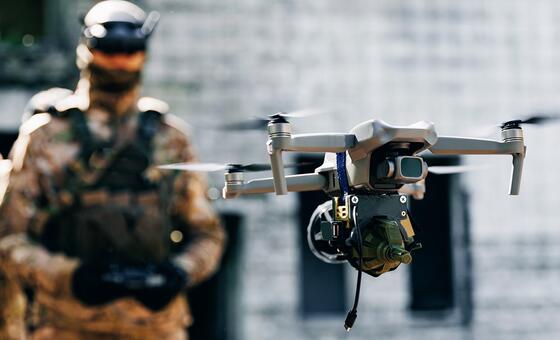
UN Secretary‑General António Guterres and the President of the International Committee of the Red Cross renewed urgent calls for stricter global controls on lethal autonomous weapons. The UN News piece links that appeal to reports that fully autonomous, AI‑guided drones may be in use on battlefields but explicitly describes those reports as 'unconfirmed.' PBS NewsHour separately reported a joint UN–ICRC appeal, describing risks as having 'intensified' and using the common label 'killer robots.' Both items emphasize humanitarian risk and the need for regulation, but neither provides independent, technical, or incident verification of battlefield use.
Source and Framing Analysis
Primary source: UN News reporting that names António Guterres and the Red Cross president and frames their renewed appeal as urgent and precautionary. Distinct contribution: UN News uniquely includes the explicit qualification that reports of fully autonomous, AI‑guided drones being used on battlefields are 'unconfirmed' and uses a rhetorical urgency ('before it is too late'). Secondary coverage: PBS NewsHour corroborates a joint appeal by the UN and ICRC, characterizing the situation as a 'stepped‑up' warning that risks have 'intensified' and using the shorthand label 'killer robots.' Framing differences: UN News is precautionary with an explicit evidentiary caveat; PBS highlights intensified risk and uses more colloquial terminology. Common limitation across sources: lack of independent verification, no technical specifics (system types, engagement policies, thresholds for 'meaningful human control'), no named eyewitness evidence or geographic/actor attribution, and no detailed proposals for regulatory wording or enforcement. Readers should treat the humanitarian warning seriously while recognizing the reporting does not establish verified operational use of fully autonomous lethal systems.
How sources covered this story
Sanctuary separately assesses reporting quality and alignment with Christian virtues. The virtues assessment considers truthfulness, dignity, compassion, justice, peacemaking, humility, and care for vulnerable people. It does not assess a publisher's faith or reward religious language.
Compare 2 reports
Reporting 72/100Virtues 78/100
- Distinctive contribution
- Introduces the specific claim of unconfirmed battlefield use of fully autonomous/AI-guided drones and explicitly attributes the renewed urgent call to António Guterres and the President of the Red Cross.
- Framing
- Urgent, precautionary framing — presents controls as an immediate necessity ('before it is too late') and links the call to potentially emerging battlefield developments.
- Omissions or uncertainty
- The 'unconfirmed reports' are not sourced or described; no evidence, locations, actors, or technical definitions are provided in the excerpt; the degree of confirmation or credibility of the reports is unclear.
- Why these scores
- Supplies timely attribution to senior officials and relevant context, but leans on an unsourced phrase ('unconfirmed reports') and uses dramatic language ('before it is too late'), reducing rigor. Responsible on attribution but limited on sourcing and evidentiary detail in the supplied text. The piece emphasizes protection and precaution, aligning with care for vulnerable people and concern for human life. While somewhat alarmist in tone, it does not dehumanize subjects and advances a call to limit harm, supporting justice and compassion.
Reporting 80/100Virtues 76/100
- Distinctive contribution
- Explicitly records a joint UN–ICRC appeal and supplies the quoted characterization that risks have 'intensified' and the common label 'killer robots.'
- Framing
- Frames the story as a stepped-up, joint appeal warning of increased risk from autonomous weapons; neutral news tone with emphasis on urgency.
- Omissions or uncertainty
- Does not name the specific UN or Red Cross officials, does not cite evidence of use of autonomous systems, gives no detail on the proposed bans/restrictions, and does not identify implicated states or incidents.
- Why these scores
- Clear and properly attributed brief that accomplishes a concise news update. Loses points for lack of detail, absence of named speakers in the supplied excerpt, and no evidentiary support for the stated increase in risk. Respects truthfulness and human dignity by reporting a safety-focused appeal and avoids dehumanizing language. Limited detail reduces ability to evaluate compassion or justice impacts, but overall aligned with protecting vulnerable people and precaution.
Biblical Reflection
Christian moral concern emphasizes the sanctity of human life, protection of the vulnerable, accountability for life‑and‑death decisions, and the pursuit of justice and peace. The public appeals by international humanitarian leaders call Christians to listen: to advocate for safeguards that prevent dehumanizing violence, to support transparent inquiry before amplifying unverified battlefield claims, and to press for legal frameworks preserving meaningful human oversight. Practically, this means combining urgency to protect civilians with humility about technical claims, partnering with credible humanitarian actors, engaging policymakers for accountability, and caring pastorally for those fearful or impacted.
Scripture in context
- 1Matthew 5:9 — Part of Jesus' teaching about the character and conduct of those who belong to God's kingdom. — Calls Christians to be peacemakers and to pursue reconciliation and protection for the vulnerable; this perspective grounds a precautionary posture toward technologies that could widen indiscriminate harm or remove human moral judgment from lethal decisions.
- 2Romans 13:1-7 — Paul's instructions about the role of governing authorities and civil responsibility for order and justice. — Encourages engagement with civic institutions to shape laws that restrain injustice and protect citizens, supporting efforts to establish legal norms and accountability for emerging military technologies.
Faithful Response
Pray for accurate information, protection of civilians, and wisdom for policymakers and humanitarian actors confronting new weapon technologies.
Listen to humanitarian appeals and technical experts; avoid amplifying unverified battlefield claims while taking the humanitarian warning seriously.
Advocate with humility and persistence: contact lawmakers and support international initiatives that aim to preserve meaningful human control and accountability for lethal force.
Support credible humanitarian organizations that work to protect civilians, document harms, and promote compliance with international humanitarian law.
Educate congregations: host a forum or invite an expert in international humanitarian law or the ethics of AI so members can respond informedly and constructively.
Reflection and Discussion
- 1How does the call to be peacemakers shape our congregation's response to rapidly evolving military technology?
- 2What standards of human accountability and dignity must Christians insist on if machines may be used to make lethal choices?
- 3When news reports are uncertain, how does Scripture guide our balance between urgent moral concern and the responsibility to verify facts before acting or speaking?
Sources
Reporting links are evidence inputs; Sanctuary News' biblical reflection is commentary.
This outlook currently relies on fewer than two linked sources. Broaden verification before teaching from it.
- 1.UN chief, Red Cross renew call for rules on lethal autonomous weaponsofficial_document