News Summary
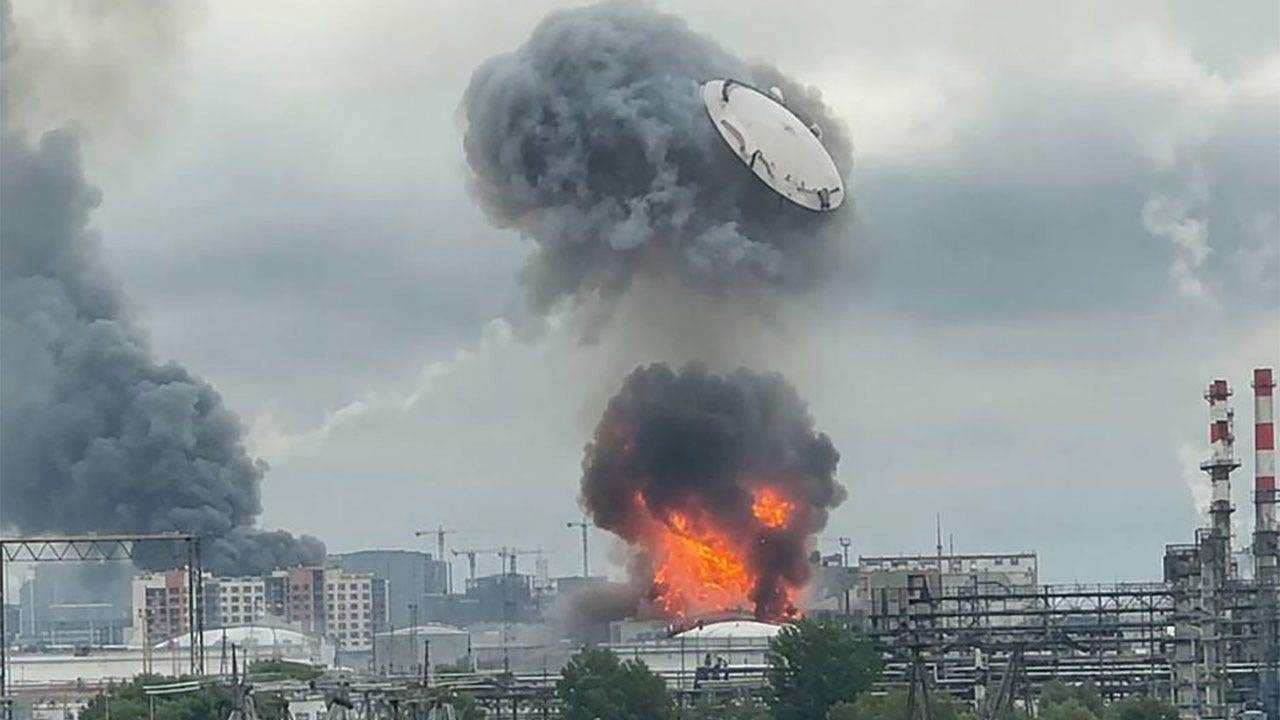
Ukrainian long-range drone and missile strikes have targeted Russian oil refineries, fuel storage and tankers deep inside Russian territory, including attacks reported on the Kapotnya (Moscow), Omsk (Russia’s largest refinery), and Saratov facilities. These strikes have led to temporary refinery shutdowns, reported reductions in Russian gasoline and diesel output, visible fuel shortages in parts of Russia and occupied Crimea, and emergency measures by Moscow such as a diesel export ban through the end of July. Observers quoted include ex-Russian opposition figure Maxim Katz, retired Western generals Philip Breedlove and Richard Newton, and Ukraine’s ambassador to Israel, who said U.S. intelligence has aided Ukraine’s long-range targeting (a claim that Fox News sought comment on from U.S. officials). Data cited from Reuters and agencies show a sharp drop in seaborne fuel exports in June versus May and the previous year. Analysts note that while the strikes strain Russia’s domestic fuel supplies and could create political pressure ahead of elections, Russia continues to generate substantial energy revenue through projects such as Yamal LNG and retains the ability to prioritize fuel for military needs; the strikes have not yet forced Russia to cease military operations or enter negotiations.
Biblical Reflection
The article foregrounds a strategic, utilitarian view of warfare: damaging an opponent’s economic and logistical base to weaken its capacity and political standing. From a Christian perspective, this raises several moral and pastoral concerns. The reporting highlights real economic effects and political consequences, but it relies heavily on perspectives from opposition figures and Western military officials and includes claims (e.g., U.S. intelligence assistance) that are reported but not fully confirmed in the piece; readers should note potential source bias and gaps in independent verification. Ethically, targeting energy infrastructure that sustains both military and civilian life is complex: it may degrade an aggressor’s ability to wage war, yet it also risks increasing civilian suffering and shifting burdens onto ordinary people—something Scripture calls us to weigh carefully. Christians seeking truth should hold these tensions together: acknowledge the legitimate desire to stop aggression and protect the innocent, but also grieve the human cost, demand transparent and honest reporting, and pray for restraint, proportionality, and avenues toward reconciliation. The article’s framing tends toward strategic success and pressure on leadership; it underemphasizes humanitarian consequences inside Russia and the wider region and does little to explore alternatives that limit civilian harm. Practically, believers should be skeptical of-certainty about political collapse or imminent regime change and instead attend to verified facts, to the wellbeing of civilians on all sides, and to advocating for policies and actions that protect noncombatants.
Scripture in context
This outlook does not yet include contextual Scripture citations. Do not treat a general biblical theme as an exegetical conclusion.
Faithful Response
No prescribed response is offered. Consider the reflection prompts below in your own church context.
Reflection and Discussion
- 1Which voices are centered in this story and whose suffering or perspective is underreported or absent?
- 2Does the article treat damage to infrastructure primarily as a military win without adequately considering the humanitarian consequences for civilians?
- 3How does reliance on anonymous or single-source intelligence claims affect how confidently we should accept conclusions about causation and responsibility?
Sources
Reporting links are evidence inputs; Sanctuary News' biblical reflection is commentary.
This outlook currently relies on fewer than two linked sources. Broaden verification before teaching from it.
- 1.Original reportprimary