News Summary
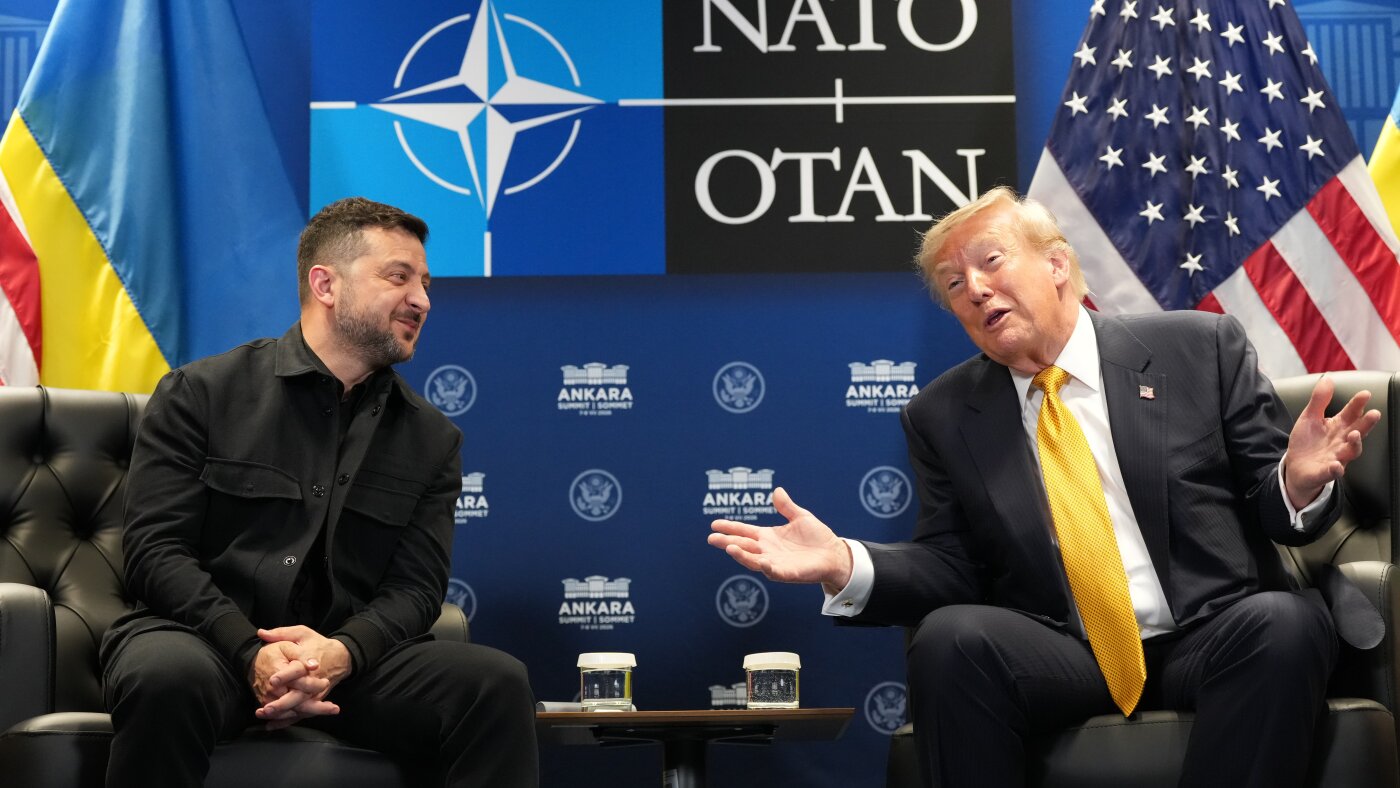
At a NATO summit in Ankara on July 8, 2026, President Donald Trump met with Ukrainian President Volodymyr Zelenskyy and announced the United States will grant Ukraine a license to manufacture Patriot air defense systems. Trump said the U.S. will “show them how to do it” and enable Ukrainian production. The summit included sharp public exchanges earlier in the day—Trump criticized some European partners over issues including Greenland and support for operations involving Iran—but concluded with the president praising allies' increased defense spending. NATO leaders issued a declaration pledging $80 billion to help meet Ukraine's defense needs this year and next. NATO Secretary-General Mark Rutte commended recent U.S. strikes on Iran; Trump said he considered an interim deal with Iran effectively over but would allow talks to continue. The Pentagon is conducting a six-month review of U.S. force posture in Europe. Separately, Trump met Syrian leader Ahmad al-Sharaa, and U.S. officials signaled plans to remove Syria from the state-sponsor-of-terrorism list as part of a normalization process. The article notes Zelenskyy renewed his appeal for NATO membership and highlighted Ukraine’s claims about continued battlefield gains.
Biblical Reflection
The report describes concrete policy shifts: a U.S. decision to transfer sensitive air-defense manufacturing capability to Ukraine, large NATO funding pledges, and diplomatic moves involving Iran and Syria. These actions reflect a pragmatic, transactional worldview: security through military capacity-building, burden-sharing demands of allies, and willingness to reassess relationships for perceived national interest. From a Christian perspective, supporting measures that protect civilians and deter unjust aggression can be consistent with loving one's neighbor, but military aid also risks escalation and prolonged suffering if not paired with sincere, sustained diplomatic efforts and care for displaced and wounded civilians. The article centers leaders’ statements and geopolitical headlines more than humanitarian consequences or long-term peacebuilding; readers should notice that emphasis and ask whether policy choices balance short-term security with justice, reconciliation, and care for the vulnerable.
Scripture in context
This outlook does not yet include contextual Scripture citations. Do not treat a general biblical theme as an exegetical conclusion.
Faithful Response
No prescribed response is offered. Consider the reflection prompts below in your own church context.
Reflection and Discussion
- 1Are we equating moral responsibility with military capacity alone, or are we also investing in diplomacy and civilian relief that lead toward durable peace?
- 2Whose stories are centered in coverage like this—state leaders and weapons transfers—or the civilians who bear the human cost of prolonged conflict?
- 3When governments make rapid policy reversals or transactional deals, what safeguards should Christians expect to ensure accountability, justice, and care for those most harmed?
Sources
Reporting links are evidence inputs; Sanctuary News' biblical reflection is commentary.
This outlook currently relies on fewer than two linked sources. Broaden verification before teaching from it.
- 1.Original reportprimary