News Summary
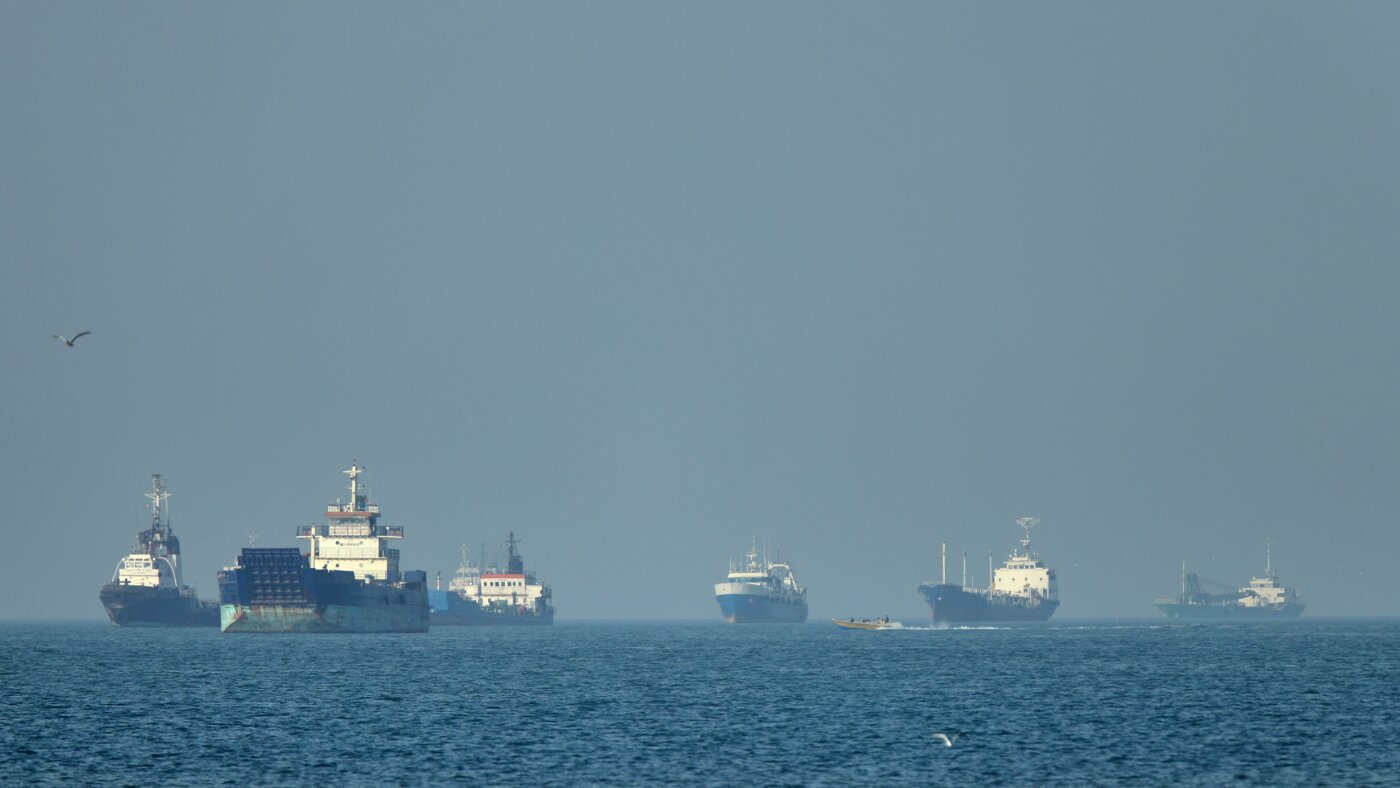
Multiple incidents occurred in and around the Strait of Hormuz and Gulf of Oman. The United Arab Emirates reported engaging incoming missiles and drones it said were launched by Iran, and three people were wounded. U.S. forces reported intercepting attacks on three Navy ships, striking Iranian military facilities linked to those attacks, and firing upon and disabling two Iranian tankers that Washington said were trying to breach an American blockade of Iranian ports. Iran's government condemned the U.S. strikes as violations of a ceasefire. Satellite imagery reviewed by the Associated Press and maritime intelligence firm Windward AI showed an oil slick near Kharg Island covering about 95 square kilometers. Reports also noted that Iran has limited transit through the Strait of Hormuz and moved to formalize control with a new agency, while hundreds of commercial vessels remain bottled up in the Persian Gulf. The article quotes statements from U.S. leaders and mentions diplomatic efforts by Pakistan and others to extend a ceasefire and negotiate a settlement.
Biblical Reflection
From a Christian perspective this account points to several moral concerns. First, the escalation of military action and rhetoric runs counter to the biblical call to pursue peace and to protect the vulnerable; violence often produces civilian harm, economic hardship, and environmental damage (as seen in the reported oil slick). Second, the story highlights competing claims of authority over an international waterway and the temptation for states to assert control by force—Christians should test such claims against justice, international law, and the common good rather than power or national prestige alone. Third, the framing of the article reflects a security-first worldview: emphasis on interdiction, deterrence, and military success can obscure nonmilitary solutions, the human cost, and environmental stewardship. Finally, Christians are called to pursue truth (including careful attention to accurate reporting and titles), to lament environmental harm (stewardship of creation), and to pray and work for reconciliatory outcomes that prioritize life, justice, and lasting peace.
Scripture in context
This outlook does not yet include contextual Scripture citations. Do not treat a general biblical theme as an exegetical conclusion.
Faithful Response
No prescribed response is offered. Consider the reflection prompts below in your own church context.
Reflection and Discussion
- 1What assumptions about security, sovereignty, and legitimate force shape how officials and media describe these events, and how should those assumptions be tested by Christian commitments to justice and the protection of the vulnerable?
- 2Where are the human and environmental costs underemphasized in the coverage, and how might a focus on stewardship and care (for people and creation) change the priorities of policymakers?
- 3How can Christians hold leaders accountable for truthfulness and restraint while advocating faithfully for peaceable and lawful solutions to disputes over international waterways and commerce?
Sources
Reporting links are evidence inputs; Sanctuary News' biblical reflection is commentary.
This outlook currently relies on fewer than two linked sources. Broaden verification before teaching from it.
- 1.Original reportprimary