News Summary
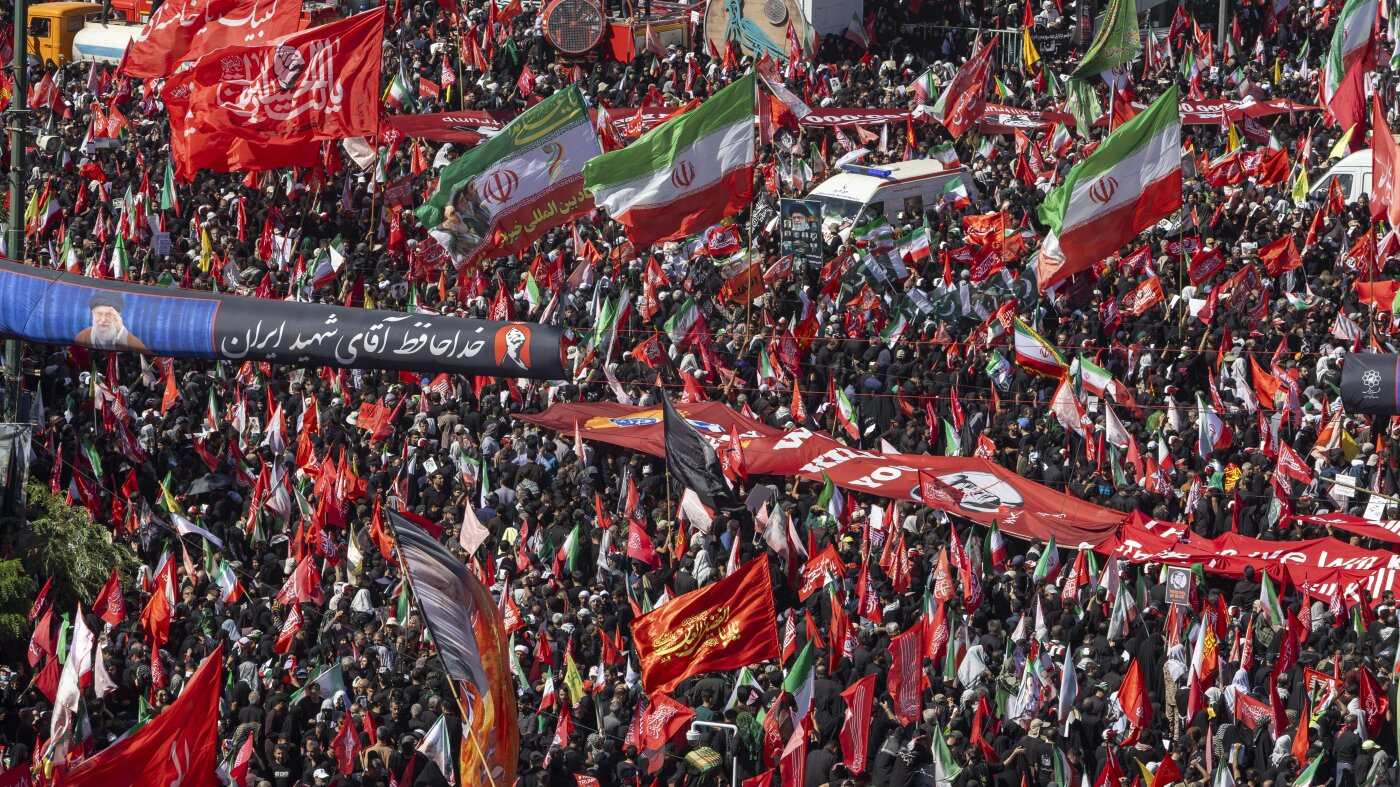
After two days of exchange, fighting between the United States and Iran appears to have paused; U.S. officials say U.S. forces struck 170 targets in Iran, while Iranian officials say they targeted U.S. military bases in the Gulf. The clashes coincided with a weeklong funeral described in the article for former Supreme Leader Ayatollah Ali Khamenei and four family members reported killed on the first day of the conflict. Separately, the U.S. Supreme Court gave the Trump administration authority to revoke Temporary Protected Status for more than 300,000 people, putting Haitian and Syrian TPS holders at risk of losing legal work authorization and residence. President Trump also dismissed the remaining members of the bipartisan U.S. Election Assistance Commission, citing a recent Supreme Court decision (the Slaughter case) on presidential removal power. Regarding Israel and Gaza, a ceasefire brokered last year has deteriorated: Israeli officials and NPR analysis say Israeli forces now control nearly 70% of Gaza (up from about half at the start of the ceasefire). Israeli Prime Minister Benjamin Netanyahu says the military is surrounding Hamas; Palestinian authorities report more than 1,000 Palestinians killed since the ceasefire took effect. NPR reporters document life for families trapped between expanding military zones in Gaza, describing nightly shelling, daytime gunfire, displacement, and shrinking access to aid. The newsletter also briefly summarizes other political and cultural items, including the U.K. Labour leadership contest and entertainment recommendations.
Biblical Reflection
The reporting highlights overlapping crises: the risk of interstate escalation between the U.S. and Iran, a continuing humanitarian catastrophe in Gaza, and domestic policy and legal shifts that affect vulnerable people (TPS recipients) and civic institutions. From a Christian vantage point, these stories call us to distinguish between verified facts and competing claims, to prioritize care for noncombatants, and to guard democratic processes that protect the vulnerable. Wartime statements from governments about strikes and targets are often asymmetric and hard to verify quickly; news consumers should note source attributions (U.S. claims, Iranian claims, Gaza Health Ministry figures, NPR analysis) and avoid treating any single claim as indisputable. The pieces about Gaza center human suffering—displacement, loss of aid access, and death—which should press Christians toward compassionate action and public advocacy for civilian protection and humanitarian access. The TPS and Election Assistance Commission items raise justice and stewardship concerns: how a society treats immigrants who depend on legal protections and how institutional changes affect fair administration of elections. Spiritually, the stories expose how power is exercised in ways that can silence or displace the weak; Christian wisdom urges seeking truth, defending human dignity, praying for peace, and holding leaders accountable without dehumanizing opponents.
Scripture in context
This outlook does not yet include contextual Scripture citations. Do not treat a general biblical theme as an exegetical conclusion.
Faithful Response
No prescribed response is offered. Consider the reflection prompts below in your own church context.
Reflection and Discussion
- 1Which claims in this reporting come from official sources versus independent verification, and how should that affect how we accept or repeat them?
- 2Whose suffering is centered in these accounts and whose may be underreported—what does that reveal about our informational blind spots?
- 3How should concern for civilian protection and for rule-of-law institutions shape Christian public prayer, witness, and advocacy in these crises?
Sources
Reporting links are evidence inputs; Sanctuary News' biblical reflection is commentary.
This outlook currently relies on fewer than two linked sources. Broaden verification before teaching from it.
- 1.Original reportprimary