News Summary
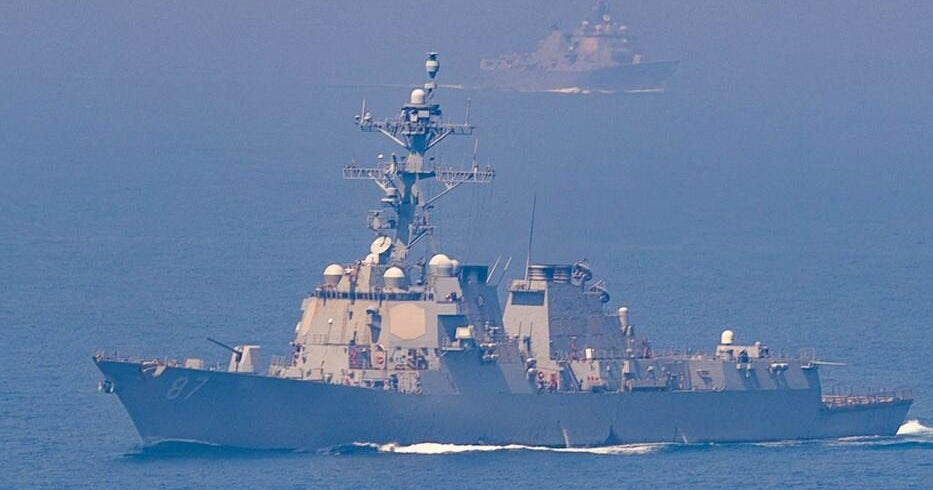
U.S. Central Command said U.S. forces fired on and disabled two Iran-flagged oil tankers (M/T Sea Star III and M/T Sevda) to prevent them from docking at Iranian ports, using precision munitions against their smokestacks. CENTCOM also said a U.S. fighter jet disabled another Iranian-flagged tanker, M/T Hasna, by firing into its rudder earlier in the week. U.S. officials say they have intercepted more than 50 vessels to enforce a naval blockade of Iranian ports that followed failed peace talks in Islamabad. CENTCOM reported that Iranian forces attacked three U.S. Navy destroyers (USS Truxtun, USS Mason and USS Rafael Peralta) with missiles, drones and small boats; U.S. officials said none of the ships were hit and that U.S. forces carried out “self-defense strikes” against military assets and launch sites at or near Iranian ports in the Strait of Hormuz. Iran’s military and foreign ministry condemned the U.S. strikes, described them as violations of a ceasefire (signed April 8, 2026, per participants’ accounts), and said the U.S. had “crossed the point of no return.” Iran reported wounded and missing sailors and said additional strikes occurred. The UAE reported intercepting missiles and drones launched by Iran and said debris from intercepts moderately wounded three people; UAE officials gave cumulative tallies of weapons intercepted and civilian casualties since the wider conflict began. Iran also said its forces seized an oil tanker, Ocean Koi (aka Jin Li), near the Sea of Oman; open-source tracking showed the vessel off Oman and listed it as part of a sanctioned “shadow fleet” previously. The article also reports related regional developments: heavy casualties and displacement in Lebanon from the Israel-Hezbollah exchanges, Israeli evacuation warnings in southern Lebanon, arrests in Israel for alleged spying for Iran, and U.S. diplomatic/military friction with NATO allies over use of bases. President Trump maintained the ceasefire was still in effect, described U.S. action as a strong response, and said the U.S. vessels were unharmed.
Biblical Reflection
From a Christian perspective, this report highlights how quickly diplomatic rupture and military escalation produce widespread human suffering and uncertainty. The article mostly presents competing official claims (U.S. military, CENTCOM, Iranian state bodies, UAE, and President Trump), with factual details about ship names, locations, and reported casualties, but many assertions remain contested or based on official statements rather than independent verification. Readers should note: (1) both governments use charged language to justify force—rhetoric that can harden enmity and obscure avenues for negotiation; (2) the operational focus (interdictions, strikes, vessel tracking) risks sidelining the human and humanitarian costs emphasized in other parts of the article (civilian deaths, displacement, wounded first responders); and (3) the article reflects a predominantly state-centric security frame that treats military action as an instrument of policy while offering limited scrutiny of legal claims (blockade legality, claims of ceasefire breach) or third-party verification. Biblically, Christians are called to be peacemakers and to seek truth (Matthew 5:9; John 8:32). That calls for careful discernment of official claims, compassion for civilians caught in the crossfire, and an insistence that nations pursue just peace and protect noncombatants. Practically, believers should resist simplifications that make any side wholly righteous or wholly evil, demand accountability and transparency from leaders, and advocate for humanitarian access and de-escalation. The article’s emphasis on military detail and political posturing should prompt readers to look for corroborating sources, to center the experiences of civilians and humanitarian indicators, and to pray and act for peace and justice rather than be swept into partisan triumphalism.
Scripture in context
This outlook does not yet include contextual Scripture citations. Do not treat a general biblical theme as an exegetical conclusion.
Faithful Response
No prescribed response is offered. Consider the reflection prompts below in your own church context.
Reflection and Discussion
- 1Which claims in the article are independently verified and which are competing official statements? How does that shape which parts you take as fact?
- 2Whose voices are centered (military and political leaders) and whose are marginalized (civilians, humanitarian workers)? What does that reveal about the priorities behind the reporting?
- 3How does rhetoric that frames retaliation as a necessity affect the possibilities for negotiated peace and protection of noncombatants?
Sources
Reporting links are evidence inputs; Sanctuary News' biblical reflection is commentary.
This outlook currently relies on fewer than two linked sources. Broaden verification before teaching from it.
- 1.Original reportprimary