News Summary
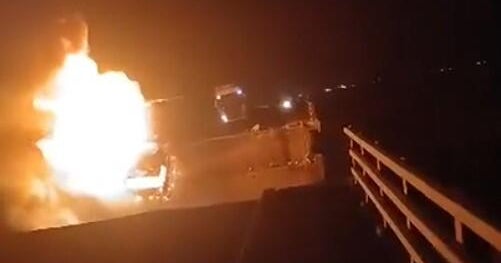
Iran's Islamic Revolutionary Guard Corps (IRGC) claimed multiple strikes on U.S. military facilities across the Middle East, including allegations of attacks on a U.S. base at al-Tanf (Syria), a base in Kuwait, radar facilities near Salamah Rocks (Oman), and U.S. forces in Bahrain and Jordan; U.S. officials did not immediately confirm the IRGC's claims. Kuwait reported damage to power and desalination infrastructure; Qatar reported a child wounded by shrapnel after an intercepted weapon. Maritime-risk analysts said ship crews are refusing to transit the Strait of Hormuz, citing fear after recent attacks on commercial vessels, and transits through the strait have fallen sharply. Brent crude rose to about $85 a barrel amid the disruption. The U.S. carried out a sixth consecutive night of strikes on Iranian targets, which CENTCOM described as hitting coastal surveillance, air defenses, logistics, and maritime capabilities; Iranian state media reported U.S. strikes killed and wounded several people and hit an airport, railway station, and bridges. CENTCOM said more than 50,000 U.S. personnel are deployed in the region and reported boarding and redirecting commercial vessels enforcing a U.S. naval blockade of Iranian ports; the U.S. disabled one oil tanker. The White House press secretary stated Iran violated a memorandum of understanding by firing on commercial vessels and said the U.S. is holding Iran to account while peace talks purportedly continue.
Biblical Reflection
This article reports an intensifying state-on-state conflict with real human, economic, and geopolitical consequences. Both sides' public statements are political instruments—IRGC claims and U.S. statements are likely shaped by propaganda, deterrence, and domestic messaging—so readers should treat unilateral claims cautiously. The immediate effects are concrete: damage to civilian infrastructure, risk to merchant crews, disrupted global shipping, and higher oil prices that will affect many economically. From a Christian perspective we should mourn the escalation, the toll on civilians and workers (seafarers, port staff, nearby residents), and the way fear is driving decisions. Christians are called to seek truth, pray for protection of innocents, and press leaders toward de-escalation and just restraint. At the same time, discernment requires recognizing legitimate security concerns while rejecting dehumanizing rhetoric that simplifies complex causes into moral absolutes. The article aligns with observable facts about strikes, economic impacts, and maritime disruptions, but it relies heavily on claims from interested parties; thoughtful readers should look for independent confirmations and humanitarian reporting on civilian harm.
Scripture in context
This outlook does not yet include contextual Scripture citations. Do not treat a general biblical theme as an exegetical conclusion.
Faithful Response
No prescribed response is offered. Consider the reflection prompts below in your own church context.
Reflection and Discussion
- 1Which claims in this report come from parties with a direct stake in the outcome, and where is independent verification missing?
- 2How are the needs and safety of noncombatants—seafarers, port communities, and civilians—being weighed against military objectives?
- 3Are fear and economic pressure shaping policy and public response more than clear-headed efforts to minimize harm and restore peace?
Sources
Reporting links are evidence inputs; Sanctuary News' biblical reflection is commentary.
This outlook currently relies on fewer than two linked sources. Broaden verification before teaching from it.
- 1.Original reportprimary