News Summary
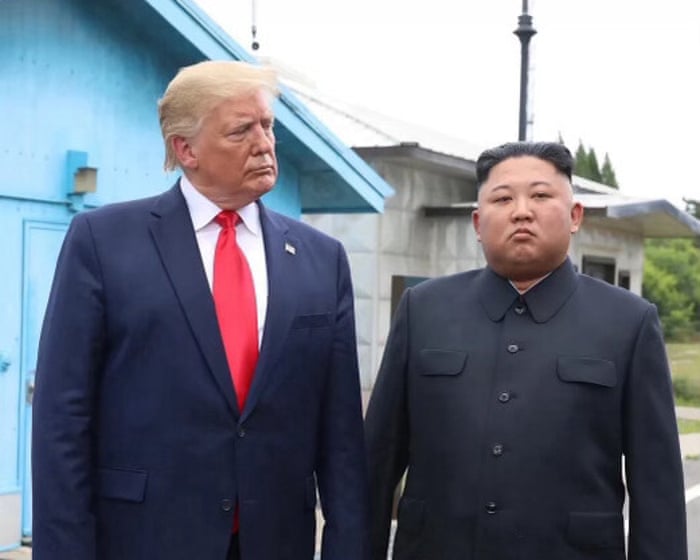
The Guardian live blog reports that President Trump directed the Pentagon to scale back certain combined U.S.–South Korea military exercises. The live entry attributes to the president the characterization that the planned large-scale joint drills were “inappropriate and hostile,” cites his reference to a “very good relationship” with North Korea’s leader as part of his rationale, and says he ordered Defense Secretary Pete Hegseth to “substantially reduce” participation because it was too late to cancel outright. The live format supplies quotes and attributions but does not publish a linked Pentagon or White House directive, a list of which exercises would be affected, or a documented response from the South Korean government or U.S. military leaders.
Source and Framing Analysis
Source: The Guardian (live blog). The live-blog format provides near-real-time attributions and quotations but typically omits full primary documents, official orders, and extended sourcing. In this instance the Guardian frames the decision around the president’s personal rationale (his stated relationship with North Korea and concerns about cost and signaling) while also noting, briefly, military warnings that North Korea is adapting tactics from the Ukraine war. Distinctive details the piece supplies include the president’s quoted language, the naming of the defense secretary (Pete Hegseth) as the official instructed to reduce the drills, and the characterization of the exercises as “inappropriate and hostile.” Major omissions and uncertainties in the piece: no published Pentagon/White House directive text, no specification of which exercises (names, units, dates, scope) would be scaled back, no formal South Korean or U.S. military response, and no operational analysis of how deterrence or readiness would be affected. Because the source mixes brief items in live coverage, the reporting should be treated as provisional until primary documents or official statements are available.
How sources covered this story
Sanctuary separately assesses reporting quality and alignment with Christian virtues. The virtues assessment considers truthfulness, dignity, compassion, justice, peacemaking, humility, and care for vulnerable people. It does not assess a publisher's faith or reward religious language.
Compare 1 reports
Reporting 78/100Virtues 78/100
- Distinctive contribution
- Provides verbatim presidential quotes explaining motive, cites the specific instruction to the defense secretary (Pete Hegseth) to 'substantially reduce' the exercises, and notes the administration’s characterization of North Korea as 'unthreatening and respectful' under Trump—details that go beyond a bare headline.
- Framing
- Frames the decision as driven by the president’s personal relationship and cost/ signaling concerns, while explicitly noting opposing context by referencing military officials’ warnings that North Korea is learning battlefield tactics from the Ukraine war. The tone is factual with an implicit tension between presidential rationale and military concern.
- Omissions or uncertainty
- No detail on what 'substantially reduce' means (which exercises, timeline, scale), no South Korean government response, no direct sourcing or quotes from the mentioned military officials, no explanation of Pete Hegseth’s official capacity or authority in this action, and no operational or strategic implications.
- Why these scores
- The excerpt includes direct quotes and a named instruction, and it situates the decision against a countervailing military perspective, showing responsible attribution and balance for a brief piece. It loses points for lack of specific sourcing for the military warnings, limited operational detail, and unanswered factual follow-ups. The excerpt is truthful and non‑dehumanizing, includes countervailing perspectives (military warnings) which supports humility and truthfulness, and avoids sensational language. It could rate higher if it showed more explicit concern for vulnerable populations or consequences of the decision (regional security, allied partners).
Biblical Reflection
A Christian response should center peacemaking and protection together: pursue de-escalation and diplomatic openings where they genuinely reduce human suffering, but insist on clear safeguards for allies, civilians, and service members who rely on security commitments. Truth and humility require asking for transparent explanations and evidence before accepting major shifts in posture. Mercy and justice call us to prioritize the safety of vulnerable populations (civilians on the Peninsula, families of deployed personnel, and communities reliant on deterrence) and to hold leaders accountable without demonizing opponents. Practically, Christians should pray for wisdom, press for full information, support those affected by policy changes, and work for policies that reduce the risk of violence while not abandoning obligations to protect the vulnerable.
Scripture in context
- 1Matthew 5:9 — Jesus commends peacemakers and calls disciples to active, reconciliatory engagement in a broken world. — Peacemaking in the face of geopolitical tension requires courage, practical prudence, and care for those at risk. This passage urges Christians to seek peace but not at the cost of abandoning duties to protect the vulnerable—so calls for reduced military exercises should be weighed alongside credible plans to preserve deterrence and civilian safety.
Faithful Response
Short-term steps: (1) Request primary documents and clarifications from official channels (Pentagon, White House, and the South Korean government)—ask for any directive text, lists of affected exercises, and legal/operational authority cited. (2) Encourage congregations to pray for national leaders, diplomats, service members, and allied civilians. (3) Organize a public forum or invite a security analyst to explain what kinds of exercises are normally held, what ‘scaling back’ might mean, and likely readiness implications. (4) Provide pastoral care for military families who may be anxious about changed deployments or missions. (5) Advocate — through letter-writing, respectful conversation with elected representatives, and community engagement — for transparent decision-making that includes allied consultation and explicit safeguards for civilians. Longer-term: support community education on the human costs of mis- or disinformation about security policy, and build ecumenical and civic partnerships that promote both peace and protection.
Reflection and Discussion
- 1How should Christians weigh gestures toward diplomatic engagement (which may reduce immediate tensions) against concrete obligations to deter aggression and protect allied civilians?
- 2What kinds of transparency and evidence should we demand from leaders before accepting major changes in military posture that affect allied security?
- 3How can our congregation offer pastoral care to people directly affected by changes in military readiness (service members, families, veterans) while also advocating responsibly for regional peace?
Sources
Reporting links are evidence inputs; Sanctuary News' biblical reflection is commentary.
This outlook currently relies on fewer than two linked sources. Broaden verification before teaching from it.
- 1.Trump cuts military drills with South Korea citing ‘very good relationship’ with Kim Jong-un – US politics liveprimary_reporting