News Summary
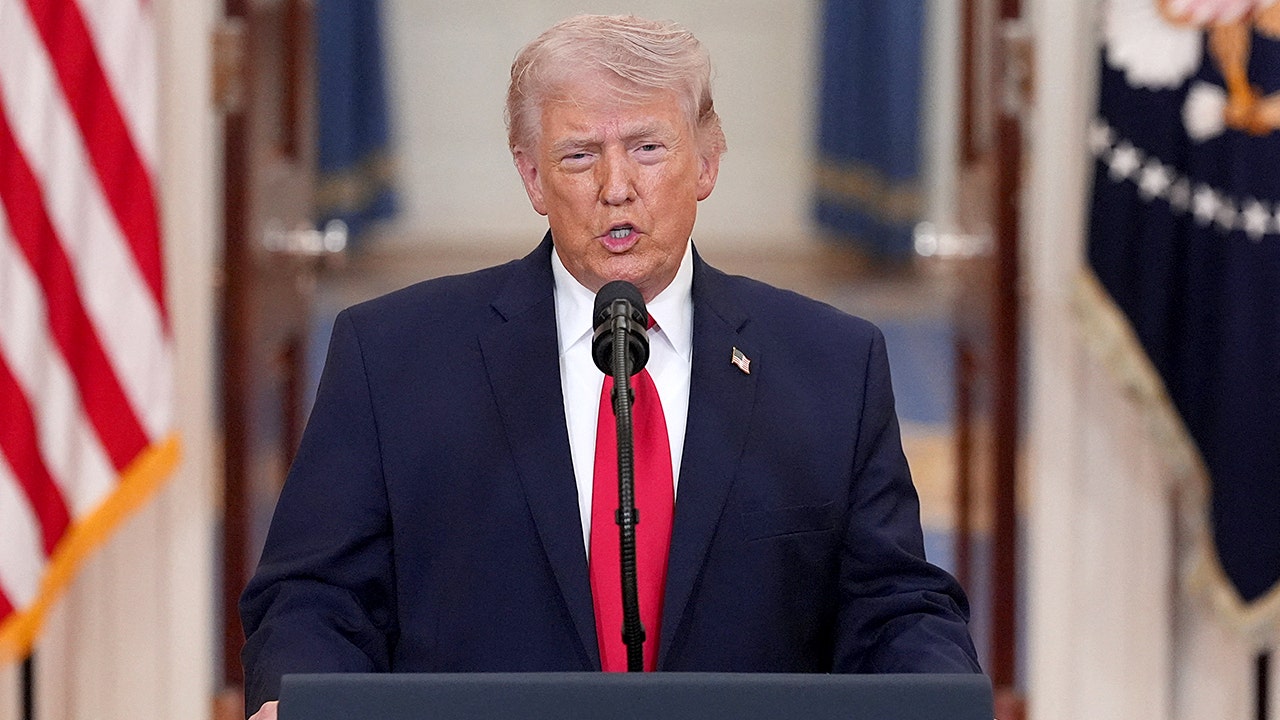
President Donald Trump delivered a primetime address saying the United States’ “core strategic objectives” in Iran are “nearing completion” roughly 32 days after the start of a U.S. military campaign called Operation Epic Fury. In the speech Trump claimed the operation has largely neutralized Iran’s military threat, asserting Iran’s navy and air force have been destroyed, its missile stockpiles are nearly depleted, and its defense industrial base has been annihilated. He said these actions will cripple Iran’s ability to support proxies and build a nuclear weapon, and he warned the U.S. would “hit them extremely hard” over the next two to three weeks. Trump thanked regional allies (Israel, Saudi Arabia, Qatar, the UAE, Kuwait, Bahrain) and framed the campaign as necessary to prevent a nuclear Iran. He reiterated that ending the 2017 Iran nuclear deal negotiated under President Barack Obama was one of his administration’s accomplishments and said he had ordered past strikes on Iranian nuclear sites (referencing “Operation Midnight Hammer” and B-2 bomber strikes). He acknowledged recent U.S. gasoline price increases and attributed them to Iranian attacks on commercial tankers and neighboring countries. Trump also referenced recent U.S. operations in Venezuela, honored 13 U.S. service members killed in the current campaign, and said regime change was not the U.S. goal even though Iran’s leadership had changed. The article reporting the speech is written by Brooke Singman for Fox News Digital and summarizes the top takeaways from the address.
Biblical Reflection
From a Christian perspective, this report raises two important, intertwined concerns: the moral realities of state use of force and the shape of public rhetoric during conflict. Scripture recognizes that governments bear responsibility to restrain evil and protect the innocent (e.g., Romans 13), so a measured defense of civilians and prevention of nuclear proliferation can be a legitimate governmental duty. At the same time, the language reported here — absolute claims of total military destruction, triumphalist phrasing, and assurances that the “hard part is done” — should prompt careful discernment. Christians are called both to seek justice and to pursue peace (Matthew 5:9). The article largely relays the president’s claims without critical verification, amplifying strong partisan and militaristic framing while omitting independent confirmation, potential civilian harm, humanitarian impacts, and diplomatic avenues. The underlying worldview of the piece leans toward signaling strength and electoral/political advantage (emphasizing achievements, allies, and economic resilience) rather than inviting sober public deliberation about proportionality, long-term stability, or reconciliation. Read this account with healthy caution: verify factual claims from multiple sources, weigh the human cost and the prospects for lasting peace, and resist uncritical acceptance of triumphal rhetoric that can numb compassion or normalize indefinite conflict. Christians should pray for truth, mourn lives lost, support care for the bereaved, and advocate for policies that prioritize both security and the dignity of all people.
Scripture in context
This outlook does not yet include contextual Scripture citations. Do not treat a general biblical theme as an exegetical conclusion.
Faithful Response
No prescribed response is offered. Consider the reflection prompts below in your own church context.
Reflection and Discussion
- 1Which parts of this address are verifiable facts and which are claims or rhetorical framing designed to persuade an audience?
- 2How does triumphant, absolutist language about an enemy affect public willingness to consider diplomacy, humanitarian consequences, or reconciliation?
- 3Are we prioritizing short-term displays of strength over long-term stability and the protection of innocent lives — and how should a Christian discern that balance?
Sources
Reporting links are evidence inputs; Sanctuary News' biblical reflection is commentary.
This outlook currently relies on fewer than two linked sources. Broaden verification before teaching from it.
- 1.Original reportprimary