News Summary
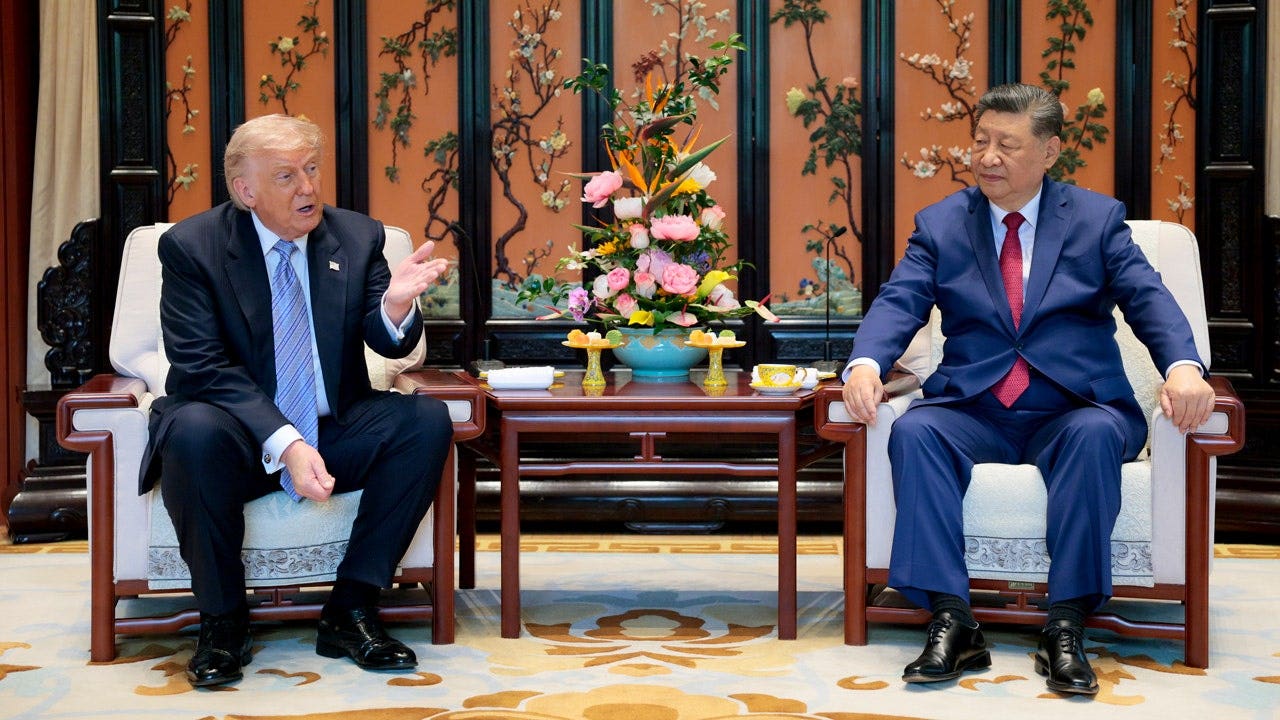
President Donald Trump and Chinese President Xi Jinping met at the Zhongnanhai compound in Beijing for a final bilateral meeting during Trump's visit. After the meeting, Trump told reporters the visit had been "incredible" and that "we've made some fantastic trade deals," saying the deals were "great for both countries." The article reports that China agreed to order 200 Boeing jets, but otherwise does not specify which deals were reached. U.S. officials present for the meeting included Ambassador to China David Perdue, Secretary of State Marco Rubio, Treasury Secretary Scott Bessent, War Secretary Pete Hegseth, and U.S. Trade Representative Jamieson Greer. American business leaders accompanied the president and met with Premier Li Qiang to discuss economic and trade cooperation. A Chinese Ministry of Foreign Affairs press release stated China was "willing to work with the United States to implement the important consensus reached by the two heads of state" and called for both countries to "meet each other halfway" to safeguard bilateral economic and trade relations. The article places the meeting in the context of a yearslong tariff standoff between the U.S. and China, notes Trump's use of tariffs (including the "Liberation Day" tariffs introduced in April 2025) as leverage, and mentions a recent Supreme Court ruling that the article says weakened a key U.S. pressure tool. The White House and the Chinese Embassy in Washington did not immediately respond to requests for comment, according to the piece. The article also notes Trump said Xi plans to visit the U.S. in September and that China expressed interest in investing "hundreds of billions of dollars" alongside U.S. business leaders.
Biblical Reflection
From a Christian perspective, the report raises two primary concerns: first, the reliability of the public claims made about "fantastic trade deals," and second, the ethical and communal impact of trade policies and deals. The article leans heavily on presidential statements and a brief mention of a Boeing order, but it provides few verifiable details about the scope, binding nature, or timeline of the deals. That gap invites healthy skepticism: Christians are called to pursue truth (Ephesians 4:25) and to weigh claims against evidence rather than rhetoric. The piece also reflects a political-economic worldview that treats trade as both national leverage and a means to create jobs. Scripture supports honest commerce and care for neighbors (e.g., fair treatment of workers and vulnerable peoples), so Christians should evaluate such deals by their real-world effects—do they pursue justice, protect the vulnerable, and promote mutual flourishing? Finally, the article's tone and selection of facts may serve partisan or promotional aims (emphasizing success while omitting contractual detail). Discernment is needed to avoid turning praise for economic gains or national prestige into an idol. Pray for transparency, wise stewardship of resources, and outcomes that reflect justice and peace rather than merely political advantage.
Scripture in context
This outlook does not yet include contextual Scripture citations. Do not treat a general biblical theme as an exegetical conclusion.
Faithful Response
No prescribed response is offered. Consider the reflection prompts below in your own church context.
Reflection and Discussion
- 1What concrete evidence would show that the announced deals are binding, equitable, and likely to benefit ordinary people in both countries rather than only political or corporate interests?
- 2How does the article's reliance on presidential claims and a ministry press release shape your confidence in the reported outcomes? What further sources would you seek to verify the story?
- 3Do the trade strategies and rhetoric described prioritize mutual flourishing and justice, or do they primarily serve national advantage and political narrative?
Sources
Reporting links are evidence inputs; Sanctuary News' biblical reflection is commentary.
This outlook currently relies on fewer than two linked sources. Broaden verification before teaching from it.
- 1.Original reportprimary