News Summary
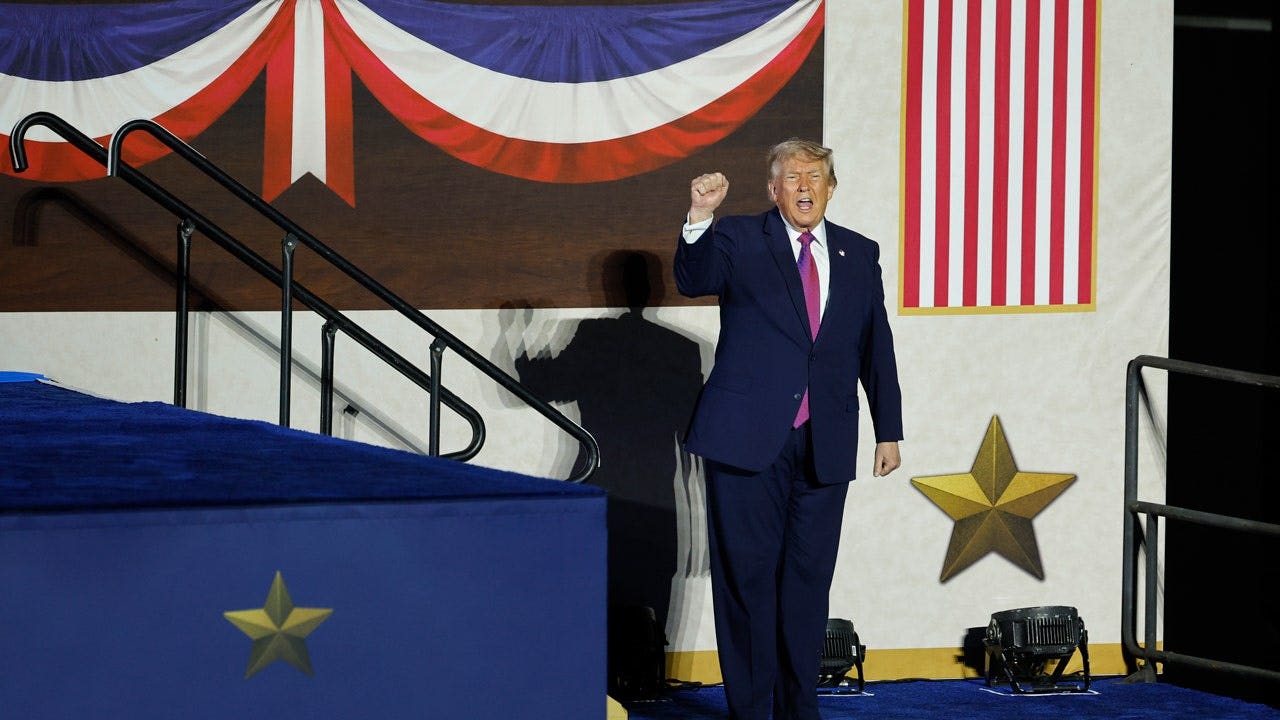
On July 3, 2026, President Donald Trump delivered a patriotic address at Mount Rushmore on the eve of the United States' 250th anniversary. Speaking beneath the carved likenesses of Washington, Jefferson, Lincoln and Theodore Roosevelt, he praised American “exceptionalism,” calling the United States the “most successful, most accomplished, most exceptional nation ever to exist.” An Air Force One flyover preceded the event and a fireworks display followed. Trump warned of what he described as a growing communist movement and labeled communism “the greatest threat” facing the country, saying Americans must choose between loyalty to Karl Marx or loyalty to America and asserting that one cannot be both a communist and a patriot. He invoked the nation’s founding sacrifices and religious language about America being “under God,” described his remarks as a rededication to national greatness, and said this moment begins a new “golden age” for the country. He is scheduled to deliver another speech on the National Mall in Washington, D.C., the following day.
Biblical Reflection
This speech is primarily rhetorical: it combines patriotic praise, religious language, and stark political contrast to mobilize supporters. Claims that the United States is uniquely ‘the most exceptional nation ever’ are statements of national pride rather than empirically verifiable propositions; similarly, calling communism the greatest threat in U.S. history is a strong value judgment and rhetorical escalation compared with other concrete security threats. The speech’s framing creates a clear in-group/out-group divide by equating political opponents with an existential ideological enemy. From a Christian pastoral perspective, there are tensions to notice: honoring the good in one’s country and remembering sacrifices is appropriate, but Christian love calls believers to speak truth with humility, avoid demonizing neighbors, and pursue the common good. Using religious language to sanctify a political project risks conflating kingdom allegiance with national identity. Christians should evaluate both truths and exaggerations in the rhetoric, guard against dehumanizing political opponents, and hold leaders accountable for promoting justice, mercy and peace alongside civic pride.
Scripture in context
This outlook does not yet include contextual Scripture citations. Do not treat a general biblical theme as an exegetical conclusion.
Faithful Response
No prescribed response is offered. Consider the reflection prompts below in your own church context.
Reflection and Discussion
- 1Does labeling political opponents as existential enemies help or hinder the practice of neighbor-love and truthful civic conversation?
- 2How should Christians weigh patriotic rhetoric that uses religious language—does it rightly call people to virtue or risk making nationalism into a form of idolatry?
- 3Which concrete threats to human flourishing should shape our public priorities, and how do we test political rhetoric against measurable harms and facts?
Sources
Reporting links are evidence inputs; Sanctuary News' biblical reflection is commentary.
This outlook currently relies on fewer than two linked sources. Broaden verification before teaching from it.
- 1.Original reportprimary