News Summary
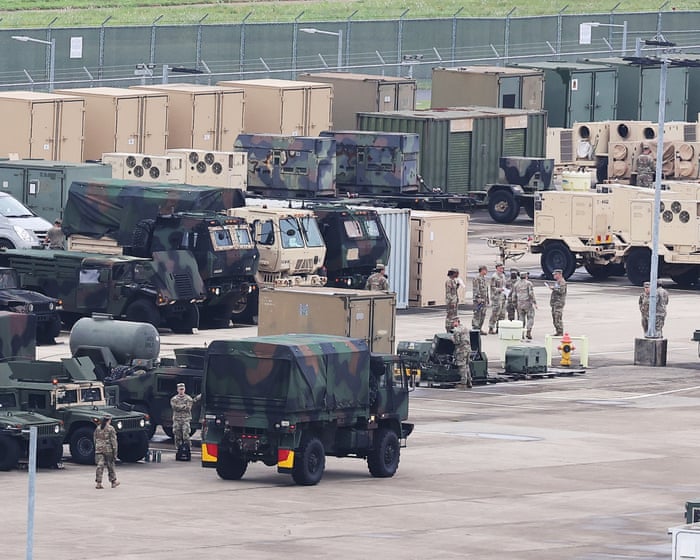
Reporting from The Guardian (corroborated in summary by PBS) says President Donald Trump abruptly ordered the Pentagon to scale back joint U.S.–South Korea military exercises. The action reportedly came days after North Korea test-fired ballistic missiles. The Guardian attributes the president’s stated rationale to his “very good relationship” with North Korean leader Kim Jong-Un; PBS’s account lists additional reasons the president cited (cost, his relationship with Kim, and Seoul’s refusal to join the Iran war). The move drew sharp bipartisan criticism in the coverage—lawmakers called it “inane” and “shortsighted,” and some warned it could have wider geopolitical effects, including a possible benefit to Russia in Ukraine. Available reporting does not include named White House, Pentagon, or South Korean on-the-record operational statements, nor does it specify which exercises, for how long, or the operational timeline and scope of the change.
Source and Framing Analysis
Primary sources in the cluster: The Guardian (detailed, critical framing) and PBS NewsHour (corroborative summary with a broader transactional framing). The Guardian frames the order as abrupt and damaging to a 73-year alliance, foregrounding lawmakers’ strong language ("inane," "shortsighted") and linking the timing to recent North Korean missile tests; it attributes the president’s justification to his personal rapport with Kim Jong-Un. PBS frames the decision as part of a pattern of a transactional approach to alliances and lists the administration’s stated reasons (cost, relationship with Kim, and Seoul’s refusal to join the Iran war). Both pieces attribute evaluative claims (motives, consequences) to political actors rather than presenting operational confirmations. Distinctive contributions: The Guardian supplies timing and strong lawmaker reactions; PBS corroborates the central factual claim and enumerates reasons the president gave. Major omissions and uncertainties across the reporting: no named White House/Pentagon or South Korean statements on the record in the supplied excerpts; no specifics about which exercises are cut or the timeframe; no independent defense analysis of impacts on deterrence; and partisan interpretations of motive and consequence remain contested. Readers should treat partisan characterizations of intent and downstream geopolitical effects as opinion-based warnings until officials, defense experts, or allied governments provide operational detail and analysis.
How sources covered this story
Sanctuary separately assesses reporting quality and alignment with Christian virtues. The virtues assessment considers truthfulness, dignity, compassion, justice, peacemaking, humility, and care for vulnerable people. It does not assess a publisher's faith or reward religious language.
Compare 2 reports
Rank 1
PBS NewsHour: South Korea relationship shift highlights Trump's transactional approach to alliesReporting 75/100Virtues 72/100
- Distinctive contribution
- Explicitly lists the reasons Trump cited for scaling back exercises and frames the decision as part of a broader 'transactional' approach to alliances.
- Framing
- Frames the policy as straining a close alliance and as an example of a transactional approach to allies; presents the administration's stated reasons without detailed pushback in the excerpt.
- Omissions or uncertainty
- No dates or specifics about which exercises were scaled back, no direct quotes or named attributions beyond 'he cited,' no reaction from South Korea or the Pentagon, and no evidence assessing the validity of the stated reasons.
- Why these scores
- Clear, concise attribution of the administration's stated reasons and a reasonable broader framing. Limited by brevity: lacks specifics (dates, named sources, scope of exercises) and supporting detail, but the excerpt responsibly distinguishes the president's stated rationale rather than asserting causal facts. Neutral, measured language that raises concerns about alliance strain without dehumanizing actors. Presents the president's stated reasons rather than trafficking in sensationalism; however, it lacks explicit attention to affected civilians or humanitarian implications that would raise the score further.
Rank 2
The Guardian: Trump’s move to gut South Korea alliance is ‘inane, haphazard decision’, lawmakers sayReporting 72/100Virtues 68/100
- Distinctive contribution
- Adds timing (decision came days after North Korean ballistic-missile tests), records partisan lawmaker criticism and the claim that weakening the alliance could strengthen Russia's position in Ukraine, and emphasizes the long-standing (73-year) nature of the alliance.
- Framing
- Critically framed: describes the move as 'gutting' the alliance and highlights lawmaker condemnation; the excerpt attributes strong evaluative language to critics rather than the reporter but uses emphatic verbs and adjectives.
- Omissions or uncertainty
- Names of the lawmakers and their exact quotes are not in the excerpt, no direct quotes from administration or Pentagon, no South Korean response, lack of evidence or expert analysis supporting the link to Russia/Ukraine, and a minor typo ('the the') appears.
- Why these scores
- Useful and context-rich excerpt that cites reactions and relevant timing; it attributes criticism to lawmakers rather than stating it as fact. The excerpt is somewhat sensational in diction and lacks named sources and balancing quotes in the supplied text, which limits its completeness though not its basic reliability. The piece surfaces concerns about alliance damage and wider geopolitical consequences, which aligns with care for collective well-being. However, the excerpt leans on charged language and partisan criticism without displayed balancing perspectives or attention to humanitarian stakes, so it scores slightly below neutral-to-positive alignment.
Biblical Reflection
Christians are called to pursue peace and protect the vulnerable together. Sudden, high-stakes changes to military posture can increase anxiety among allied populations and change deterrence calculations with real human consequences. Faithful civic discipleship therefore requires seeking truth, practicing mercy, pursuing justice, exercising humility, and defending those at risk rather than seeking approval at any cost. That means urging leaders to consult military and allied partners, explain the rationale publicly, and provide accountability. It also means supporting diplomatic efforts and humanitarian measures that reduce suffering, offering pastoral care to those directly affected, and resisting partisan simplifications when the stakes include lives and the security of neighbors.
Scripture in context
- 1Matthew 5:9 — A beatitude from the Sermon on the Mount that names peacemakers and connects peacemaking with the character of God's kingdom. — Peacemaking calls the church and civic leaders to seek peace that protects the vulnerable and pursues justice; it affirms that wise boundaries and credible deterrence can be part of responsible stewardship of public safety while also urging humility and reconciliation where possible.
Faithful Response
Pray for wisdom for national leaders, allied governments, and military planners involved in these decisions.
Seek reliable, multiple sources of information before forming or sharing strong judgments; press officials for transparent, on-the-record explanations of what was ordered and why.
Advocate for policies that balance credible deterrence and responsible de-escalation, emphasizing care for civilians and fidelity to allied commitments.
Support diplomatic and humanitarian efforts that protect vulnerable populations affected by regional instability.
Provide pastoral care and sober guidance to congregations and individuals with personal or family ties to the Korean peninsula; discourage partisan or fear-driven responses.
Reflection and Discussion
- 1In what ways should the church hold political leaders accountable when policy shifts affect the safety of neighbors and allies?
- 2How can Christians balance the call to pursue peace with the responsibility to protect vulnerable people who depend on credible deterrence?
- 3When a leader emphasizes personal rapport with an adversary as justification for policy changes, what prudential tests should guide our judgment about intent and consequence?
- 4What practical steps can congregations take to offer pastoral support to members worried by sudden foreign-policy changes?
Sources
Reporting links are evidence inputs; Sanctuary News' biblical reflection is commentary.
This outlook currently relies on fewer than two linked sources. Broaden verification before teaching from it.
- 1.Trump’s move to gut South Korea alliance is ‘inane, haphazard decision’, lawmakers sayprimary_reporting