News Summary
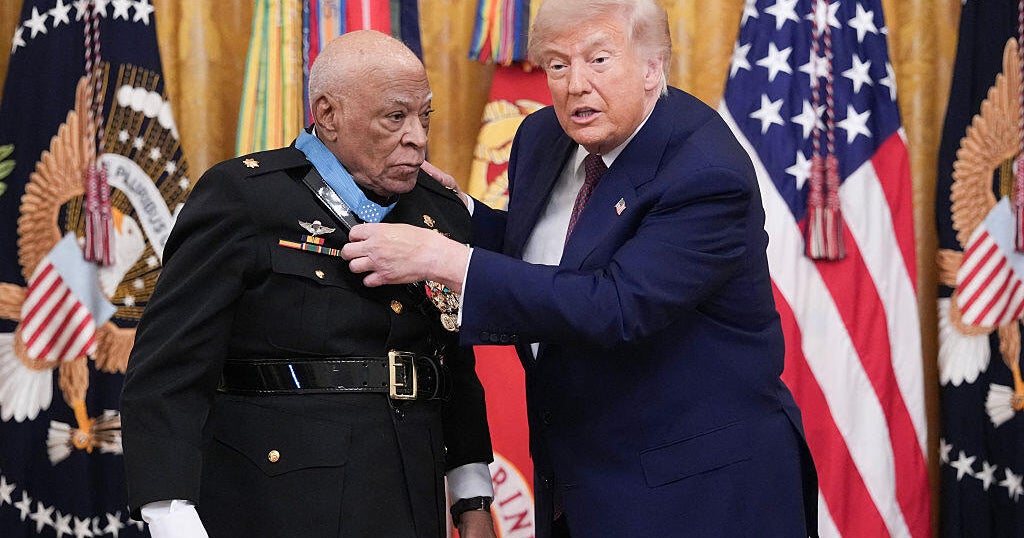
At a White House ceremony on June 18, 2026, President Trump presented the Medal of Honor to three U.S. veterans: retired Marine Maj. James Capers Jr., retired Army Maj. Nicholas Dockery, and the late Marine Col. John W. Ripley. Attendees included Defense Secretary Pete Hegseth, U.S. Ambassador to the United Nations Mike Waltz, and Sen. Lindsey Graham. According to the White House account quoted at the ceremony, Capers (age 88) led his Marines to an extraction after a four-day reconnaissance patrol in Vietnam in 1967 despite multiple gunshot and shrapnel wounds, refusing evacuation until his men were aboard. Ripley, serving as an adviser to South Vietnamese forces in April 1972, is credited with repeatedly placing explosives beneath a bridge at Dong Ha under enemy fire and detonating them to stop an advancing North Vietnamese assault; he previously received the Navy Cross and died in 2008. Dockery is described as rallying his platoon during a 2012 ambush in Kapisa Province, Afghanistan, killing two attackers while rescuing a dragged comrade, performing CPR, evacuating wounded soldiers, and coordinating air support. The awards and the president's remarks were presented using White House and presidential accounts of the cited actions.
Biblical Reflection
The article reports a formal, symbolic honoring of individual courage and sacrifice. From a Christian perspective, recognizing those who risked and in some cases gave their lives to protect others affirms biblical values of self-sacrifice, neighbor-love, and courage. The piece largely relays White House and presidential accounts of battlefield actions; readers should note that details come from official citations and ceremonial remarks rather than independent investigation, which is typical for award ceremonies. While ceremonies rightly express gratitude, Christian discernment also calls us to soberly remember the human cost of war: the wounded, grieving families, and long-term needs of veterans. The event can serve both as rightful praise for heroism and as a prompt to accompany gratitude with practical compassion — advocating for veterans' ongoing medical, emotional, and spiritual care — and to pray and work for peace where possible. Be aware too that political leaders may use such ceremonies for public relations; that reality doesn't erase the genuine valor being honored but should shape how we receive the messaging.
Scripture in context
This outlook does not yet include contextual Scripture citations. Do not treat a general biblical theme as an exegetical conclusion.
Faithful Response
No prescribed response is offered. Consider the reflection prompts below in your own church context.
Reflection and Discussion
- 1Does honoring individual valor change how we think about the wider causes and costs of the conflicts in which they fought?
- 2Are we moved only to public praise, or do we also support the long-term physical, mental, and spiritual needs of veterans?
- 3How might political use of military honors shape the way we evaluate and receive such ceremonies?
Sources
Reporting links are evidence inputs; Sanctuary News' biblical reflection is commentary.
This outlook currently relies on fewer than two linked sources. Broaden verification before teaching from it.
- 1.Original reportprimary