News Summary
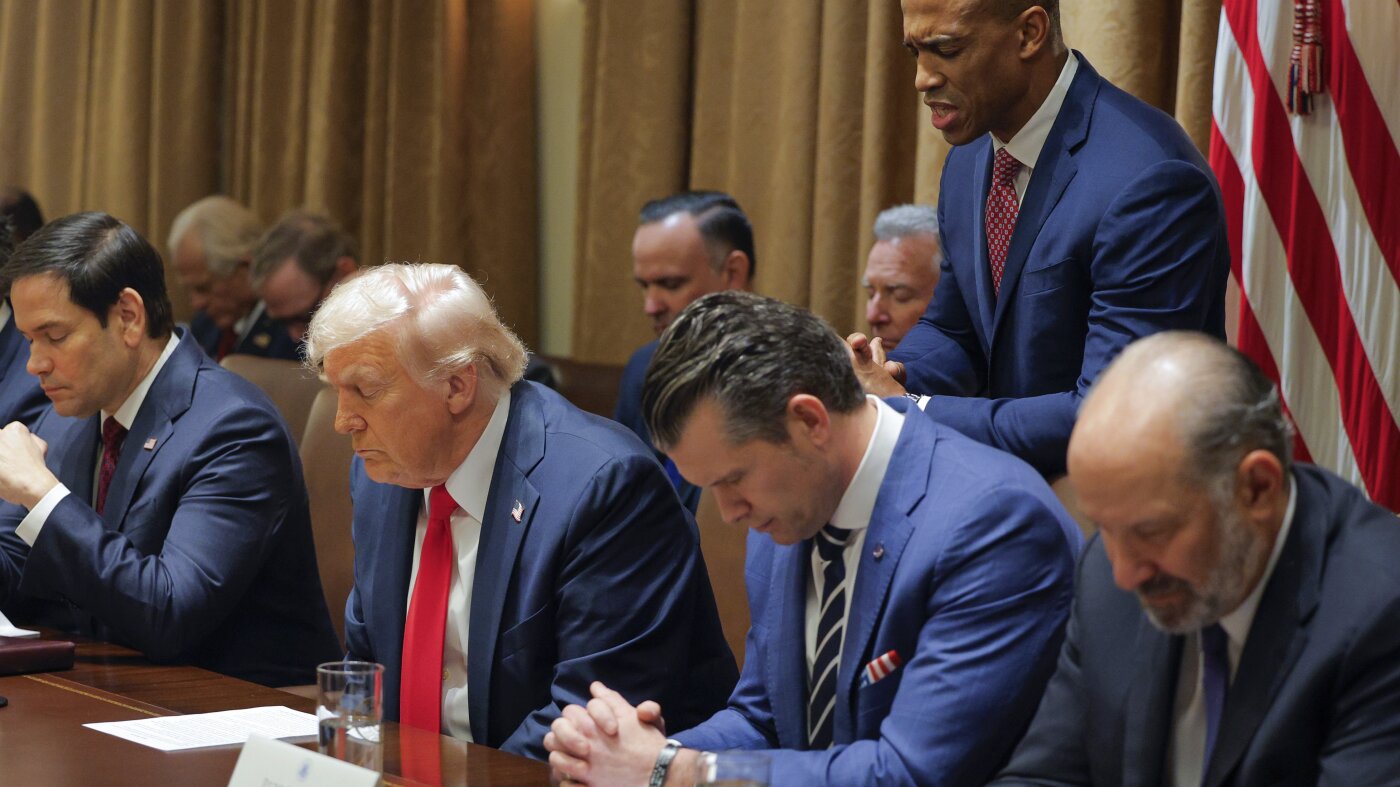
During large immigration enforcement actions in Minnesota in January 2025, the Department of Homeland Security released a produced video that combined night-vision footage of agents and raids with Lorde's cover of “Everybody Wants to Rule the World” and a quotation from Matthew’s Beatitudes: “Blessed are the peacemakers … for they shall be called the sons of God.” The article documents several instances in which officials in the Trump administration have publicly cited or invoked biblical passages to frame or bless immigration enforcement and military actions. It describes Secretary of Defense Pete Hegseth—an evangelical author of the book American Crusade—quoting Psalm 144 at a Pentagon prayer service on Jan. 21 after the invasion of Venezuela and reading from Mark at the National Prayer Breakfast in early February, interpreting the call to “take up his cross” in martial terms. The piece cites scholars and pastors who interpret such uses of Scripture in different ways: some see a historical pattern of militaries invoking God, others call the messaging a deliberate attempt to sanctify force or to reframe peacemaking as peace through strength. The article also cites a recent Pew Research finding that a majority of surveyed Americans say the Bible should have some or a great deal of influence on U.S. laws, with 28% saying the Bible should have more influence than the will of the people when the two conflict. Critics quoted in the article argue that selective citations can turn scripture into a resource that sanctifies state power, while others view greater public religiosity among politicians as noteworthy. The piece summarizes perspectives that distinguish an “ideological Christianity” that refracts scripture through political interests from a “Christianity of faith” that challenges power and calls for service and humility.
Biblical Reflection
The article reports a real phenomenon: officials are increasingly using biblical language and imagery to frame and justify state actions. From a Christian pastoral perspective, that raises several concerns and one clear responsibility. Scripture has historically been invoked by political leaders for many purposes, and leaders who speak openly about faith are not ipso facto acting faithfully. The Christian witness in Scripture tends to valorize humility, self-giving love, and peacemaking; read in context, many of the passages cited by officials (for example, the Beatitudes and the call to take up a cross) are more naturally understood as critiques of power than as endorsements of state violence. Using selected verses as rhetorical cover for raids or military force risks converting the Bible into an instrument that blesses partisan or imperial aims rather than a text that calls power to account. That does not mean religious conviction has no place in public life—Christians can and should bring moral insight into civic debates—but faithful witness requires honesty about context, an attentiveness to the vulnerable, and a willingness to have scripture critique our policies. Christians should also be aware of the plural character of public life: invoking sacred texts in policy messaging can alienate neighbors of other faiths or none and can conflate private conviction with public coercion. Pastoral discernment, not uncritical acceptance, is needed when political leaders use Scripture as justification.
Scripture in context
This outlook does not yet include contextual Scripture citations. Do not treat a general biblical theme as an exegetical conclusion.
Faithful Response
No prescribed response is offered. Consider the reflection prompts below in your own church context.
Reflection and Discussion
- 1When leaders quote Scripture to justify state action, are they citing verses in their fuller biblical context or selecting lines that support a preexisting policy?
- 2Does the use of religious language in official messaging serve the common good and the vulnerable, or primarily strengthen national power and political ends?
- 3How should Christians distinguish between personal conviction and the public use of scripture so that faith neither dominates plural civic life nor shirks moral critique of power?
Sources
Reporting links are evidence inputs; Sanctuary News' biblical reflection is commentary.
This outlook currently relies on fewer than two linked sources. Broaden verification before teaching from it.
- 1.Original reportprimary