News Summary
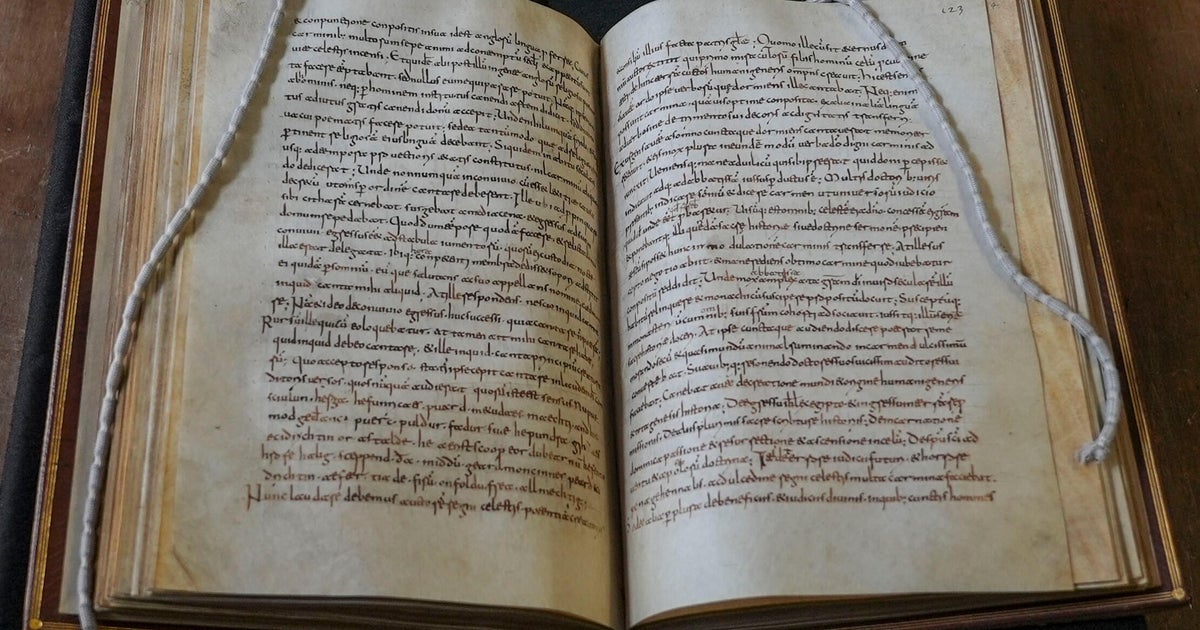
Researchers at Trinity College Dublin (Elisabetta Magnanti and Mark Faulkner) identified a 9th-century manuscript held in Rome's National Central Library that contains an Old English version of Caedmon's Hymn embedded within the main Latin text of Bede's Ecclesiastical History. Caedmon's Hymn is traditionally attributed to a 7th-century Northumbrian agricultural worker and is considered the earliest surviving Old English poem. Earlier known Old English witnesses of the hymn appeared as marginal translations or appendices; this Rome manuscript shows the hymn included directly within the main body of text. The manuscript was produced in the scriptorium of Nonantola Abbey, later moved through various hands and collections (including Thomas Phillipps, Martin Bodmer, and H.P. Kraus) before being acquired by Italy's culture ministry and kept in Rome. The library digitized the Nonantolan collection and provided images to the researchers, enabling the discovery. Scholars say the find pushes back the earliest manuscript evidence for English-language material in Bede copies and has implications for the diffusion and importance of English in the early medieval period.
Biblical Reflection
This discovery is a reminder that material culture—manuscripts, libraries, and the painstaking work of transcription—shapes how we know our past. Caedmon's Hymn is explicitly Christian in content: it praises the Creator and frames creation as the work of a sovereign, eternal Lord. From a Christian perspective this continuity is encouraging: it shows early English-speaking Christians using their native tongue to praise God, which anticipates New Testament patterns of worship and teaching in the language of the people (e.g., preaching and hymns in a vernacular). At the same time, readers should distinguish careful scholarship from pious legend. The traditional account of Caedmon composing the hymn in a dream is a part of Bede’s narrative framework and devotional imagination; it points to the faith context of the poem but is not the same as independently verifiable historical fact. The article largely reports the scholarly significance but also leans into wonder—understandable for a rare find—so be alert to romanticized language that treats providence and accident interchangeably. Spiritually, the story affirms the value of stewarding cultural and religious heritage: preserving texts helps later generations worship, learn, and see God’s work in human history. It also invites humility—much of what we treasure survives by fragile chains of preservation, and scholarship is ongoing; new finds can revise earlier assumptions about when and how the faith was expressed in local languages.
Scripture in context
This outlook does not yet include contextual Scripture citations. Do not treat a general biblical theme as an exegetical conclusion.
Faithful Response
No prescribed response is offered. Consider the reflection prompts below in your own church context.
Reflection and Discussion
- 1Does the article clearly separate what is documented (manuscript evidence) from what is traditional or legendary (Caedmon's dream), and how does that distinction affect how I interpret the find?
- 2How does the discovery shape our understanding of the church’s role in preserving language and worship, and where might modern Christians responsibly invest in preserving spiritual and cultural resources?
- 3What assumptions about national or cultural pride appear in accounts of 'firsts' in literature, and how should a Christian balance appreciation for heritage with humility before God and historical uncertainty?
Sources
Reporting links are evidence inputs; Sanctuary News' biblical reflection is commentary.
This outlook currently relies on fewer than two linked sources. Broaden verification before teaching from it.
- 1.Original reportprimary