News Summary
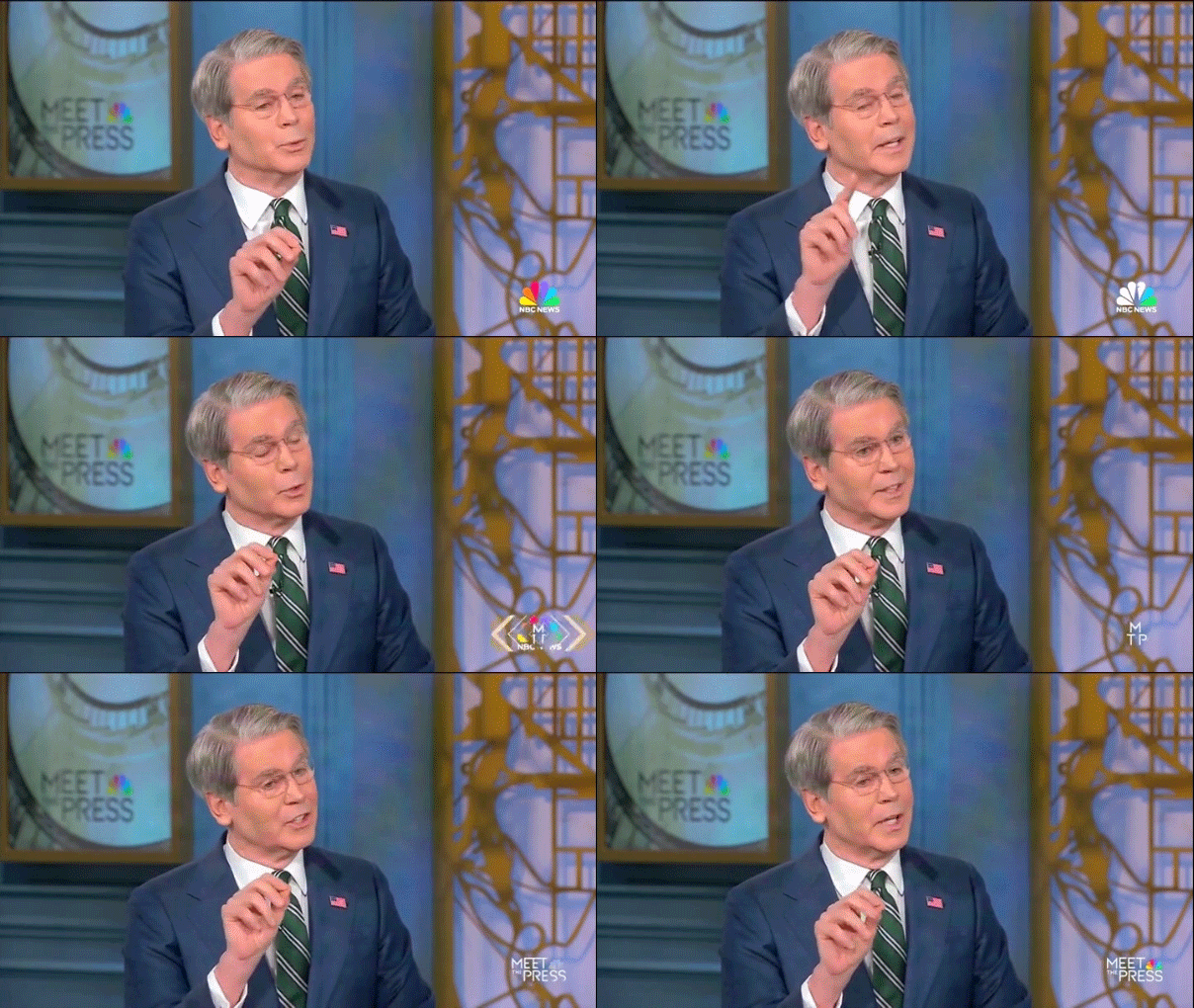
Treasury Secretary Scott Bessent appeared on NBC’s Meet the Press and clashed with host Kristen Welker over the Treasury Department’s decision to lift sanctions on Iranian oil stored on tankers. Welker cited reporting that the move could allow Iran to gain more than $14 billion in oil revenue. Bessent pushed back, calling the question “terrible framing,” and argued that much of the oil was already destined for China at a discount, so accommodating that supply helps prevent a larger global price spike. He explained that 140 million barrels afloat represent roughly 10–14 days of supply and that coordinated releases (including a large SPR release by a 32-country coalition) have helped keep U.S. prices below $100 per barrel. Bessent also resisted the suggestion that easing sanctions “rewards” Russia, saying the net additional benefit to Russia would be limited. The exchange occurred against the backdrop of President Trump’s public ultimatum to Iran to reopen the Strait of Hormuz, warning of strikes on Iranian power plants if the strait remained closed. The story focuses on the policy rationale, media scrutiny, and the broader geopolitical and energy-market context.
Biblical Reflection
From a biblical perspective, this exchange raises several spiritual concerns and lessons. First, Scripture calls for truthfulness and honest measures (e.g., honesty in business, speech, and reporting). The sharp rebuke of “terrible framing” points to the need for accurate, charitable questioning rather than loaded or alarmist rhetoric. Christians should hold both leaders and journalists to the standard of truthful communication — not because they are perfect, but because deception and sensationalism harm the vulnerable and inflame fear.
Second, the situation highlights the tension between prudence and the use of force. Leaders are called to protect the common good (Romans 13 speaks to authorities’ role), but the Christian ethic also values peacemaking (Matthew 5:9) and warns against warmongering and threats offered for political advantage. Policy choices that reduce harm to ordinary people (for example, measures that stabilize energy prices) can reflect wise stewardship, provided they are pursued with justice and a clear conscience.
Third, consider economic justice and care for the poor. Volatile energy prices disproportionately hurt the poor and working families. Policymakers who intentionally act to prevent price shocks are, in a sense, practicing stewardship and compassion; yet we must also scrutinize motives and long-term consequences — asking whether short-term fixes obscure deeper injustices or enable harmful behavior without accountability.
Finally, Christians are called to discernment and humility. Public figures often use strong language to shape narratives. We must seek facts, pray for truth, and insist on accountability while rejecting fear-driven or partisan reflexes. Pray for leaders to pursue peace and justice, for journalists to ask fair and substantive questions, and for the church to care for those most affected by geopolitical and economic upheaval.
Scripture in context
This outlook does not yet include contextual Scripture citations. Do not treat a general biblical theme as an exegetical conclusion.
Faithful Response
No prescribed response is offered. Consider the reflection prompts below in your own church context.
Reflection and Discussion
- 1Am I responding to media soundbites and political rhetoric with prayerful discernment and a commitment to seek accurate facts?
- 2How can I pray for and support policies or actions that protect the vulnerable from economic shocks while also promoting justice and accountability?
- 3When leaders or reporters use sharp language, how does the gospel call me to model truth, peace, and humility in conversation?
Sources
Reporting links are evidence inputs; Sanctuary News' biblical reflection is commentary.
This outlook currently relies on fewer than two linked sources. Broaden verification before teaching from it.
- 1.Original reportprimary